
12-Month Baby Guide: The Big One-Year Milestone
12 Month Baby Development: What to Expect at One Year
It’s the night before your baby’s first birthday, and as they sleep, you can’t help but think back on the year.
You remember their first smile, the sleepless nights, when they tried to sit up, and how their little hands held onto yours like you were everything to them.
Now, you see them exploring confidently, trying to talk, and taking those first brave steps. These are the 12 month milestones that remind you how much your baby has grown and how much you have grown with them.
This phase marks a shift toward independence, stronger preferences, and constant curiosity. As you guide your little one into toddlerhood, Teddyy stays right beside you, supporting you like an older sister would.
Growth & Milestones
At twelve months, many babies want to do things on their own. You’ll notice more purposeful actions, attempts at communication, and a strong desire to explore.
Here’s what you might see your one-year-old doing:
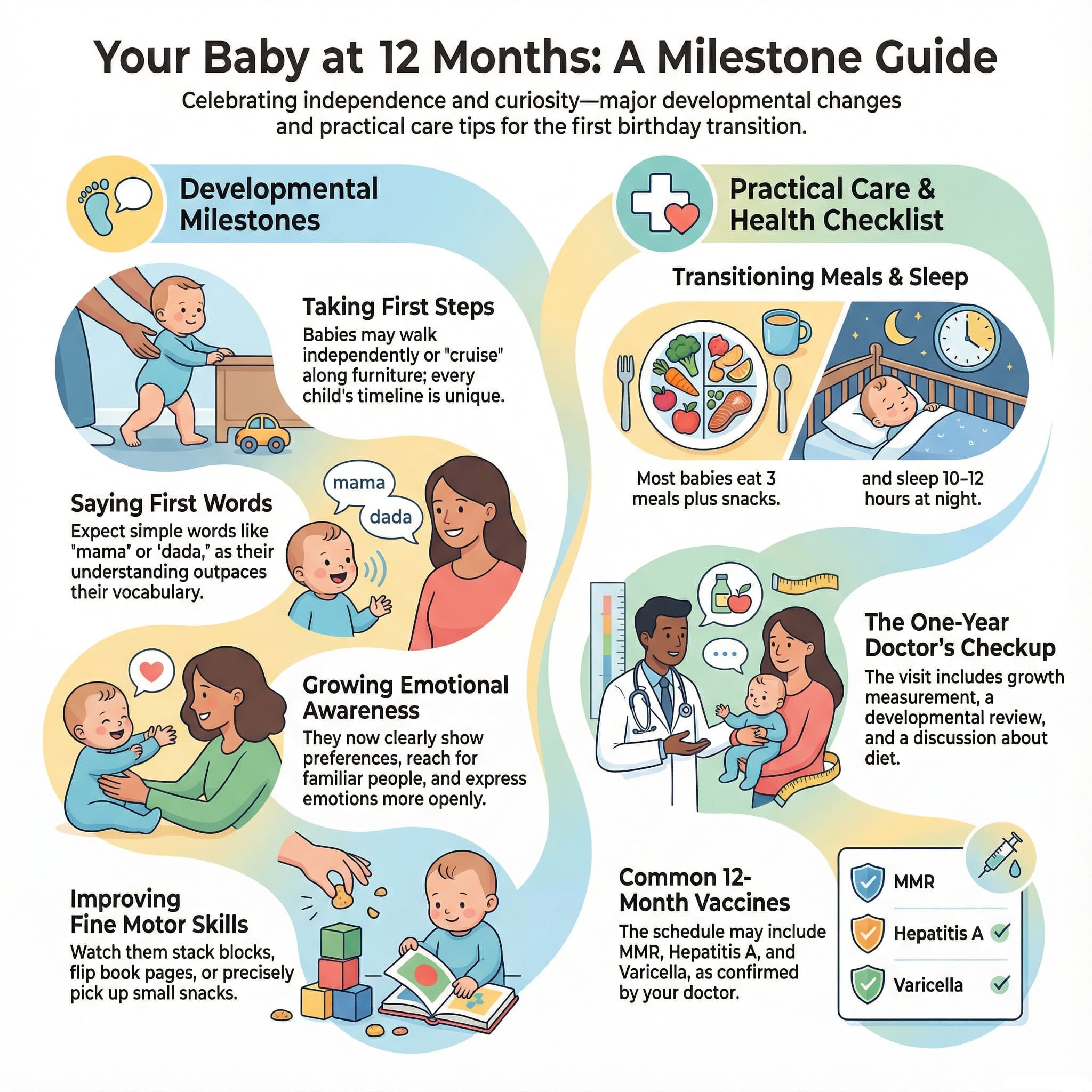
Walking or Attempting to Walk: Some babies begin walking independently, while others prefer standing or cruising along furniture for a few more weeks.
Every child follows their own timeline, and these changes are part of healthy baby growth month by month.
First Words & Better Understanding: Your baby may start saying simple words like “mama,” “dada,” or the name of a favourite object.
Even with limited words, understanding is far ahead. Responding to instructions and routines reflects strong child development milestones.
Emotional Awareness: At this stage, babies show preferences clearly. They may say “no,” reach for familiar people, or react emotionally to situations.
These behaviours show growing emotional awareness and social understanding.
Fine Motor Skills: Coordination continues to improve. You may notice your baby flipping through books, stacking blocks, or picking up snacks with precision.
These fine motor changes often appear rapidly, sometimes week by week.
Feeding & Sleep
Feeding: Around the first birthday, babies usually eat three meals a day along with healthy snacks.
They become more comfortable with varied textures and often want to feed themselves.
If you are wondering when to introduce whole cow’s milk, this should be discussed with your paediatrician.
Most babies transition to cow’s milk after turning one, unless advised otherwise.
Many mothers also continue breastfeeding beyond one year, adjusting routines gradually based on comfort and the baby’s needs.
Sleep: Most one-year-olds take one long nap or two shorter naps daily.
Night sleep usually improves to around 10–12 hours.
Consistent routines like dim lights, quiet play, and predictable bedtimes support healthy sleep habits as part of baby growth month wise development.
Common Concerns
Weaning Concerns: If you have started or are planning weaning, remember that this process takes time.
Babies often resist changes in feeding because it brings comfort. This is a very normal part of baby growth month by month.
Mealtime Refusals: Some days your baby may eat eagerly, while other days they may refuse food completely.
Offer variety, keep mealtimes relaxed, and trust that appetite fluctuates.
Emotional Attachment: Clinginess around caregivers is common at this age.
It shows strong bonding and emotional security, which later supports confidence and independence.
Diapering & Hygiene
Diapering: Diaper changes can feel challenging as babies become more active.
A comfortable, well-fitted diaper helps reduce leaks and makes changes easier.
Teddyy diapers keep your baby dry during active play, outings, and naps.
Potty Readiness: Around one year, you may notice early signs of curiosity about the bathroom, such as tugging at a wet diaper or staying dry briefly.
These are early indicators, not a signal to start potty training. Most babies are ready much later.
Basic Hygiene: Encourage simple hygiene habits like hand washing, gentle gum cleaning or tooth brushing, and regular baths.
Oral hygiene becomes especially important as teething continues.
Doctor Visits & Vaccines
At the one-year checkup, your doctor reviews your baby’s overall development.
This typically includes:
- Height, weight, and head circumference
- Review of baby growth by month patterns
- Assessment of social, cognitive, and motor skills
- Screening for anaemia or other concerns
- Discussion around feeding, sleep, and behaviour
- Guidance on transitioning to cow’s milk
Your paediatrician will also place your baby’s progress in context using a baby growth chart by month.
Vaccines at 12 Months: Depending on India’s immunisation schedule, vaccines may include:
- MMR (Measles, Mumps, Rubella)
- Hepatitis A
- Varicella
- Booster doses as per local guidelines
Your doctor will confirm the exact schedule based on previous vaccinations.
Parent Self-Care
You have completed twelve months of feeding, soothing, lifting, carrying, and loving a little human who depends on you completely.
It’s natural to feel proud, emotional, and sometimes overwhelmed.
Here are simple ways to care for yourself:
- Ask for help without guilt
- Take short breaks whenever possible
- Rest when your baby rests
- Share responsibilities with your partner
- Acknowledge all emotions that motherhood brings
Your wellbeing directly affects your baby. You deserve care too.
Play & Stimulation
Your one-year-old is ready for more complex play that challenges their growing abilities. Simple puzzles with large knobs, nesting cups, and shape sorters develop problem-solving skills. Encourage walking by holding hands and cheering every attempt. Drawing with thick crayons on large paper introduces early creativity. Ball play, rolling, throwing, and chasing, builds gross motor skills and is endlessly entertaining. Social play with other babies or siblings teaches sharing and turn-taking basics. Reading interactive books with flaps, textures, and sounds keeps attention and builds a lifelong love of stories.
Conclusion
Reaching the one-year milestone is a blend of reflection and new beginnings.
From early wobbles to confident steps and from babbling to meaningful communication, your baby’s growth month by month has been remarkable.
Teddyy is proud to walk alongside you through messy mealtimes, big milestones, and everything in between.
Frequently Asked Questions
1. What vaccines are due at 12 months?
Vaccines commonly include MMR, Hepatitis A, Varicella, and booster doses depending on national and state schedules. Your doctor will confirm.
2. When should I switch from formula or breast milk?
Many families transition to whole milk after one year, but breastfeeding can continue if both mother and baby are comfortable.
3. How can I encourage walking confidence?
Provide sturdy furniture for support, keep floors clutter-free, allow barefoot walking at home, and celebrate attempts without pressure.
4. Is it okay if my child isn’t speaking yet?
Yes. Some babies say only a few words at this stage. Consistent interaction and responsiveness matter most.
5. When should I consider potty training?
Most babies show readiness after 18 months. Early signs at one year are observational, not a signal to begin training.
6. How can I celebrate my baby’s birthday meaningfully?
A small gathering, a cake smash, memory photos, or handwritten notes about the year make beautiful keepsakes.