
Filter by Month

By Nobel Hygiene Team | Last Updated: January 6, 2026
11-Month Baby Guide: Confidence, Curiosity & Connection
11 Month Baby Development: What to Expect This Month
Your home has officially become an obstacle course. A pillow here, a toy there, a curious baby everywhere.
At eleven months, your little explorer wants to stand, climb, grab, babble and inspect every single thing that catches their eye. These are the 11 month baby milestones that quietly tell you, “I’m growing, Mama… keep watching!”
This is the month where confidence and curiosity grow side by side. Your baby tries new sounds, points at things, shows preferences for people, and bursts into giggles at the smallest jokes.
Amid all this movement, you may notice new child development milestones that fill your heart.
If you’re juggling excitement and exhaustion at the same time, you’re not alone. This phase is big and busy, and Teddyy is here to support you every step of the way.
Growth & Milestones: Standing, Early Words and Cognitive Leaps
At eleven months, your little one feels more capable than ever — crawling faster, trying to stand, exploring new things, and attempting little tasks independently.
These skills often appear naturally through everyday play.
Standing With Support
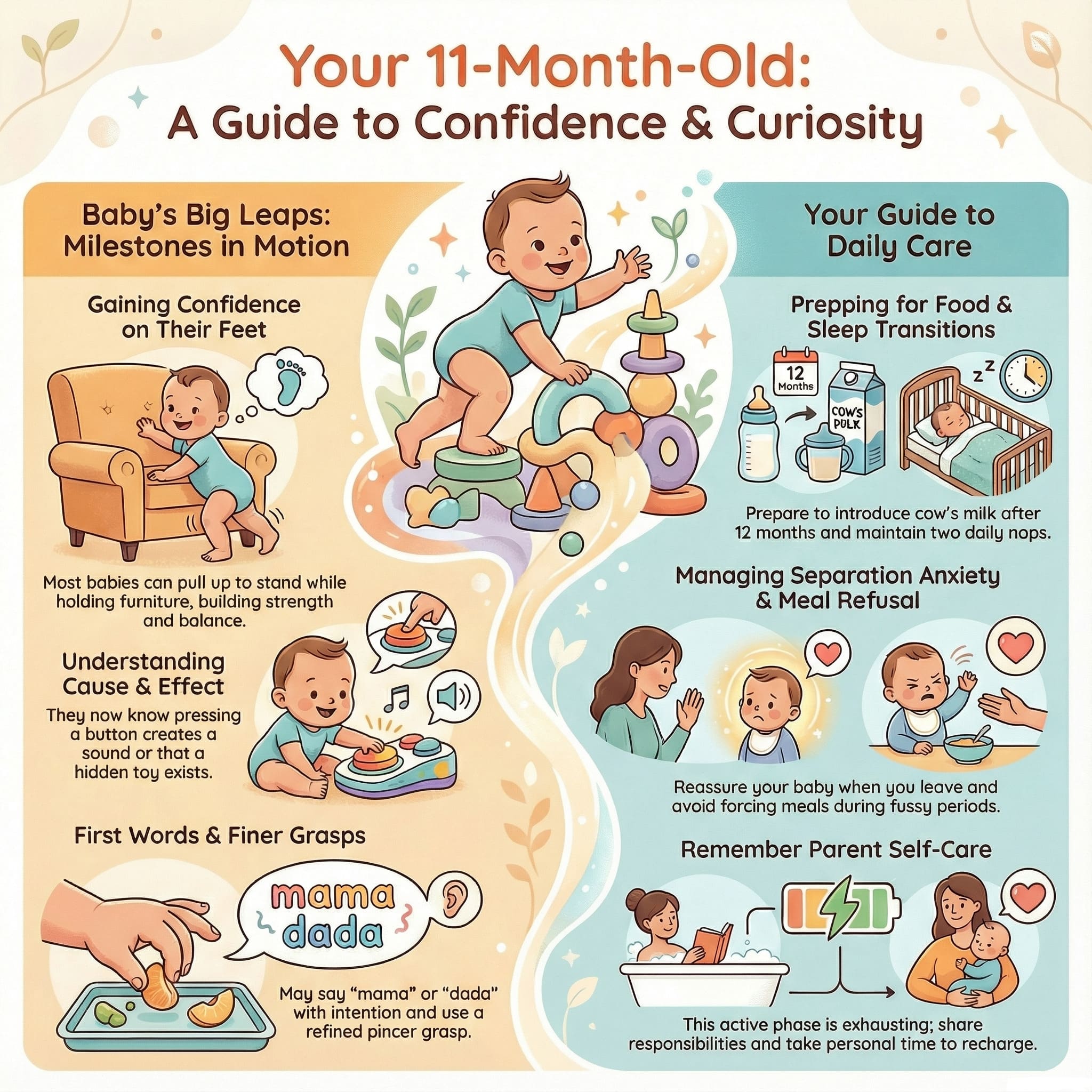
Most babies can pull themselves up to stand while holding onto furniture. This is one of the key 11 month developmental milestones and signals improving leg strength and balance.
You may even notice your baby testing how long they can stand without support.
Early Words and Babbling
Your baby may say “mama,” “dada,” or another simple word with intention.
Even if speech is limited, they are absorbing language constantly. Responding to babbles strengthens communication skills and supports healthy child milestones.
Cognitive Growth
At this stage, your baby begins to understand cause and effect more clearly.
They know that pressing a button creates a sound or that a hidden toy still exists. These discoveries strengthen memory and support child development milestones.
Teeth and Motor Skills
New teeth may begin pushing through, which can cause fussiness and increased chewing. This phase of baby teeth growth is normal.
The pincer grasp also becomes more refined, making self-feeding easier and more confident.
Feeding & Sleep: Prepping for Big Transitions
Feeding
Around this age, you may begin planning the transition to cow’s milk after twelve months.
Milk remains important, but solid meals become more structured. Offer soft, bite-sized foods and allow your baby to explore flavours at their own pace.
Good finger food options include steamed vegetables, soft roti pieces, dal-rice mash, khichdi bites, and fruit slices.
Encouraging self-feeding helps build independence and confidence during mealtimes.
Sleep Patterns
Most babies still need two naps per day. Night sleep usually ranges between 11–12 hours, with occasional disruptions.
Teething or separation anxiety may temporarily affect sleep. A calm, consistent bedtime routine can help.
Common Concerns: Meal Refusals and Behaviour Changes
Meal Refusal
At times, babies may refuse even favourite foods. This often happens during growth spurts or when learning new skills.
Stay relaxed, continue offering a variety of foods, and avoid forcing meals.
Separation Anxiety
It is normal for your baby to cry when you step away. They now understand that you can leave.
Offer reassurance, return frequently, and say a gentle goodbye to help them feel secure.
Diaper & Hygiene: Keeping Up with Movement
Diaper changes can become challenging at this age, as babies love to roll, stand, or crawl away.
Try distraction techniques such as a special diaper-time toy, gentle singing, or calm conversation.
A well-fitting diaper like Teddyy helps keep your baby comfortable while they move freely.
Maintain hygiene by wiping your baby’s face after meals, gently cleaning drool to prevent rashes, and brushing teeth with a baby toothbrush.
Doctor Visits & Vaccines: Preparing for the 1-Year Mark
Your paediatrician will typically review your baby’s overall development and discuss upcoming vaccinations at the 12-month mark.
During the visit, the doctor may assess:
- Growth, including weight, height, and head circumference
- Developmental progress through play and interaction
- Feeding habits and food preferences
- Mobility such as standing, cruising, or early walking
- Social and language responses
- Sleep routines and rest patterns
This is also a good opportunity to discuss transitioning from breast milk or formula and ensuring proper nutrition.
Parent Self-Care: You Deserve Support Too
Eleven months of parenting is full of joy, learning, and movement—but it can also be exhausting.
Remember to care for yourself alongside your baby.
- Share baby responsibilities with your partner or family members
- Give yourself at least ten minutes of personal time daily
- Connect with other parents for emotional support
- Acknowledge small daily wins
Motherhood is powerful, but it is okay to feel tired. You are doing a wonderful job.
Conclusion
Watching your 11-month-old grow is filled with wobbly steps, rising confidence, and heart-melting moments.
Every day brings something new. You are not just managing routines—you are creating memories that last a lifetime.
Teddyy is right there with you, supporting you through this beautiful phase of growth, learning, and love.
FAQs
1. Should I start transitioning to whole milk now?
It’s best to wait until your baby turns one year old. At eleven months, you can begin planning and consult your doctor for guidance.
2. How many naps does an 11-month-old need?
Most babies take two naps daily. Nap resistance may occur as new skills develop.
3. Is it normal for my baby to say only one or two words?
Yes. Many babies speak just a few words at this stage. Continue responding to sounds and gestures to support development.
4. How can I make diaper time easier?
Use distraction, stay relaxed, and ensure a comfortable diaper fit like Teddyy to reduce resistance.
5. What safety measures should I take as my baby becomes more mobile?
Secure furniture edges, keep floors clean, and avoid slippery clothing. Monitoring milestones using a baby development chart can help you stay prepared.
6. How can I manage my own fatigue during this active phase?
Sharing responsibilities, taking short breaks, and simplifying routines can make fatigue more manageable. Self-care is essential.