
Filter by Month

By Nobel Hygiene Team | Last Updated: January 6, 2026
10-Month Baby Guide: Mobility, Curiosity & Routines
10 Month Baby Development: What to Expect This Month
You have probably heard it from everyone around you: “Enjoy these days, they grow so fast.” It’s only now, at ten months, that the meaning of that sentence really hits you.
Your baby feels more active, more aware, and far more curious than ever before. One moment they are crawling toward the sofa, and the next they are trying to pull themselves up, giving you your first glimpse of the 10 month baby milestones you have been waiting for.
This stage is full of new discoveries. You start noticing how much your little one has learned through the baby growth stages so far.
You may even find yourself checking a baby growth chart by month or comparing small changes to a baby growth chart by week just to reassure yourself that everything is on track.
The good news is that the 10 month milestones often show up in small, everyday moments that tell you your baby is learning beautifully.
Growth & Milestones
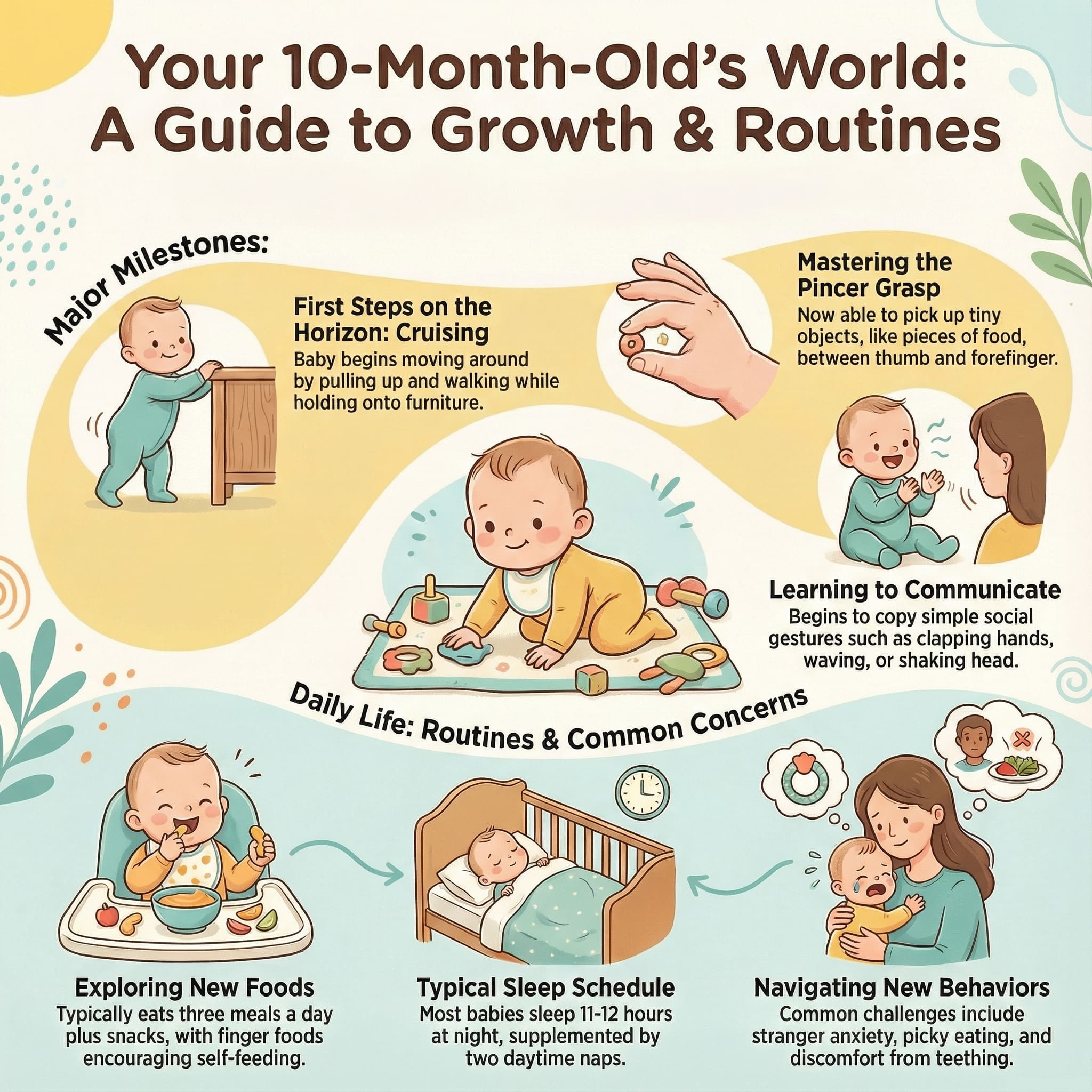
At ten months, you start seeing clear progress across baby development stages month by month. Many babies begin cruising, which means moving around while holding furniture for support.
This is one of the most visible 10 month baby milestones and a strong indicator of growing leg strength.
You may also notice your little one copying simple actions, such as clapping, waving, or shaking their head. These gestures reflect growth in social understanding and communication.
Your baby’s curiosity grows stronger, and so does their confidence. They may stack objects, explore toys with intention, or attempt to open small containers.
Motor skills continue to improve as well. The pincer grasp becomes more refined, allowing your baby to pick up tiny pieces of food or small objects.
This is one of the most important 10 month old milestones because it supports both feeding and early play skills.
If you ever compare progress using a baby growth chart by month, remember that development can appear gradually or suddenly. Every baby grows at their own pace.
Feeding & Sleep
By now, your baby is likely eating three meals a day along with snacks. Finger foods become an important part of daily routines and help support self-feeding skills.
Babies can be offered the following healthy foods:
- Soft fruits like banana or chikoo that are easy to mash
- Cooked vegetables such as carrots or sweet potatoes
- Small pieces of paneer (Indian cottage cheese)
- Simple foods like idli, upma, or boiled dal khichdi
Breast milk or infant formula remains the primary source of nutrition, but solid food intake increases as your baby learns to respond to hunger cues. Keep mealtimes relaxed and pressure-free.
Sleep patterns may change during this stage. Most babies sleep about 11–12 hours at night with two daytime naps. Increased mobility and curiosity can sometimes cause mild sleep regression.
Common Concerns
Stranger Anxiety
Clinginess often increases at this age. Babies recognize familiar faces and may feel cautious around new people.
Stay close, offer reassurance, and allow your baby to warm up at their own pace. This behaviour is a normal part of infant development.
Picky Eating
As your baby explores textures, they may refuse foods or lose interest quickly.
Offer small portions, colourful foods, and a variety of soft textures. Avoid forcing or rushing meals.
Teething Discomfort
Teething may cause fussiness, drooling, or changes in sleep. Chilled teething toys or gentle gum massages can provide comfort.
Diapering & Hygiene
With increased movement, diaper leaks may become more common. Ensure a proper fit around the waist and thighs.
Teddyy diapers help keep your baby dry and comfortable during crawling, cruising, and active play.
You can also introduce simple hygiene habits now. Gently wipe hands and face after meals, clean gums with a soft cloth, and offer small sips of water with solids.
Bath time often becomes playful. Use a gentle cleanser, keep supplies within reach, and never leave your baby unattended.
Doctor Visits & Vaccines
Around this time, your doctor may review your baby’s overall progress and prepare you for the upcoming one-year checkup.
This visit may include:
- Monitoring weight and height
- Reviewing feeding habits
- Checking mobility and hand skills
- Assessing any missed vaccines
Keeping a list of questions helps make the appointment more productive.
Parent Self-Care
With a mobile baby, your day can feel nonstop. Creating short moments of rest becomes important.
Nap when your baby naps, prepare meals in advance, and share routines with your partner or family members.
Encouraging short periods of supervised independent play can also help you recharge.
Motherhood is not meant to be handled alone. Small breaks make a meaningful difference.
Conclusion
At ten months, your baby shows more energy, curiosity, and awareness of their surroundings.
Cruising, balancing, and confident exploration are signs of healthy growth and development.
Celebrate every achievement and remember to be gentle with yourself as you guide your baby through each new milestone.
Teddyy is here to walk with you through every phase with comfort, support, and a deep understanding of what mothers truly need.
FAQs
1. How can I encourage walking safely?
Give your baby plenty of floor time and let them cruise along furniture. Keep the space clutter-free and avoid walkers.
2. What finger foods are healthy for my baby?
Healthy options include ripe fruits, cooked vegetables, soft cheeses, dal khichdi, and chapati strips. Always supervise during meals.
3. Why does my baby cry around strangers?
This is common at this age. Babies recognize familiar faces and need time to feel secure with new people.
4. Should I wake my baby for feeding at night?
If weight gain is steady and your doctor is satisfied, waking your baby is usually not required.
5. How often should I bathe my 10-month-old?
Two to three baths per week are enough, with gentle wipes on other days.
6. How do I manage time for myself with a mobile baby?
Create a safe play zone, use nap times wisely, and share responsibilities with your support system.