
Maximum How Many Days to Confirm Pregnancy : When to Test Pregnancy
By Teddyy Editorial Team | Last Updated: April 23, 2026

Wondering how to confirm pregnancy? Most women want to confirm pregnancy as soon as possible after a missed period. The good news is that modern pregnancy tests allow you to confirm pregnancy within days of conception. In this guide, we explain the best time to confirm pregnancy and what methods are most reliable.
Wondering how to confirm pregnancy? Understanding the right time and method to confirm pregnancy is crucial for every expecting mother.
Medically reviewed by Dr Kriti Sharma (Obstetrician | Reproductive Medicine, Gynecologic Surgery)
Many doctors recommend using a home pregnancy test to confirm pregnancy about one week after your missed period.
If you want to confirm pregnancy earlier, a blood test at your doctor’s office can detect hCG levels sooner. Either way, the key is timing your test correctly to confirm pregnancy accurately.
embarking on the thrilling possibility of a pregnancy experience a flood of emotions and questions, and one that often lingers is: Maximum how many days to confirm pregnancy after a missed period? Early pregnancy symptoms and a history of unprotected sex are common reasons people wonder about the timing for confirming pregnancy. In this blog, we unravel the mystery surrounding the maximum days needed to ensure a positive result on that eagerly awaited pregnancy test. Let us help you navigate this important timeframe to eaae any worries that accompanies this beautiful chapter of life.
What Should You Know About Your Menstrual Cycle to Confirm Pregnancy
The menstrual cycle is a natural, monthly process that occurs in women of reproductive age, and is governed by hormonal fluctuations. It typically lasts around 28 days, although variations are normal.
The cycle consists of two main phases: the follicular phase, where an egg matures in the ovaries, and the luteal phase, which follows ovulation and prepares the body for a potential pregnancy.
If fertilization doesn’t occur, the uterine lining sheds in the form of blood, mucus, vaginal tissues and fluids through the vagina during menstruation or a monthly period, marking the beginning of a new cycle. Hormones such as estrogen and progesterone lead to these changes, maintaining the delicate balance necessary for reproductive health. Understanding the menstrual cycle is an important step towards family planning and overall women’s health.
What Are the Signs of Pregnancy
If you’re wondering when to check pregnancy, waiting until at least a week after a missed period is advisable for reliable test outcomes. Listed below are some early signs to look out for:
1. Missed Period:
A delay for a week or more in your expected period date may indicate pregnancy, but this can be tricky for those with irregular cycles.
2. Tender Breasts:
Hormonal changes in early pregnancy can lead to breast sensitivity and soreness, gradually easing as your body adapts.
3. Nausea and Vomiting:
Morning sickness, starting around one month into pregnancy, may vary in onset. Its exact cause is unclear, but pregnancy hormones likely contribute.
4. Increased Urination:
Pregnancy increases blood volume, prompting kidneys to process extra fluid, resulting in more frequent urination.
5. Fatigue:
Elevated progesterone levels (a hormone that helps support healthy pregnancy) in early pregnancy can cause fatigue, making you feel more drowsy than usual.
What Are the Different Types of Pregnancy Tests
Human Chorionic Gonadotropin (HCG), often called the “pregnancy hormone,” is produced when a woman becomes pregnant. Its levels rise, crucially supporting gestation by signaling the ovaries to produce progesterone for maintaining pregnancy. Most pregnancy tests work by detecting HCG in either urine or blood, and most tests are designed to be easy to use at home. HCG serves as a key pregnancy indicator detected by tests.
There are different types of pregnancy test kits available. Over-the-counter kits are at home pregnancy tests, which often use a test strip or pregnancy test strip to detect HCG in urine. These urine tests are widely available, convenient, and less invasive than blood tests. For more sensitive tests, a healthcare provider may take a blood sample from a vein in your arm. Blood tests can detect pregnancy earlier than urine tests because they can identify lower levels of HCG, making them especially useful for early detection. While some tests can detect pregnancy before a period is due, testing too early may yield a false negative due to insufficient HCG levels.
1. Urine Test:
- Over-the-counter (OTC) kits:Easily available at pharmacies, these kits help detect HCG hormone in urine.
- Digital tests:Provide a clear digital result for simpler interpretation.
2. Blood Test:
- Qualitative HCG:Confirms or rules out pregnancy.
- Quantitative HCG:Measures exact HCG levels for more detailed information.
3. Early Detection Tests:
- Detect lower HCG levels, offering results a few days before a missed period.
4. Miscarriage Risk Assessment:
- Tests such as the progesterone blood test gauge miscarriage risk.
5. Doctor-Administered Tests:
- Ultrasound and Doppler fetal monitoring ensure healthy fetal development.
Will a pregnancy test work if I’m on the pill?
Yes, a pregnancy test will still work even if you’re on birth control pills. Hormonal contraceptives, such as the pill, do not impact the effectiveness of a pregnancy test. These tests measure hCG levels, a hormone produced during pregnancy, which is unaffected by contraceptives. Since no method of birth control is 100% foolproof, it’s essential to know when to take a pregnancy test if you experience symptoms or suspect pregnancy. If you’re unsure about your status, understanding when to take a pregnancy test and following the instructions on the test can help ensure an accurate result.
Pregnancy test results
Home pregnancy tests can provide accurate results if used correctly, but understanding how to test pregnancy is essential for reliable outcomes.
A positive result is usually accurate, but a negative result may not always be dependable. Factors like taking the test too early, not following instructions properly, or certain medications can influence the result. To ensure accuracy, read the instructions carefully to know how to test pregnancy effectively. If you receive a negative result but still suspect pregnancy, wait a few days and test again. If your period remains absent after a second negative result, consult your doctor for further evaluation.
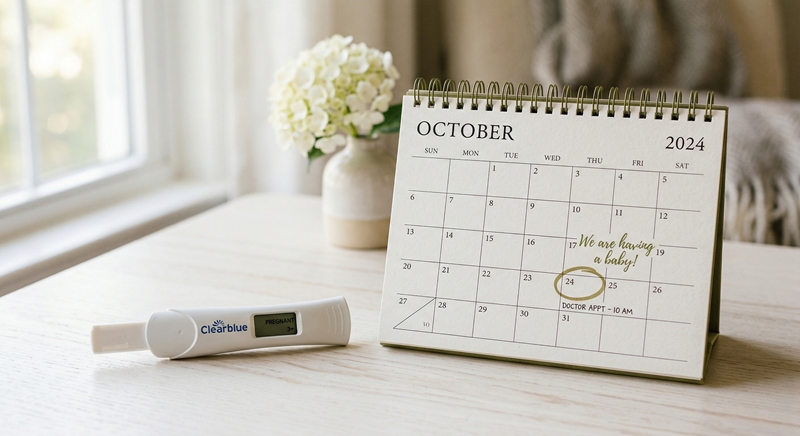
How Many Days Delay in Period Confirms Pregnancy?
Understanding how many days delay in period confirms pregnancy can be essential for timely testing. Generally, a delay of at least seven days past your expected period date is a good time to take a home pregnancy test. This allows the pregnancy hormone, hCG (human chorionic gonadotropin), to build up to detectable levels in your urine. For those with irregular menstrual cycles, pinpointing the right time can be more challenging. In such cases, waiting two weeks after ovulation or consulting a healthcare provider for a blood test can yield more accurate results. However, it’s essential to keep in mind that missing a period does not always indicate pregnancy. Other factors, such as stress, dietary changes, intense physical activity, hormonal imbalances, or underlying conditions, can also lead to irregular or skipped menstrual cycles.
How to Check Pregnancy at Home
Home pregnancy tests, available over-the-counter, are the perfect solution for women looking to discreetly check if they’re pregnant in the comfort of their own homes. These test kits help detect the levels of HCG in your urine to determine if you’re pregnant or not. These test kits come in traditional and digital formats, offering clear results. Many are designed for early detection, providing results a few days before an expected period.
Five Factors Affecting Test Accuracy
The accuracy of pregnancy kits can be influenced by various factors such as:
- The timing of the test in relation to your menstrual cycle
- The sensitivity of the pregnancy kit used
- Whether the test instructions are followed correctly
- Certain medical conditions or medications
- Fertility medications, which can sometimes affect the accuracy of pregnancy test results, especially if they contain hCG
1. Precision in the following Instructions:
Incorrect usage, such as not using the first-morning urine or misinterpreting the results, can affect accuracy. It’s important to follow the instructions provided with the kit.
2. Timing of the Test:
Testing a week after your missed period will enhance accuracy.
3. Quality of the Test Kit:
Choosing a reputable and reliable pregnancy test kit brand contributes to accuracy.
4. Potential Interference:
Certain medications or medical conditions may impact test results.
5. Individual Variables:
Personal differences and unique bodily responses can influence test outcomes.
Conceive How Many Days? Timing Fertility for the Best Results
Understanding the ideal time to get pregnant can greatly improve the chances of conception. The best time to get pregnant is during the ovulation period, which typically occurs around day 14 of a 28-day menstrual cycle. Ovulation is the release of an egg from the ovary, and this egg remains viable for about 12 to 24 hours. However, sperm can survive inside the female reproductive tract for up to 5 days, which means the good time for pregnancy actually spans a fertile window of about 6 days — the 5 days before ovulation and the day of ovulation itself. Couples trying to conceive should focus on having intercourse during this fertile window. To understand conceive how many days post-ovulation pregnancy is most likely, experts say conception usually happens within 1 to 2 days after ovulation. This period is considered the pregnancy best time for fertilization to occur, maximizing the chances of pregnancy.
When to Consult a Doctor
If you receive a positive pregnancy test result, experience irregular menstrual cycles, encounter unusual symptoms, have a history of pregnancy complications, or face concerns about fertility, consulting a doctor is advisable.
1. Possible Reasons for Delayed Confirmation:
Several factors can contribute to a delayed confirmation of your pregnancy such as:
2. Testing too Early:
Conducting a pregnancy test too soon after conception may yield a false negative result.
3. Irregular Menstrual Cycles:
Women with conditions such as PCOS and thyroid disorders who experience irregular cycles may find it challenging to predict the timing of a missed period.
4. Inadequate HCG Levels:
Low levels of the pregnancy hormone hCG might delay positive test results, especially in early pregnancy.
5. Faulty Testing Technique:
Incorrect usage of home pregnancy tests or misinterpretation of results can contribute to delayed confirmation.
6. Stress and Lifestyle Factors:
High stress levels, significant weight changes, or lifestyle factors can influence menstrual cycles and delay confirmation.
5. Ectopic Pregnancy:
In some cases, a delayed confirmation might be linked to an ectopic pregnancy, meaning the fertilized egg implants outside the uterus, leading to a lot of pregnancy complications.
How to Confirm Pregnancy: Related Guides
More helpful pregnancy resources:
- Pregnancy Precautions: A Comprehensive Guide
- Pregnancy Diet Plan Month by Month
- Importance of Prenatal Vitamins
- Stretch Marks During Pregnancy
For medical guidance, consult the American College of Obstetricians and Gynecologists.
Best time of day to take a pregnancy test
Take a home pregnancy test with your first morning urine for the most accurate result. Overnight, hCG concentrates in the urine making early detection easier when levels are still low. If you cannot wait until morning, hold your urine for 4 hours and avoid drinking too much water before the test, since dilute urine can give a false negative. Read the result within the time window stated on the kit, usually 5 to 10 minutes. Reading too early or too late can show evaporation lines that are not real positives. If the result is unclear, repeat in 48 hours when hCG levels typically double.
Common pregnancy test mistakes to avoid
Several easy mistakes lead to wrong results. Testing too early before your missed period is the most common, even sensitive tests need at least 12 to 14 days after ovulation to detect hCG. Drinking large amounts of water before the test dilutes urine and lowers the chance of a positive. Using an expired test kit or one stored in heat or moisture can give faulty readings. Not following the timing instructions on the package leads to misreading. Forgetting to check the expiry date is another common error. Stress about the result can make you misread a faint line, get a second opinion or repeat with a fresh test for confidence.
References & Sources
- World Health Organization (WHO). Maternal and Newborn Health. who.int
- Indian Council of Medical Research (ICMR). National Guidelines for Maternal Care. icmr.gov.in
- American Academy of Pediatrics (AAP). Caring for Your Baby. aap.org
- Indian Academy of Pediatrics (IAP). Child Health Guidelines. iapindia.org
- National Library of Medicine. Diaper Dermatitis. pubmed.ncbi.nlm.nih.gov
- National Institute of Nutrition (NIN). Dietary Guidelines for Indians. nin.res.in
You May Also Like




Frequently Asked Questions
How many days delay in period confirms pregnancy?
Generally, a delay of at least seven days past your expected period date is a good time to take a home pregnancy test.
Maximum how many days to confirm pregnancy after missed period?
Generally, waiting for at least a week after a missed period is advisable for accurate home pregnancy test results.
In which week is pregnancy confirmed?
Pregnancy is typically confirmed around the fourth or fifth week, usually after a missed period.
How many days to confirm if you are pregnant?
Most home pregnancy tests can provide reliable results within 10-14 days after conception.
When to test for pregnancy?
Testing for pregnancy is recommended after a missed period or at least 10-14 days after potential conception.
How many days after check pregnancy test?
If you’ve missed a period, it’s best to wait for a week before taking a pregnancy test for accurate results.
How to use pregnancy kit or the Prega News kit?
Follow the instructions provided with the Prega News kit, usually involving collecting a urine sample and applying it to the designated area on the test device, then waiting for the indicated time for results.
Maximum how many days to confirm pregnancy after sex?
If you’ve engaged in unprotected sex and are now suspecting a pregnancy, it is best to wait at least a week after a missed period to perform a pregnancy test for accurate results or consult a doctor.