
Early Signs of a Twin Pregnancy: How It Differs from a Singleton Pregnancy?
By Teddyy Editorial Team | Last Updated: April 23, 2026

Ever had a gut feeling you might be carrying twins? For some, the signs are hard to miss—stronger symptoms, double the cravings, and an undeniable sense that something extraordinary is happening. For others, the news comes as a delightful surprise. Pregnancy is a time of incredible change, and if it’s a twin pregnancy, those changes can feel amplified. From heightened symptoms to unique early indicators, your body might be dropping subtle (or not-so-subtle) hints. Curious about what sets early twin pregnancy symptoms apart? Let’s explore what you might experience in those first magical weeks.
Key Takeaways
- Rapid weight gain can be one of the key early twin pregnancy symptoms.
- Extreme fatigue is one of the most noticeable early signs of twin pregnancy in the first 2 weeks.
- While a growing belly is a common sign of pregnancy, it’s not always a clear indicator of twins.
- The early signs of a twin pregnancy can be noticeably different from a singleton pregnancy.
- For trusted medical guidance on twin pregnancy, refer to the American College of Obstetricians and Gynecologists (ACOG) which provides comprehensive information about multiple pregnancies.
Elevated hCG Levels: The First Clue of Twins
Fun fact: in a twin pregnancy, studies show that your hCG levels could be significantly higher. This is a key difference between single and twin pregnancy symptoms. Human chorionic gonadotropin (hCG) is the hormone your body begins producing after conception, and it’s the same hormone that home pregnancy tests detect to confirm pregnancy. While these tests don’t measure the exact amount of hCG, blood tests can provide a precise reading. After implantation, hCG levels rise steadily, typically doubling every 39-53 hours in the early stages of pregnancy, with twin pregnancies often showing elevated levels compared to singletons.
Excessive Morning Sickness: Why It’s More Intense with Twins
If you’re carrying twins, prepare for a potentially more intense bout of morning sickness. Elevated levels of the pregnancy hormone hCG, which are common in twin pregnancies, often lead to stronger nausea and vomiting compared to singleton pregnancies. In some cases, this can escalate to hyperemesis gravidarum (HG), a condition characterized by severe vomiting. Morning sickness typically begins as early as the 4th week of pregnancy, around the time you miss your period. Interestingly, if both babies are girls, the morning sickness might be even more pronounced due to the hormonal dynamics.
Rapid Weight Gain: A Common Early Sign of Twins
Rapid weight gain can be one of the key early twin pregnancy symptoms. Since your body is supporting two little ones, it naturally needs extra energy, which means you’ll likely gain more weight than with a single pregnancy. Keeping an eye on your weight gain during pregnancy can help you stay on track. There are general guidelines based on your pre-pregnancy BMI to help guide you:
- BMI less than 18.5: 50–62 lbs.
- BMI 18.5–24.9: 37–54 lbs.
- BMI 25–29.9: 31–50 lbs.
- BMI 30 or greater: 25–42 lbs.
Staying within these ranges helps ensure you’re gaining the right amount for a healthy twin pregnancy.
Double the Effort, Double the Exhaustion
Extreme fatigue is one of the most noticeable early signs of twin pregnancy in the first 2 weeks. Some individuals carrying twins report feeling unusually tired even before their missed period. This could be because their body is working harder to support the growth of two babies, which requires significantly more energy. The combination of hormonal changes, potential extra weight, and symptoms like nausea or indigestion could amplify feelings of exhaustion. If you suspect you might be pregnant with twins, be mindful of your body’s signals and prioritise rest. Adjust your bedtime, take naps when possible, and create a peaceful sleep environment to help manage this fatigue effectively.
Bigger and Faster Belly Growth: Is It a Sign of Twins
While a growing belly is a common sign of pregnancy, it’s not always a clear indicator of twins. Your body type, height, pre-pregnancy weight, diet, and the number of previous pregnancies all play a role in how quickly your bump shows up. But many people with twin pregnancy symptoms notice their bellies growing at a faster pace than with a singleton pregnancy. Fundal height—measuring from the pubic bone to the top of the uterus—may also be larger in a twin pregnancy, but this measurement usually isn’t reliable until after 24 weeks. By then, you’ll probably already know you’re expecting multiples.
Read more: Can the Shape of Your Stomach Predict Baby’s Gender?
When Can Twin Pregnancy Be Confirmed on Ultrasound
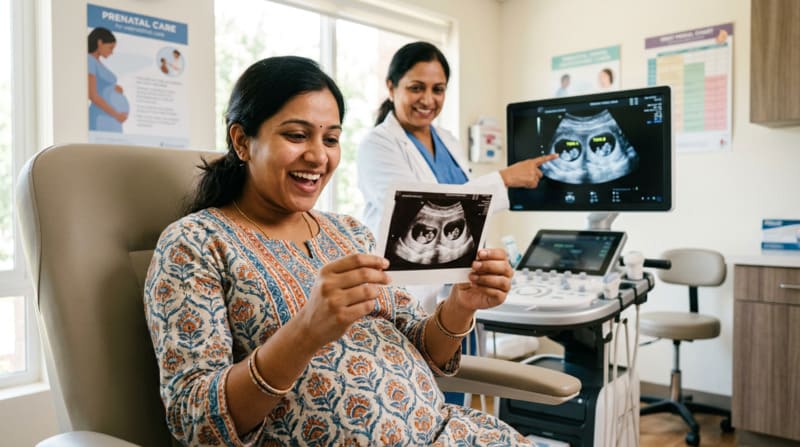
A transvaginal ultrasound can pick up two gestational sacs as early as 5 to 6 weeks, though some twins are only visible by 7 to 8 weeks. Two heartbeats are usually detectable between weeks 6 and 7. If your first scan shows one baby but your hCG is exceptionally high or symptoms are very intense, ask for a follow-up scan two weeks later — vanishing twin syndrome affects up to 30% of twin pregnancies in the first trimester.
The anatomy scan at 18 to 22 weeks confirms whether your twins are identical (sharing one placenta) or fraternal (two placentas). This information shapes the entire pregnancy monitoring plan, including frequency of scans, nutrition needs and delivery approach. Keep all scan reports together and share them at every visit.
Key Nutrition Differences for Twin Pregnancy
You need around 600 extra calories daily from the second trimester (compared to 300 for a singleton). Target 100g protein daily, 1200-1500 mg calcium, 30-60 mg iron and 1000 mcg folic acid — these are significantly higher than singleton requirements. Eat six small meals instead of three large ones to manage nausea and heartburn.
Hydration matters more with twins: 3 to 3.5 litres of water daily prevents Braxton Hicks and preterm contractions. Add nuts, seeds, paneer, eggs, dal, leafy greens, fortified cereals and milk. Your obstetrician will likely prescribe an additional iron and DHA supplement from week 14. Crash dieting, fasting or skipping meals is especially risky in twin pregnancy.
Risks That Need Extra Monitoring
Twin pregnancies carry a higher risk of gestational diabetes, preeclampsia, anaemia, preterm labour and low birth weight. Expect a prenatal visit every 2 weeks from week 24 and weekly from week 32. Growth scans are done every 4 weeks from week 24 to check that both babies are growing symmetrically.
For identical twins sharing a placenta (monochorionic), doppler scans check for twin-to-twin transfusion syndrome (TTTS) every 2 weeks. Blood pressure and urine protein are monitored at every visit. Know the signs of preterm labour — regular tightening, pelvic pressure, fluid leakage, reduced movement — and have a bag ready from week 28.
Delivery Options for Twin Pregnancies
Around 40% of twin deliveries in India are vaginal and 60% are C-section. Vaginal delivery is possible when both babies are head-down (cephalic), both placentas are separate (dichorionic) and there are no other complications. The second twin usually delivers 15 to 30 minutes after the first.
C-section is planned if the first twin is breech, babies share a placenta with risky positions, there are signs of growth restriction, or you have previous C-section history. Most twins are delivered between 36 and 38 weeks — carrying to 40 weeks is uncommon and often not recommended. Discuss your birth plan with your obstetrician by week 32.
Emotional and Practical Prep for Twin Parents
Twin pregnancies are physically and emotionally more demanding. Start planning childcare, feeding supplies and sleep arrangements by week 24. Build a support system — two babies means two of everything at 3 AM, so partner involvement and family help are not optional. Join twin parent communities early; their practical tips are unmatched.
Mental health support matters — anxiety and antenatal depression are more common in twin pregnancies. Regular short walks, prenatal yoga, journaling and weekly video calls with close friends all help. Budget for higher delivery costs, NICU possibility (30-50% of twins spend time in NICU briefly for monitoring) and the first year of doubled expenses.
Conclusion
The early signs of a twin pregnancy can be noticeably different from a singleton pregnancy. From elevated hCG levels to more intense morning sickness, rapid weight gain, extreme fatigue, and a faster-growing belly, twin pregnancies often bring more pronounced changes in the body. While some of these symptoms are common to all pregnancies, the difference between single and twin pregnancy symptoms is key to recognizing the possibility of carrying multiples. If you’re experiencing any of these signs in the first few weeks, it could be worth checking in with your doctor to confirm if you’re expecting twins!
Expert Resources on Twin pregnancy
For trusted medical guidance on twin pregnancy, refer to the American College of Obstetricians and Gynecologists (ACOG) which provides comprehensive information about multiple pregnancies. The World Health Organization (WHO) also offers important maternal health guidelines. For postnatal care of twins, visit HealthyChildren.org.
References & Sources
You May Also Like




Frequently Asked Questions
How do you know if you're pregnant with twins?
You might notice symptoms like higher hCG levels, more intense morning sickness, rapid weight gain, extreme fatigue, and a faster-growing belly. A doctor’s ultrasound is the most reliable way to confirm a twin pregnancy.
When did twin pregnancy symptoms start?
Twin pregnancy symptoms can start as early as the first few weeks, often around the time you miss your period, though symptoms may be more intense than with a singleton pregnancy.
Do twins cause more pain in early pregnancy?
Some women with twin pregnancies may experience more discomfort, such as heightened nausea, fatigue, and stretching pains due to the increased demands on the body.
What to avoid during twin pregnancy?
During a twin pregnancy, it’s important to avoid smoking, alcohol, excessive caffeine, strenuous physical activity, and certain medications without medical advice. Also, try to manage stress and follow a balanced diet for optimal health.