
Diaper Changing 101: Step-by-Step Guide for New Indian Dads
By Teddyy Editorial Team | Last Updated: July 6, 2026
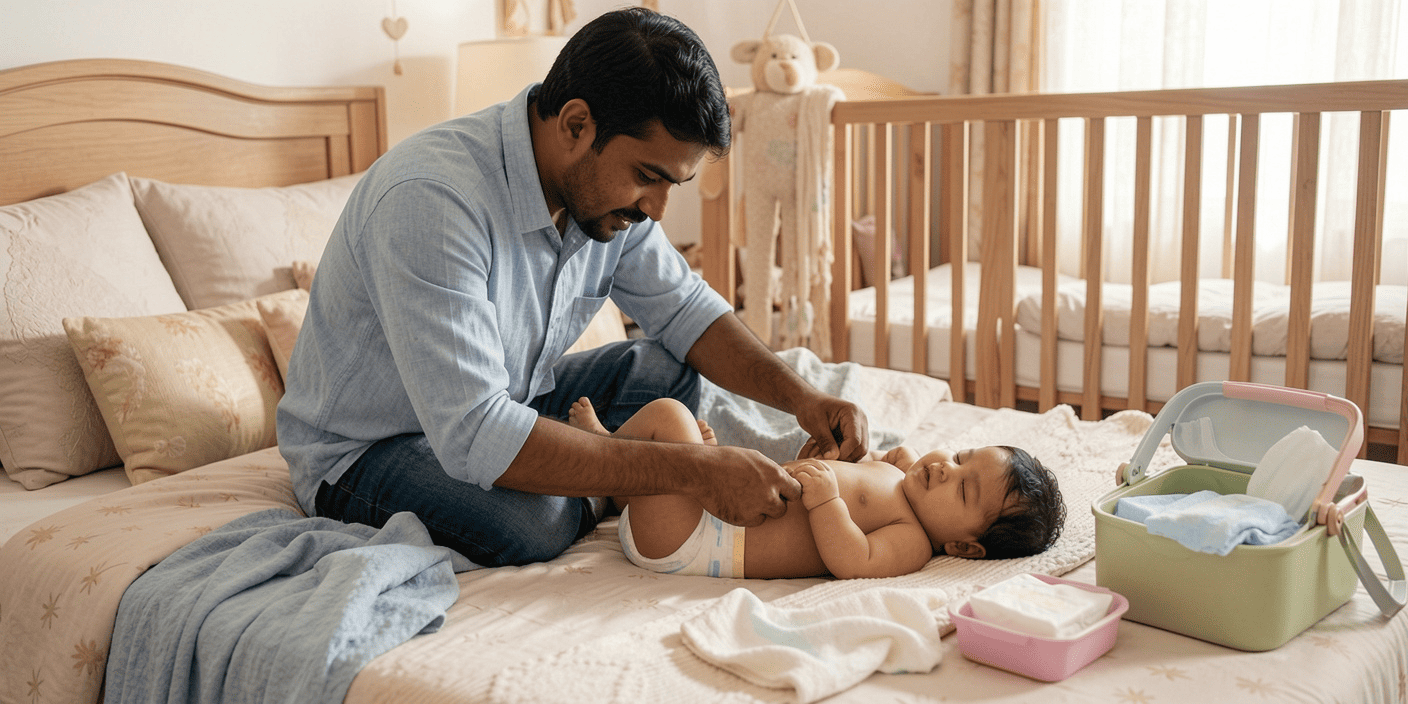
Having a baby comes with one funny surprise that nobody really warns you about. Suddenly, everyone around you becomes an expert. Your parents have advice, your relatives have advice, and even the neighbour who raised children years ago has something to share. Most of these conversations revolve around feeding, sleeping, and keeping the baby happy, but very few people take the time to explain one of the most important everyday parenting skills to new fathers: diaper changing. While it may seem simple, it can feel surprisingly overwhelming at first, making a little guidance go a long way.
Perhaps many still assume it falls under “mom duties.” Yet babies have never shown much interest in these social arrangements. When a diaper needs changing, they simply expect the nearest responsible adult to handle the situation.
That is why modern fatherhood looks different. Dads are stepping in more than ever before, and diaper duty is very much part of the job description. If you are a first-time father wondering where to start, this guide will help you avoid common mistakes and make diaper changes much less intimidating.
Step-by-Step Diaper Change Technique for Beginners
The first diaper change usually begins with confidence. The second usually begins with panic. Somewhere between those two moments, most fathers realise preparation matters more than skill. Before starting, keep everything nearby:
- Fresh diaper
- Baby wipes or cotton wool
- Clean clothes
- Rash cream if needed
- Diaper changing mat
- Disposal bag
Trying to search for wipes halfway through a diaper change is a mistake most parents make exactly once.
Start with a Safe Surface
A bed, a clean floor area, or a diaper change table can all work well. Many parents prefer using a diaper changing mat because it provides a comfortable surface and makes cleaning easier later.
Whatever surface you choose, keep one hand near your baby whenever possible. Babies develop new talents without warning. Rolling over usually arrives sooner than parents expect.
Remove the Diaper Carefully
Open the tabs gently and fold the front section down. Do not rush this part. Experienced parents know that babies occasionally have one final surprise left before the old diaper comes off completely.
Clean Properly
For baby girls, always wipe from front to back. For baby boys, clean carefully around the folds and creases. Just make sure the skin is completely clean before putting on a fresh diaper.
Let the Skin Dry
A few extra seconds allow moisture to evaporate naturally and help reduce irritation. Do not rush or skip this step.
Put on a Fresh Diaper
Slide the fresh diaper underneath and fasten it comfortably. The waistband should sit securely without looking tight. Many new parents prefer wetness indicator diapers during the newborn stage because they remove some of the guesswork, especially during sleepless nights. When looking for the best diapers for newborns, comfort and fit matter just as much as absorbency.
Diaper Changing on the Go: Handling Changes Outside Home
Babies have great timing! A diaper emergency rarely happens when you are sitting comfortably at home with all your supplies within reach.
It usually happens during a family wedding, a shopping trip, or while travelling somewhere important. That is why a well-stocked diaper bag becomes every parent’s secret weapon. Keep these essentials handy:
- Extra diapers
- Wipes
- Portable diaper changing mat
- Clothes
- Disposal bags
- Hand sanitiser
Night Diaper Changes: When to Change and When to Skip
One question appears in almost every new parent’s home. Should we wake the baby for a diaper change? The answer depends on what is inside the diaper.
If your baby has only urinated and is sleeping comfortably, there is often no need to interrupt their sleep immediately. If there has been a bowel movement, changing the diaper becomes important to prevent irritation.
This is where good diapers for newborn babies can make a noticeable difference. Teddyy diapers equipped with a super-absorbent core and anti-bacterial protection lock away moisture for hours. Our highly absorbent best diapers for newborns prevent rashes and keep your baby comfortable day and night.
Involving Indian Dads in Diaper Duty
For generations, diaper changing largely belonged to mothers. But things have changed now. Many Indian fathers today want to participate more actively in childcare. They attend doctor appointments, share night duties, and take equal responsibility for everyday parenting tasks. Diaper changing offers one of the easiest ways to build confidence with a newborn.
It also creates small moments that matter. A diaper change may seem routine, but babies learn familiarity through repeated care. Holding them, talking to them, and comforting them during those everyday moments strengthens the bond over time.
Diaper Rash Prevention Through Proper Changing Habits
Few things make parents feel more guilty than spotting a rash on their baby’s skin. The good news is that many cases can be prevented through simple habits.
Change Diapers Regularly
Babies have sensitive skin. Leaving a wet diaper on for too long increases moisture exposure and discomfort.
Clean Gently
Aggressive wiping rarely helps. Gentle cleaning usually works much better for newborn skin. Using a good quality, anti-bacterial baby wet wipes is ideal.
Allow Some Air Time
Many parents notice improvements when babies spend a few diaper-free minutes each day.
Choose the Right Diaper
The best brand of diapers for newborns is usually one that keeps things simple. A soft fit, good absorbency, and comfortable materials often matter more than fancy claims. Teddyy Premium Diapers are designed with these needs in mind, helping babies stay comfortable through active days and longer naps. Depending on your age and movements, you can choose from.
- Teddyy premium diaper pants with a super-soft stretchable waistband
- Teddyy easy tape diapers with refastenable sticker tapes for easy changes
Our best diapers for newborns have breathable materials that allow better airflow. They also have anti-bacterial protection for added hygiene and wetness lock technology that helps keep skin dry.
Watch for Early Signs
Small areas of redness often respond quickly when addressed early. Ignoring them rarely improves the situation.
Safe Diaper Disposal Practices in Indian Homes
A few simple habits can help keep the home cleaner and more hygienic:
- Roll the diaper tightly
- Fasten it using the tabs
- Place it inside a disposal bag
- Use a covered dustbin
- Wash your hands afterwards
Families with curious pets quickly learn why covered bins are important. Some parenting lessons arrive through experience. Others arrive through preventable disasters.
Conclusion
Like most parenting skills, diaper changing gets easier with practice. The first few attempts may feel awkward. A few weeks later, many parents find themselves changing without thinking about it. With a little preparation, the right technique in a well-fitting diaper can make the experience much smoother for both baby and parent. At Teddyy, we understand that the early months come with plenty of learning curves. That is why our diaper range is designed to make one part of parenting a little simpler.
Teddyy premium diaper and Teddyy easy tape best diapers for newborns have features like the following:
- Available in NB, S, M, L and XL sizes
- Soft and readable materials for comfort
- Stretchable waistbands and secure fitting
- Wetness lock technology
- Leak protection for up to 5-6 hours
Here is to easy and mess-free parenting!
FAQs
1. What is the correct technique for cleaning a baby girl vs boy during a diaper change?
For baby girls, always wipe from front to back to prevent bacteria from spreading. For baby boys, clean gently around the diaper area and skin folds. There is no need for excessive scrubbing. In both cases, make sure the skin is clean and dry before putting on a fresh diaper.
2. How do I handle umbilical cord stump care during diaper changes for a newborn?
The umbilical stump should stay as clean and dry as possible. Many parents simply fold the front of the diaper down below the stump to avoid rubbing or moisture buildup.
3. Should I use wipes or cotton wool for newborn diaper changes?
Both work well. During the first few weeks, many parents prefer cotton balls and warm water because it is gentle on the skin. Using wipes, choose a mild water-based option that is free from harsh ingredients and fragrances.
4. How can I ensure my baby’s safety on a changing mat?
Keep all diapering essentials within arm’s reach before you begin. Babies can become active and roll unexpectedly, even if they have never done so before. Always keep one hand on your baby whenever possible and never leave them unattended on a changing mat or elevated surface.
5. Is it necessary to use diaper cream at every change?
Not really. If your baby’s skin looks healthy and comfortable, a cream may not be needed every time. However, many parents use a barrier cream during long nights, loose stools, or whenever they notice early signs of redness.
6. What should I do if the baby pees or poops mid-change?
Unexpected urination or bowel movements during diaper changes are common, particularly in newborns and young infants. Clean your baby’s skin thoroughly, replace any soiled items, and ensure the changing area is dry before putting on a fresh diaper. Having essential supplies nearby can help maintain hygiene and make diaper changes more efficient.
You May Also Like



Frequently Asked Questions
What is the correct technique for cleaning a baby girl vs boy during a diaper change?
For baby girls, always wipe from front to back to prevent bacteria from spreading. For baby boys, clean gently around the diaper area and skin folds. There is no need for excessive scrubbing. In both cases, make sure the skin is clean and dry before putting on a fresh diaper.
How do I handle umbilical cord stump care during diaper changes for a newborn?
The umbilical stump should stay as clean and dry as possible. Many parents simply fold the front of the diaper down below the stump to avoid rubbing or moisture buildup.
Should I use wipes or cotton wool for newborn diaper changes?
Both work well. During the first few weeks, many parents prefer cotton balls and warm water because it is gentle on the skin. Using wipes, choose a mild water-based option that is free from harsh ingredients and fragrances.
How can I ensure my baby's safety on a changing mat?
Keep all diapering essentials within arm’s reach before you begin. Babies can become active and roll unexpectedly, even if they have never done so before. Always keep one hand on your baby whenever possible and never leave them unattended on a changing mat or elevated surface.
Is it necessary to use diaper cream at every change?
Not really. If your baby’s skin looks healthy and comfortable, a cream may not be needed every time. However, many parents use a barrier cream during long nights, loose stools, or whenever they notice early signs of redness.
What should I do if the baby pees or poops mid-change?
Unexpected urination or bowel movements during diaper changes are common, particularly in newborns and young infants. Clean your baby’s skin thoroughly, replace any soiled items, and ensure the changing area is dry before putting on a fresh diaper. Having essential supplies nearby can help maintain hygiene and make diaper changes more efficient.