
Indian Baby Weight Chart by Month: How It Affects Diaper Size Selection
By Teddyy Editorial Team | Last Updated: July 6, 2026
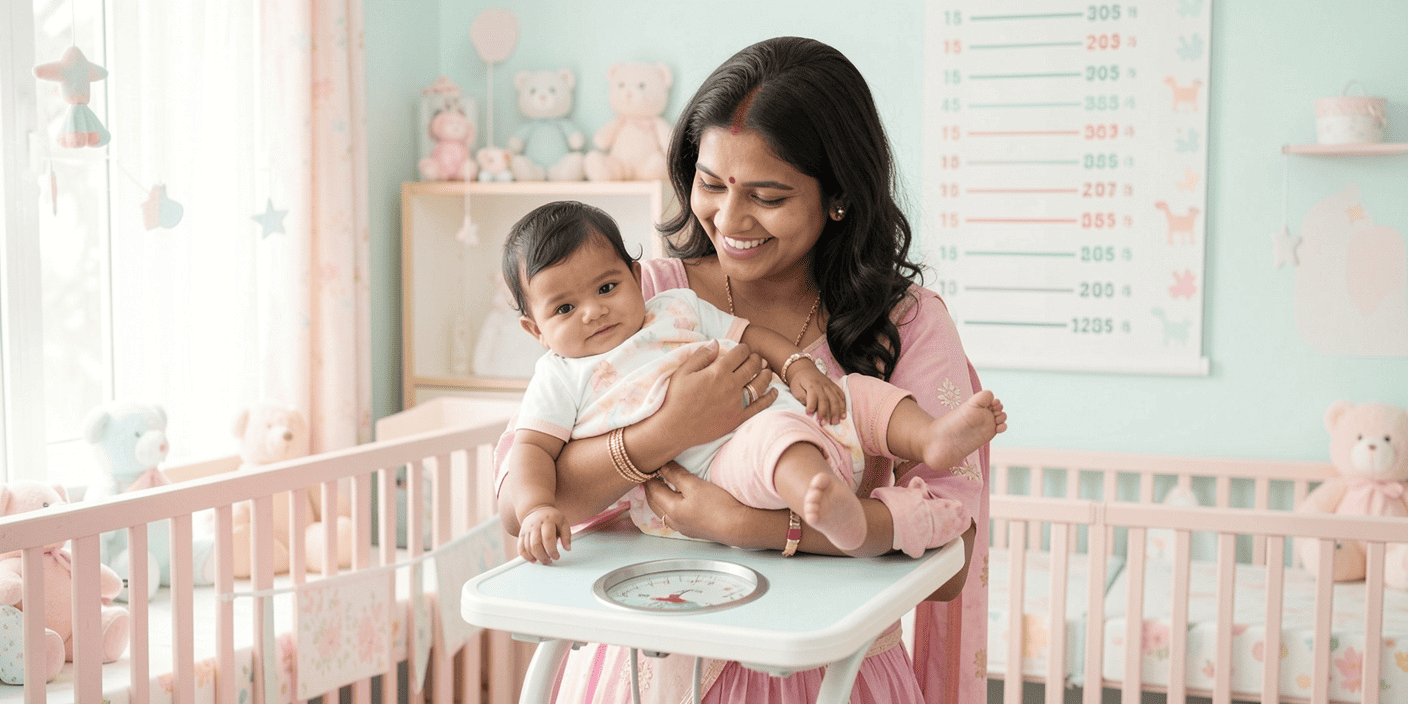
Babies grow faster than most parents expect. One day, their newborn clothes fit perfectly; a few weeks later, the sleeves seem shorter, and the diaper that worked so well suddenly starts leaking. These small signs are often the first indication that your baby has entered a new stage of growth. While parents carefully track feeding schedules, sleep patterns, and vaccination milestones, one important factor often gets overlooked: weight.
Your baby’s weight plays a crucial role in finding the right diaper fit. A diaper that fit comfortably a month ago may now feel too snug or fail to provide adequate protection. Understanding how to use a diaper size chart alongside your baby’s weight can take the guesswork out of choosing the right size, helping prevent leaks, improve comfort, and keep your baby happy throughout the day.
WHO vs Indian Baby Weight Standards: What Parents Should Know
Confused about which weight chart to trust for your baby? Here’s the simple answer: for babies under 5, doctors in India use the WHO chart. The Indian Academy of Pediatrics (IAP) has its own chart, but it recommends WHO standards for children below five years of age. The IAP chart kicks in only from ages 5 to 18.
So for your newborn or infant, the WHO chart is the right one. Here are the WHO median (average) weights:
| Age | Boys (kg) | Girls (kg) |
| Birth | 3.3 | 3.2 |
| 6 months | 7.9 | 7.3 |
| 12 months | 9.6 | 8.9 |
One thing to remember: it’s the growth pattern, not a single weight value, that matters. If your baby is gaining steadily, they’re likely doing fine. Always let your pediatrician make the call.
Many parents come across WHO growth charts during routine check-ups. The first instinct is usually comparison.
“My neighbour’s baby weighs more.”
“My baby seems smaller compared to the weight mentioned in the chart.”
That worry is common, but growth charts are only reference tools. They are not report cards. Babies can have different growth patterns depending on family genetics, feeding habits, and overall health. Instead of comparing babies, focus on steady growth. For diaper selection, your baby’s actual weight matters far more than averages printed on a chart.
Month-by-Month Weight Milestones & Matching Diaper Sizes
The first year brings constant changes. Some babies stay in one diaper size for months. Others seem determined to outgrow every pack in the cupboard. A general diaper size chart looks something like this:
| Baby Weight | Common Diaper Size |
| Up to 5 kg | Newborn diaper size |
| 5-10 kg | Small (S) |
| 10-15 kg | Medium (M) |
| 15-20 kg | Large (L) |
These ranges are only guides. Sometimes a baby reaches the upper end comfortably. Sometimes parents need to size up earlier because of leaks or tight marks.
Low Birth Weight Babies: Special Diaper Sizing Considerations
Not every baby is born with the same weight. Some newborns need extra care during the early weeks, including more attention to diaper fit. A regular newborn diaper size may sometimes feel loose around:
- The thighs
- The waist
- The lower back
When gaps appear, leaks usually follow. Many parents think buying a slightly larger diaper gives room to grow. In reality, a loose diaper often creates more problems than it solves. For smaller babies, comfort and fit usually matter more than sizing ahead.
Rapid Weight Gain Phases & Sudden Diaper Size Jumps
Babies grow up in the blink of an eye. You put them in a diaper on Monday. Two weeks later, the same diaper suddenly looks suspiciously small. Growth spurts often happen:
- During the first few months
- Around six months
- After introducing solid foods
Parents often notice clues before checking the scale:
- Red marks near the legs
- Frequent leakage
- Tighter waistband fitting
- A diaper that looks unusually full
If several signs appear together, a bigger diaper size may be needed.
How Breastfeeding vs Formula Feeding Affects Weight & Diaper Size
Every baby follows their own growth journey. Some are breastfed. Some are formula-fed. Many babies receive both. Feeding patterns can influence how quickly babies gain weight during the first year. Breastfed babies usually gain weight rapidly during the first few months. On the other hand formula for babies have a different growth pattern.
Because weight gain patterns vary, diaper size changes also happen at different times. A few parents notice their babies moving through baby diaper sizes quickly. Others stay in the same size longer than expected, irrespective of the feeding patterns.
There is no perfect timeline. The diaper pack may suggest an age range, but your baby’s weight tells a much clearer story. When in doubt, check the fit before checking the age recommendation.
Using Baby Weight Apps to Track Diaper Size Changes
Parents already use apps for everything these days. Sleep tracking. Feeding reminders. Vaccination records. Weight tracking can be useful too. You do not need anything fancy. A simple monthly record often helps parents spot growth trends before diaper problems begin. Tracking weight regularly can help with:
- Planning diaper purchases
- Avoiding unnecessary leaks
- Choosing suitable infant diaper sizes
- Reducing sizing mistakes
Wrapping Up
Diaper shopping becomes much easier when weight guides the decision. Age can provide a rough estimate, but babies rarely grow according to calendars. Some gain weight quickly. Others take their own sweet time.
That is why checking fit, comfort, and weight together usually gives the best results.
At Teddyy Diaper, we know every baby grows differently. Our diaper range is designed to support changing needs through every stage, from newborn diaper size options to larger baby diaper sizes. Because when the fit feels right, babies stay comfortable and parents worry a little less.
FAQs
1. Does the WHO baby weight chart apply accurately to Indian babies?
WHO charts are useful reference guides. However, healthy Indian babies may grow differently while still developing normally.
2. At what weight should an Indian baby move from newborn to size S diapers?
Most babies move to small diapers once they are close to 5 kg or when the newborn diaper begins feeling snug.
3. How do I read a baby weight percentile chart to choose the right diaper size?
To use a baby weight percentile chart for diaper sizing:
- Find your baby’s current weight on the growth chart.
- Ignore the percentile when choosing a diaper size, the actual weight matters most.
- Match your baby’s weight to the diaper brand’s size chart.
For example, if your baby weighs 8 kg, they will typically need a Size 3 diaper, whether they are in the 25th or 75th percentile. Also, if your baby is near the upper end of a size range or experiencing leaks, consider moving up to the next diaper size.
4. Is it normal for Indian babies to fall below standard diaper size weight ranges?
Yes. Babies grow at different rates. A proper fit is usually more important than matching average weight ranges.
5. How frequently should I weigh my baby to keep diaper size updated?
A weight check every few weeks during the first year is generally enough to track growth and diaper size changes.
6. Which diaper brands in India offer sizes calibrated to Indian baby weight ranges?
Most leading diaper brands use weight-based sizing. Parents should choose the diaper that fits their baby’s weight and body shape comfortably.