
Period-Like Bleeding During Early Pregnancy Causes, Signs & When to Worry
By Teddyy Editorial Team | Last Updated: May 3, 2026

Bleeding during early pregnancy can feel scary, especially when it resembles a period. It usually starts with a small moment of panic. A little bleeding appears, and it looks almost like a period. What was supposed to be a hopeful phase suddenly feels uncertain. Thoughts spiral. Is this normal? Is something wrong?
This situation is more common than most people talk about. Bleeding in early pregnancy does happen, but because it is not openly discussed, it can feel alarming when it happens to you unexpectedly. Not all bleeding means something is wrong, but it is also not something to ignore without understanding why it occurs.
Understanding the possible causes of bleeding during early pregnancy, the signs that are considered normal, and the situations that need medical attention can help bring clarity and a bit of calm during an otherwise confusing stage of pregnancy.
Key Takeaways
- Light, period like bleeding during early pregnancy can be relatively common.
- Bleeding in early pregnancy can happen for several reasons.
- Telling the difference between implantation bleeding and a period is not always easy.
- Bleeding during early pregnancy requires immediate medical attention if you notice the signs listed below:.
- Bleeding during your pregnancy can make you feel helpless, but there are steps you can take right away.
Is Bleeding Normal in Early Pregnancy
Light, period like bleeding during early pregnancy can be relatively common. In most cases, it does not mean anything is wrong. Around 20–30% of women experience some form of bleeding in the first trimester. However, statistics offer little comfort when it happens to you.
You deserve to understand what’s happening inside your body so that you can go ahead in your pregnancy journey without fear.
Common Causes of Period-Like Bleeding
Bleeding in early pregnancy can happen for several reasons. Some are completely harmless, and others require medical attention. You can respond to them calmly once you know the reasons behind them.
-
Implantation Bleeding
This happens when the fertilised egg attaches to the uterine lining. It occurs around 6–12 days after conception and can look very similar to a light period.
-
Hormonal Changes
Your body is adjusting rapidly. Hormonal fluctuations can cause spotting or light bleeding around the time your period would normally be expected.
-
Cervical Sensitivity
Your cervix becomes soft and sensitive due to increased blood flow during pregnancy. Intercourse, a pelvic exam, or even vaginal infections can cause light bleeding.
-
Subchorionic Hematoma
This is a small blood collection between the placenta and the uterus, and it can feel frightening when you hear about it for the first time. However, you can go on to have a completely healthy pregnancy even with this condition.
-
Miscarriage or Ectopic Pregnancy
Bleeding accompanied by severe pain, dizziness, or shoulder pain can be a sign of an ectopic pregnancy and should be evaluated immediately by a doctor. Paying attention to other symptoms when you are bleeding can rule out severe complications.
So, what are the 2 main causes of bleeding during pregnancy? The most common causes of light bleeding are implantation bleeding and hormonal changes. These are usually harmless, but bleeding should always be checked by a doctor.
Implantation Bleeding vs Menstrual Bleeding
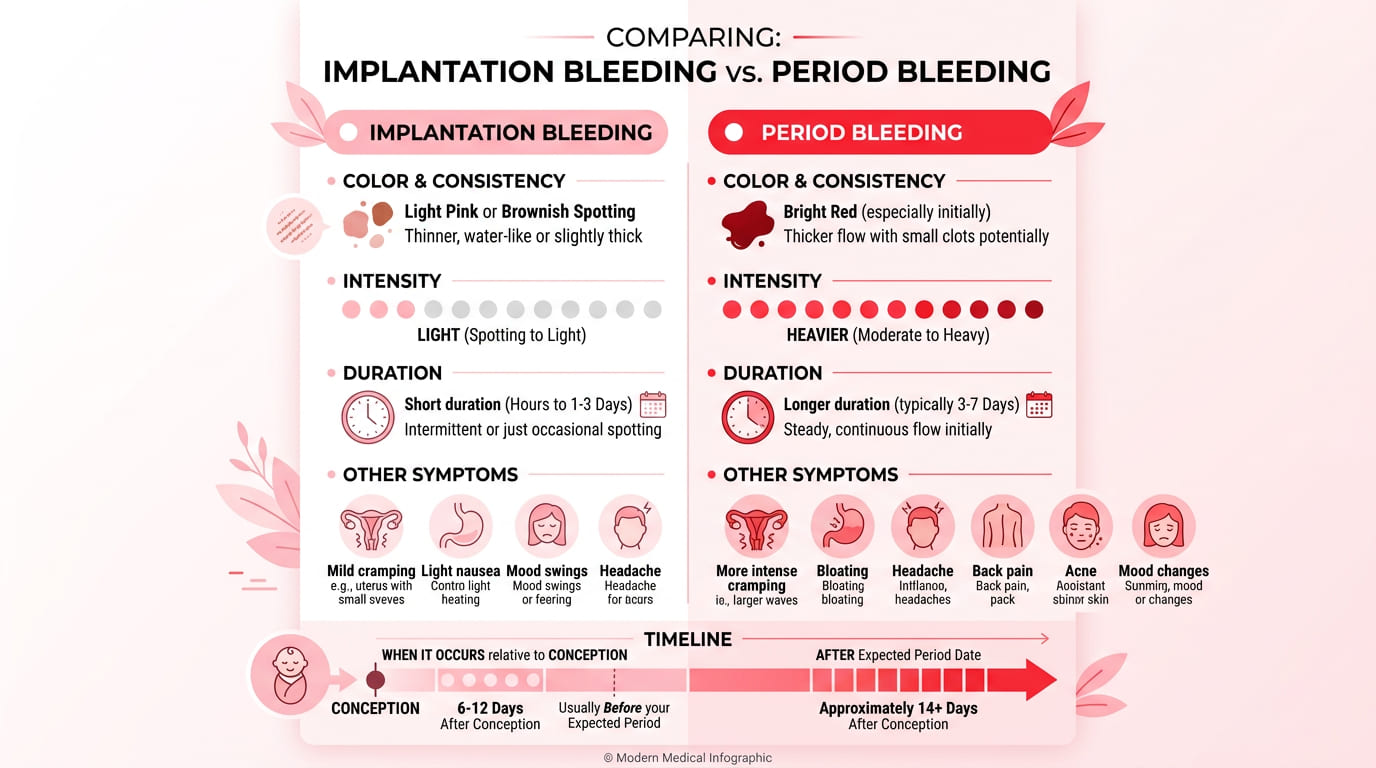
Telling the difference between implantation bleeding and a period is not always easy.
Look out for the following signs:
- Colour: Implantation bleeding is light pink or brown, while period blood is brighter red.
- Flow: Implantation bleeding is light and does not require frequent pad changes.
- Duration: It lasts a few hours to two days, unlike a regular period that lasts 4–7 days.
- Clots: Implantation bleeding does not include clots.
If you notice heavy flow with clots and strong cramps, it is less likely to be implantation bleeding and should be medically evaluated. You should set up an appointment with your gynaecologist at the earliest to prevent stress and address any possible complications without delay.
Warning Signs That Require Medical Attention
You should contact your doctor immediately if you notice the signs listed below:
- Heavy bleeding soaking through pads
- Severe abdominal or lower back pain
- Fever or chills
- Dizziness or fainting
- Pain on one side of the abdomen
- Bleeding with tissue or clots
If you notice bleeding during early pregnancy, trusting your instincts about discomfort is very important. Many women in India delay seeing a doctor due to fear, family advice, or the worry that they may be overreacting. You are not. Early medical care can be crucial for your pregnancy and your health. To support a healthy pregnancy, learn about the best dry fruits to eat during pregnancy.
What to Do If You Experience Bleeding During Pregnancy
Bleeding during your pregnancy can make you feel helpless, but there are steps you can take right away.
Stay Calm and Observe
Check the colour and amount of blood, and note whether it is accompanied by pain. This information helps your doctor understand the possible cause.
Rest Your Body
Lie down, avoid heavy household work, and reduce physical exertion. Many doctors may recommend temporary pelvic rest, which usually means avoiding intercourse for a short period.
Avoid Self-Medication
Don’t take painkillers or home remedies without consulting your doctor. Some medicines that seem harmless can affect your pregnancy.
Consult a Doctor Promptly
You can always get a medical opinion, even if the bleeding is light. An ultrasound or blood test can quickly clarify the situation.
You may ask how to stop bleeding during pregnancy first trimester. But the treatment depends on the cause. Rest, progesterone support, and avoiding physical strain are sometimes recommended, but proper medical guidance is essential.
Bleeding by Trimester: What Each Stage Suggests
Light spotting in the first trimester is most often implantation, hormonal shifts, or cervical irritation after sex or a transvaginal scan. Bleeding in the second trimester is less common and warrants a same-day call to your obstetrician — possible reasons include subchorionic haematoma, cervical insufficiency, or placental issues. Any third-trimester bleeding is treated as an emergency: placenta previa or abruption can develop quickly and need hospital assessment.
How Doctors Diagnose Bleeding in Pregnancy
Your doctor will start with a pelvic exam and a transvaginal ultrasound to confirm the pregnancy is in the uterus and check for a fetal heartbeat. Serial beta-hCG blood tests over 48 hours show whether levels are rising normally — falling or plateauing values can signal miscarriage or ectopic pregnancy. Your blood group is also checked: Rh-negative mothers may need an anti-D injection within 72 hours of bleeding to prevent antibodies forming against the baby.
Recovering Emotionally After a Bleeding Scare
Even when the scan is reassuring, the fear stays. It is normal to feel anxious, cry, or replay the moment for days. Talk to your partner honestly, limit late-night Googling, and ask the clinic for a follow-up scan in 1–2 weeks if it helps you sleep. If you have lost a pregnancy, allow yourself to grieve — counselling, support groups, and your obstetrician can guide you on when it is physically and emotionally safe to try again.
Conclusion
Pregnancy is not always about happy announcements. The fear at 3 a.m., silent tears in the bathroom, and questions you are scared to ask out loud are also a part of this journey. Period like bleeding during early pregnancy can be worrisome. Remember that this is not happening because of something you did.
Teddyy believes that every mother deserves comfort, care, and reassurance on the days that feel uncertain. Trust your body, and never hesitate to seek help. If you want to prepare for what comes next, read our guide on labour pain and stages of delivery. You have got this, and you do not have to go through it alone.
References & Sources
You May Also Like




Frequently Asked Questions
Is period-like bleeding normal in early pregnancy?
Light, period-like bleeding during early pregnancy can be normal, but it should always be discussed with a doctor to rule out complications. However, you should always get your doctor’s opinion to rule out complications.
How long does implantation bleeding usually last?
Implantation bleeding lasts from a few hours to two days. It is lighter than a period and the flow does not increase over time.
Can bleeding in early pregnancy indicate a miscarriage?
Heavy bleeding with pain is more concerning and requires immediate medical attention. Many women experience bleeding in early pregnancy, but go on to have healthy pregnancies.
Should you consult a doctor for light bleeding during pregnancy?
Light bleeding also deserves medical advice, especially in the first trimester. Early intervention can protect both you and your baby.
What precautions should be taken if bleeding occurs in early pregnancy?
You can watch out for other symptoms, rest, and follow your doctor’s advice. Get emotional support by talking to your partner or someone you trust in the family.