
Filter by Month

By Nobel Hygiene Team | Last Updated: January 6, 2026
3-Month Baby Guide: Longer Awake Windows & Hand Discovery
Remember when you were just trying to figure out which cry meant “hungry” and which meant “tired”? Now look at you and your baby! You’re three months in, and things are starting to settle into a bit of a rhythm (well, on most days, at least).
This is when your little one starts smiling on purpose, cooing like they’re having a full conversation, and spending more time awake between naps. They might even start discovering their hands, and, quite adorably, trying to eat them.
At this stage, you’ll notice so many exciting 3 month baby milestones, steadier head movements, smoother tracking, and maybe even the beginnings of a roll. It’s a big month for both of you, full of wonder, learning, and lots of little surprises along the way.
Growth & Milestones
By now, your baby is starting to show personality–those first belly laughs, playful kicks, and a sparkle of curiosity in their eyes. These are all part of the 3 month developmental milestones that mark a beautiful leap in growth and awareness.
Here’s what you can expect around this stage:
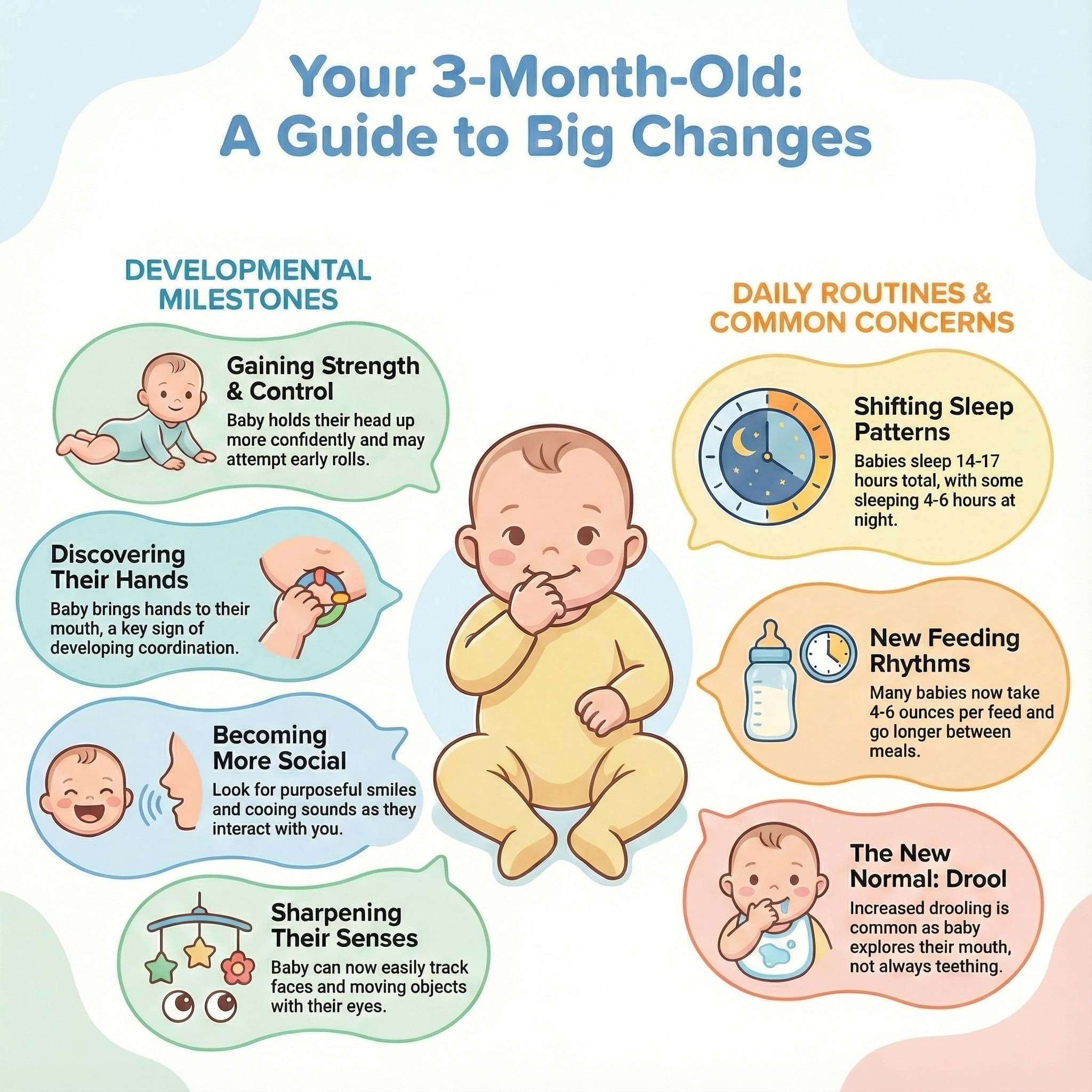
- Better head control: You’ll see your little one holding their head up more confidently during tummy time.
- Hand discovery: Babies start bringing their hands to their mouths, a key part of 3 month baby growth and early coordination.
- Tracking movement: Your baby can now easily track faces, toys, or bright objects.
- Early roll attempts: Some babies may begin to push off slightly during tummy time, which is an exciting sign of progress in 3 month old baby development.
These are all wonderful infant developmental milestones that show how your baby is learning through play, sound, and connection. Keep talking, singing, and smiling, your face is still your baby’s favourite toy!
Feeding & Sleep
Your baby’s feeding pattern may have changed a little. Many now take about 4–6 ounces per feed, and the gap between feeds may stretch longer. Some babies start sleeping longer at night, maybe even 4–6 hours in one go (a win for you too!).
Continue to follow your baby’s cues. They may still wake up often for comfort or shorter feeds, which is normal. Creating a gentle bedtime routine-a short song, dim lights, or a light massage–can signal that it’s time to rest.
In terms of sleep, your baby may still nap 3–5 times a day, totalling around 14–17 hours of sleep in 24 hours. Every baby’s rhythm is unique, so what matters most is that both of you get some rest.
This stage also supports steady 3 month baby growth, as regular feeding and rest go hand in hand with healthy baby development at 3 months.
Common Concerns
You might notice a few new things this month, such as drooling, for instance. While it can seem like part of the teething process, drooling at three months is often just your baby exploring their mouth.
Eczema or dry patches might appear on their cheeks or arms. Gentle moisturising after a bath can help. If you notice any red or oozing patches, your paediatrician can help you with treatment.
Congestion or mild colds are also common as your baby’s immune system develops. Saline drops or a humidifier (with your doctor’s advice) can make breathing easier.
And yes, you might find yourself changing more bibs and clothes than usual, but don’t worry at all–drool and milk dribbles are the new normal!
Diapering & Hygiene
- Day vs night strategy: Choose a high-quality diaper, like Teddyy diapers, to keep your baby dry and rash-free during the day and night. Ensure you select the right diaper size and change your baby’s diapers on a regular schedule to keep them clean and comfortable.
- Watch for rashes: The combination of sweat and diaper friction can irritate baby skin.
- Bath time: Continue 2–3 baths per week using mild cleansers.
- Laundry tips: For babies with drool rash or eczema, use soft, fragrance-free detergent and avoid harsh fabric softeners.
These small habits during your infant’s development not only protect their delicate skin but also keep them comfortable and irritation-free.
Doctor Visits & Vaccines
Your baby will likely have their follow-up vaccine doses this month, usually the second round of shots after the initial ones at 6–8 weeks. These may include vaccines for DTP, polio, and others as per your doctor's schedule.
During this visit, your doctor will:
- Check your baby’s weight and height–an important marker in tracking 3 month baby milestones .
- Discuss tummy time and neck strength.
- Address any feeding or sleep concerns you might have.
It’s a good time to ask questions about 3 month baby growth or changes you’ve noticed. No question is too small when it comes to your little one’s health.
Parent Self-Care
Between feeds, naps, and diaper changes, even finding time for a cup of tea can seem impossible. Here’s a small reminder, you’re doing great.
Make small adjustments that work for you:
- Pump milk in advance and store safely.
- Share baby care routines with your partner or caregiver.
- Take short breaks, even 10 quiet minutes can recharge your energy.
Parenthood isn’t about perfection; it’s about showing up with love, patience, and a whole lot of grace for yourself.
Conclusion
The 3 month developmental milestones are full of joy, your baby’s giggles, curious eyes, and growing awareness make each day brighter. You’re building a rhythm together, one feed, nap, and cuddle at a time.
These early days might be tiring, but they’re also fleeting. So, take a deep breath, smile at that tiny face, and remember, you’re doing a great job!
Frequently Asked Questions
1) Can I start a set nap schedule at 3 months?
Not yet. Most babies still have unpredictable sleep at this stage. Instead, follow their cues and gradually build a routine.
2) What are the signs that a baby is ready to roll?
You might notice your baby kicking more or rocking side to side. These are signs of developing strength, a key 3 month old baby milestone.
3) Is drooling always teething?
Not always! Around three months, drooling is usually just part of exploring their mouth, not teething.
4) What poop patterns are normal now?
Poop may become less frequent as digestion matures. As long as your baby is comfortable and feeding well, all’s good.
5) How much milk to pump per session?
This varies from mother to mother. Most pump about 2–4 ounces per session, but it depends on supply and feeding frequency.
6) Can I keep swaddling—when to stop?
Once your baby starts rolling or showing signs of it, it’s time to stop swaddling for safety. Switch to a sleep sack instead.