
5 Healthy Foods for a Healthy Baby
By Teddyy Editorial Team | Last Updated: April 23, 2026
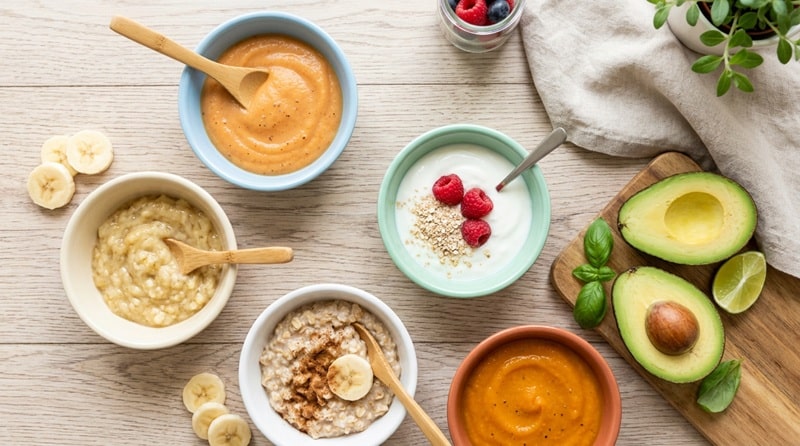
Providing healthy food to your baby is one of the most important responsibilities of parenthood. The right healthy food choices during the first years of life lay the foundation for lifelong nutrition habits. Understanding which healthy food options are best for your baby helps ensure proper growth and development.
Giving your baby the right healthy food from the start is one of the best things you can do for their growth and development.
It’s an exciting milestone when your baby is ready for solid food! It’s finally time for you to flex your cooking skills and time for your baby to reject all that you cook. ?
Feeding your baby something new also comes with its fair share of doubts and confusions. What can I feed my baby? How much will my baby eat? Is my baby even ready for solid food?
We’re going to answer it all in this blog!
How do I know if my baby is ready for solids?
In general, you can introduce your baby to solid foods when they are 6 months old or older. You can even start a month sooner if your baby gives you certain cues.
Yes, you read it right! Your baby can give you certain signals and cues when they’re ready. Here are a few:
1. They have good head control and can sit upright with little to no support.
2. They are unsatisfied with milk feeds and demand more.
3. They’re eyeing your plate and indicate that they too want to eat the same.
If you notice these cues, it’s time!
Moreover, by the time your baby turns 6-months old, breastmilk will still be a vital source of nutrients, but it won’t be enough by itself. So, for a healthy and strong baby, you need to introduce them to complementary foods, to keep up with their growing nutritional needs.
Feed your baby only homemade organic baby food.
A few tips before you actually begin introducing them to solid food:
- Consult your pediatrician to check for sure that your baby is ready.
- Always introduce one food at a time. This way it’ll be easier for you to check if your baby is allergic to any food.
- Leave a gap of three days in between feeding them new foods.
- Introduce new foods during breakfast or lunch as it will be easier to check for allergic reactions and treat them during daytime.
- Start by introducing them to liquids such as vegetable broth/water, strained clear soups, clear dal soups, etc. Gradually over a period, introduce them to mashed fruits and veggies.
What are healthy foods for babies?
We have a list of five food groups for you!
-
Fruits and vegetables
Quick DefinitionBaby care refers to the daily practices of feeding, bathing, diapering, and soothing an infant from birth through the first 12 months. Evidence-based baby care prioritizes safe sleep, skin-to-skin contact, and age-appropriate nutrition.
Babies learn through their five senses, and what better way to introduce solids to them than fruits and veggies. Fruits and vegetables come in all kinds of color, taste, fragrance, and texture, so there’s always something new for them to try out.
They are also high in vitamins, minerals, fiber, and antioxidants. These nutrients help promote healthy development in your baby. You can try pureeing fruits with water. Do not pair it with milk as it might be too much for your little one’s digestive tract. You can also feed them the water leftover from boiling vegetables.
-
Grain foods
Grain foods are a rich source of carbohydrates which provide the energy your baby needs as they grow, develop and learn. Grains are also excellent pre and probiotics that help your baby’s gut to build its population of good bacteria. Once your baby gets used to grain foods, they can easily transition to the meal cooked for the rest of the family.
You can try any mashed food made from rice, oats, wheat, barley or some other cereal grain.
-
Dairy foods
Dairy foods are great sources of protein and calcium. Babies, however, may not be able to digest cow’s milk, which may lead to dehydration and iron deficiencies. Cow’s milk is also known to cause allergies in babies. But other dairy products such as yoghurt is one of the best foods for baby brain development.
-
Healthy Drinks
For the love of your baby, STICK TO WATER! No fruit juice or sports drink for your little one for a very long time. After being exclusively breastfed, your baby can have cooled, boiled water once they are introduced to complementary foods.
-
Protein
Proteins play an important role in repairing and maintenance of tissues, and the growth of organ systems including the muscles and bones in babies.
Protein-rich foods include egg, cheese, meat, fish, poultry, beans, chicken peas, nuts, etc.
Growing babies and children who don’t get enough protein may experience various health issues including fatigue, poor concentration, bone and joint pain, slow wound healing and decreased immunity response.
Don’t expect your baby to lick the bowl clean from the very start, introduce things to them slowly and allow them to figure things out and get used to it at their own pace. Chances are your baby will end up rejecting all that you cook but keep at it!
While they’re at it, offer new foods to your baby, or offer the same foods in different ways, allow them to feed themselves, and eat together with them and let them learn from seeing you. Because at the end of the day, even eating is a process your baby has to learn, and you are their teacher.
Start with single-ingredient healthy food items and gradually introduce combinations.
Watch for any allergic reactions when trying new healthy food. Your pediatrician can guide you on the best healthy food introduction schedule for your baby’s age and development stage.
When to Introduce Solid Foods to Babies
The World Health Organization recommends exclusive breastfeeding for the first six months and starting complementary solids around the 6-month mark. Look for readiness cues: the baby holds her head steady, sits with minimal support, shows interest in family meals and has lost the tongue-thrust reflex. Starting too early can stress the kidneys and trigger allergies, while delaying past 7 months may cause iron deficiency. Begin with smooth, single-ingredient purees and gradually move to mashed and finger foods.
Iron-Rich Foods Every Baby Needs
Babies are born with iron stores that begin to deplete around six months, so iron-rich foods are non-negotiable. Mashed ragi porridge, moong dal khichdi, finely chopped spinach in dal, well-cooked egg yolk and pureed chicken liver (introduced cautiously) are excellent sources. Pair iron-rich foods with vitamin C-rich items like amla pulp, guava or mashed orange to boost absorption. Avoid giving cow’s milk as a main drink before one year because it can cause micro-bleeding and reduce iron absorption.
Healthy Snacks for Toddlers
Once your baby crosses one year, snacks become a daily ritual. Stick to simple, home-made options: cheese cubes, cucumber sticks, banana slices, ragi cookies, paneer tikka, idli pieces or boiled sweet potato cubes. Skip packaged biscuits, chips, juice tetra packs and chocolate bars that load up sugar, salt and preservatives. Two healthy snacks a day, between main meals, are enough to keep energy steady without spoiling appetite.
Foods to Avoid for Babies Under One
Honey carries the risk of infant botulism and should be avoided until 12 months. Cow’s milk as a primary drink, added salt, refined sugar, whole nuts (choking risk), unpasteurised dairy, raw eggs and high-mercury fish like swordfish are off-limits. Skip processed snacks, fruit juices and baby cereals high in added sugar. Always cut grapes, cherry tomatoes and small fruits into quarters and supervise every meal closely until the baby learns to chew well.
Sample One-Day Meal Plan for an 8-Month-Old
Morning: breastfeed or formula, then mashed banana with curd. Mid-morning: half a katori of ragi porridge made with milk. Lunch: moong dal khichdi mixed with ghee and finely mashed carrot. Afternoon: a small bowl of stewed apple. Evening: half a katori of suji upma or vegetable daliya. Bedtime: breastfeed or 100 ml of formula. Offer water in small sips between meals. Adjust quantities based on your baby’s appetite and never force-feed.
Common Feeding Mistakes Parents Make
The most frequent mistakes include adding salt or sugar before age one, mixing too many ingredients in a single meal, distracting babies with phones during feeds, and giving up on a new food after one or two refusals. Babies often need 8 to 15 exposures before accepting a new taste. Avoid bottle-propping, force-feeding and feeding on the go, all of which interfere with hunger cues. Sit together at one fixed spot and make meals a calm, social moment.
Frequently Asked Questions
How much food should a 6-month baby eat? Start with one to two teaspoons per meal and slowly grow to two to three tablespoons by 8 months. Can I add ghee to baby food? Yes — half a teaspoon a day from 7 months onwards aids brain development. Is fruit juice good for babies? Whole, mashed fruit is far better. Avoid juice before age one and limit to half a katori thereafter. What if my baby refuses solids? Continue offering, vary textures, and consult your paediatrician if refusal lasts more than a week.
Expert Resources on Healthy Food for Babies
The AAP provides detailed guidelines on introducing healthy food to infants. The WHO offers complementary feeding standards. Visit HealthyChildren.org for age-appropriate healthy food recommendations.
Related Articles
- Pregnancy Diet Plan Month by Month
- Importance of Prenatal Vitamins
- How to Change a Baby’s Diaper
- Best Baby Diapers in India
References & Sources
- World Health Organization (WHO). Maternal and Newborn Health. who.int
- Indian Council of Medical Research (ICMR). National Guidelines for Maternal Care. icmr.gov.in
- American Academy of Pediatrics (AAP). Caring for Your Baby. aap.org
- Indian Academy of Pediatrics (IAP). Child Health Guidelines. iapindia.org
- National Library of Medicine. Diaper Dermatitis. pubmed.ncbi.nlm.nih.gov
- National Institute of Nutrition (NIN). Dietary Guidelines for Indians. nin.res.in
You May Also Like




Frequently Asked Questions
What is the best baby food to start with?
There is no fixed set, or meal plan for baby foods you can start with, baby foods can be introduced in any order. Typically, pediatricians recommend starting with single-grain, iron-fortified rice cereal for 6-month baby food.
When to stop breastfeeding?
The decision to stop breastfeeding is a personal one. But the World Health Organization recommends exclusive breastfeeding for the first 6 months, and continued breastfeeding with the introduction of complementary foods up to the age of 2 years, or even more.
When can babies drink water?
Babies can drink water once they are 6 months old, or when you have decided to introduce complementary foods in their diet.
What is the best food for a 6-month-old baby?
Foods rich in nutrients that will help your baby grow, learn and develop healthily. Include food from the following four food categories in your baby’s diet:
- Fruits and vegetables
- Grain foods
- Dairy foods
- Proteins
Be sure to consult your pediatrician first!