
Surprising Benefits of Baby Massage
By Teddyy Editorial Team | Last Updated: April 23, 2026
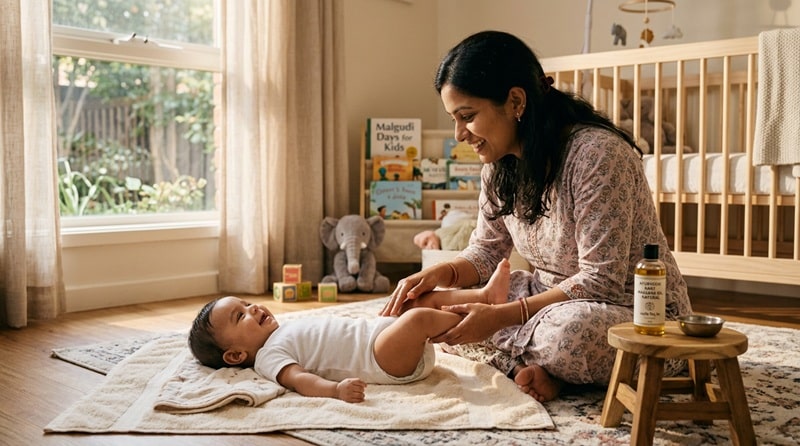
You know how it goes: The minute you put your baby down, they cry. Pick them up and, voila! – they’re all cheerful and smiley again. If just holding them in your arms can be so soothing, just imagine what a baby massage can do.
Key Takeaways
- There are many tips and tricks to patenting, but few are as effective and incredible as a baby massage.
- The AAP supports baby massage as beneficial for infant development.
Why Baby Massage Is Important for Development
There are many tips and tricks to patenting, but few are as effective and incredible as a baby massage. You’d be surprised to learn all the benefits of baby massage, which we’re here to do today. Moreover, baby massage is as simple as it is enjoyable, so get yourself some baby massage oil and have fun with your little one!
• Bonding
Rhythmic movement and affectionate touch are among the most powerful forms of communication between a parent and their baby. With each gentle stroke, your baby will feel loved and cared for. It teaches them that you are a trusted and stabilizing force in their life and allows for you two to bond together.
• Digestion
A newborn’s digestive system is still developing and might need a natural kick-start to get its job done properly. Baby constipation, colic and gas problems are some of the things that a tummy massage can aid with.
There are many specific massage patterns for your baby’s changing needs, there’s one specific for digestion and tummy aches too, ask an experienced mother and get yourself educated on all the specifics of how to massage a baby.
• Brain and Motor Development
Since, a massage traces everything from head to toe, it can be a really powerful sensory experience for your baby. This experience stimulates your little one’s brain and helps them develop finer motor skills as they grow up.
Remarkably, baby massage can also help with your child’s motor development if they have a developmental delay or disability.
• Teething
For some babies, teething is a time of pain, discomfort and crankiness and can be a huge stressor for both the baby and the parents. Massaging the jaw and gum line can alleviate the pain associated with teething. Doing a full body massage can also lessen teething pain as it calms their pain receptors and distracts them from teething.
• Baby Sleep
Not all babies ‘sleep like a baby’ and can wake up every hour or so, not only making you restless but your baby as well. Baby massage is one of the best ways to encourage sleeping in your restless baby.
It is calming to the nervous system and raises the levels of the feel-good hormone called oxytocin and decreases cortisol, a hormone associated with stress. As a result, your baby’s breathing and heart rate slows down and your baby becomes more relaxed and sleepy.
We recommend giving them a massage right after bath and before feeding which helps them relax prior to their bedtime.
• Immunity
Baby massage is also a great booster for a baby’s growing immunity system. It stimulates the blood flow throughout their body and assists the lymphatic system in draining the toxins away and out of their body. This keeps their internal organs and body functioning in a perfect condition.
Another thing to note is that, when babies are stressed and restless, their immune system becomes weak. So some good baby massage is just what you might need in the cold and flu seasons to get them through.
• Weight gain
Baby massage might even promote healthy growth in your baby, and it does it in two ways: By enhancing the release of growth hormones and by aiding in better digestion and absorption of nutrients in their growing phase. Premature babies especially seem to benefit from baby massages due to these properties.
Whether you’re soothing your baby’s indigestion or sending them to sleep paradise, a good massage can do wonders for your baby! The power lies right in your gentle fingertips, what’s holding you back!? Give your baby a massage right now! ?
Best Time to Start Baby Massage
Most paediatricians suggest starting gentle massage after the umbilical cord stump falls off, usually around 10 to 15 days after birth. Until then, soft strokes over clothing are enough. From the second week onward, daily oil massage before a warm bath becomes a calming routine. Choose a time when the baby is alert but not hungry — about 45 minutes after a feed. Pick a warm, draught-free corner and keep towels and clean clothes within arm’s reach so you never leave the baby unattended.
Choosing the Right Oil for Baby Massage
For Indian babies, traditional choices like cold-pressed coconut oil, sesame oil and olive oil work well in different seasons. Coconut oil is light and cooling for hot, humid months. Sesame and almond oil are warming and suit winters. Avoid mustard oil for newborns as it can irritate sensitive skin, and skip mineral or perfumed oils that block pores. Always patch-test a new oil on a small skin area for 24 hours, and store oil in a clean glass bottle away from sunlight.
Step-by-Step Baby Massage Technique
Warm a teaspoon of oil between your palms. Start with the legs — long strokes from thigh to ankle, gentle circular motions on the soles. Move to the tummy with slow clockwise circles around the navel to ease gas. Next, the chest with butterfly strokes outward from the centre. Massage the arms with the same long, downward strokes. Turn the baby gently and stroke the back from neck to bottom. End with the face — light circles on cheeks, soft pressure between the brows. Total time: 10 to 15 minutes.
Common Baby Massage Mistakes to Avoid
Pressing too hard, massaging right after feeding, using cold hands or cold oil, and skipping the patch test are the most common mistakes. Never massage if the baby has a fever, rash, vaccination soreness or is unwell. Avoid the soft spot on the head (fontanelle) and do not pull on the limbs. Stop immediately if the baby cries continuously, becomes stiff or shows discomfort. Massage should feel like a hug, not a workout — slow, warm and rhythmic.
Baby Massage by Age: What Changes
Newborns (0 to 3 months) need very gentle, short sessions of 5 to 10 minutes with the lightest touch. From 3 to 6 months, you can extend to 15 minutes and add gentle leg cycling and tummy strokes that aid digestion. From 6 to 12 months, babies enjoy more interactive massage with eye contact, soft singing and slightly firmer pressure. Toddlers benefit from massage focused on growing legs and back muscles, especially after busy crawling or walking days.
When to Avoid Baby Massage
Skip massage on days when the baby has a fever, an active skin infection, eczema flare-up, or has just received a vaccination. Avoid massaging immediately after feeds to prevent reflux and vomiting. If the baby has reflux, jaundice or any underlying medical condition, get your paediatrician’s clearance first. During the early weeks of teething, gentle face and gum massage helps, but avoid heavy strokes if the baby is irritable.
Massage and Baby Sleep: How They Connect
A consistent night-time massage routine helps the baby produce more melatonin, the sleep hormone, and reduces cortisol, the stress hormone. Babies who are massaged daily often fall asleep faster, wake up less and have longer sleep cycles. Combine massage with a warm bath, dim lights and a feed for the perfect bedtime sequence. This routine also signals to the baby that night is for rest, helping settle the day-night rhythm in the early months.
Frequently Asked Questions
How many times a day should I massage my baby? Once a day is enough. Twice daily is fine for older babies if they enjoy it. Can I massage my baby in winter? Yes — warm the room first, use slightly warmed oil, and dress the baby quickly afterwards. Is mustard oil good for baby massage? Better avoided for newborns. Coconut, almond or olive oil are safer for sensitive skin. Can grandparents massage the baby? Absolutely, as long as they follow the same gentle technique.
Expert Resources on Baby Massage
The AAP supports baby massage as beneficial for infant development. The WHO includes touch therapy in newborn care guidelines. For more tips, visit HealthyChildren.org.
Related Articles
- How to Change a Baby’s Diaper
- Best Baby Diapers in India
- Diaper Rash Causes and Remedies
- Taking Care of Yourself After Birth
References & Sources
- American Academy of Pediatrics (AAP). Caring for Your Baby. aap.org
- Indian Academy of Pediatrics (IAP). Child Health Guidelines. iapindia.org
- National Library of Medicine. Diaper Dermatitis. pubmed.ncbi.nlm.nih.gov
- National Institute of Nutrition (NIN). Dietary Guidelines for Indians. nin.res.in
- AAP. Safe Sleep Recommendations. aap.org/safe-sleep