
8-Month Baby Guide: Growth, Milestones & Parenting Tips
If you’ve noticed your little one trying to eat the TV remote, crawl toward the dog bowl or babble back when you say “no,” congratulations. You’ve officially entered the wonderfully unpredictable world of eight months.
This is the stage where 8 month old baby milestones start showing up in the funniest and most heart-melting ways. One minute, your baby is sitting like a pro; the next, they’re trying to chase a toy with a unique half-crawl, half-slide move.
And you? You’re juggling mealtimes, nap schedules, teething crankiness and the constant “Am I doing this right?” thoughts that every mother has.
Take a breath. You’re doing beautifully. Let’s walk through what this month looks like in real, everyday motherhood and how you can support your baby’s 8 month baby development with confidence.
Growth & Milestones
At eight months, your baby is becoming more independent, curious and expressive. These are some key 8 month baby milestones you may notice:
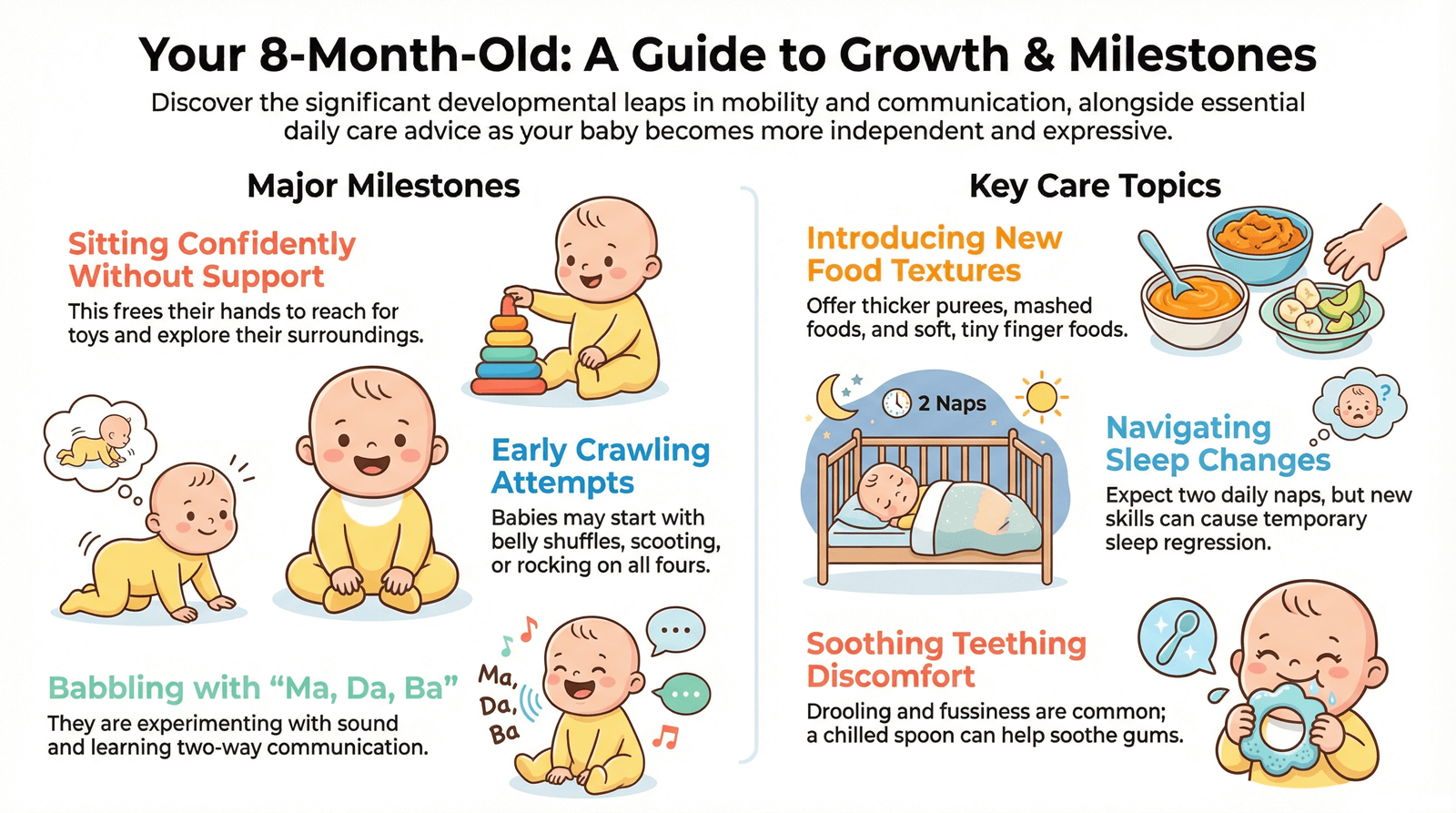
Sitting Without Support: Most babies can sit confidently by now. You’ll see them leaning forward to grab toys, twisting to look around and using their hands to balance. This steady sitting marks a big leap in baby development milestones because it frees their hands for more exploration.
Early Crawling Attempts: Some babies begin proper crawling this month. Others start with scooting, rocking on all fours or doing adorable belly shuffles. All of these fall within normal baby development stages month by month.
If your baby is not crawling yet, do not stress. Crawling has a wide range, and many babies begin closer to 9 or 10 months.
Pulling to Stand: Around 8 months, many babies start pulling themselves up to a standing position using furniture, crib rails, or your hands for support. This is a major milestone that builds leg strength and balance for future cruising and walking. Make sure heavy furniture is anchored securely as your baby becomes more adventurous.
Babbling and More Sounds: You’ll hear lots of “ba,” “da,” “ma,” and long strings of excited chatter. Your baby is experimenting with sound and learning that communication goes both ways. This is an important part of your baby’s development chart, even if they haven’t said any clear words yet.
Stronger Grasp and Hand Skills: Your baby may transfer objects easily from one hand to another, bang toys together, or explore textures with curiosity. These are all signs of healthy baby development month by month.
Feeding & Sleep
Introducing Textured Solids: By eight months, your baby is ready for thicker purees, mashed foods and soft textures like:
- Idli pieces
- Well-cooked dal
- Mashed rice
- Soft fruits like banana or chikoo
- Steamed carrots or sweet potato
This helps them progress through 8 month baby development safely and confidently.
Keep milk feeding steady as their main source of nutrition. Solids are still for exploration and nutrient support.
Finger Foods Begin: Most babies will love the opportunity to eat tiny pieces of soft finger food. Giving your baby these kinds of foods promotes independence and helps them develop fine motor skills. Make sure that finger foods are offered to babies as small, soft pieces that are easily mashed with their gums.
Sleep Patterns: Babies usually need two naps during this stage of development. New skills like crawling and teething can cause an inconvenience to your baby’s sleep cycle if you have established a routine for your baby.
Using the same types of consistent sleep cues (e.g., dimming lights, short lullabies, gently rocking your baby to sleep each night) will help your baby establish a rhythm for sleep, allowing your baby to be calm.
Common Concerns
Teething Fussiness: Teething pain for babies around the eight-month mark will cause your baby to drool, fret, and attempt to chew or gnaw on anything they find. If your baby is drooling excessively, try giving them a cold toothbrush or a chilled spoon to help soothe sore gums.
Sleep Regression: At this stage, many babies will begin waking up several times during the night as they learn to execute different skills. While nighttime wake-ups may seem overwhelming, rest assured that this is a normal part of normal brain growth and development.
Reassure your baby with calming sounds and a consistent bedtime routine.
Constipation With New Foods: As solids increase, stools change. If your baby strains or seems uncomfortable, offer water sips, fruits like pears or papayas, and include more fibre-rich foods.
Diapering & Hygiene
Teething Rash and Diaper Rash: Teething drool can sometimes irritate the skin, especially near the mouth, chest and neck. This drool also causes frequent mouth wiping, which increases moisture around the chin.
While this doesn’t directly affect diapers, teething can make your baby pee more frequently or get more irritable during changes.
A soft, absorbent diaper like Teddyy keeps your baby dry for longer stretches so their delicate skin stays protected through naps and playtime.
Hygiene With Solids: Mealtime is much messier now. Wipe hands, face and high-chair surfaces regularly to avoid skin irritation and bacterial buildup.
Water Sips in Open Cup: At this age, babies can practise tiny sips of water during meals. Open cups help improve oral motor skills and are recommended for long-term healthy habits.
Doctor Visits & Vaccines
At eight months, there are usually no scheduled vaccinations unless your baby is catching up on missed doses. However, your doctor may:
- Review growth patterns
- Track progress in 8 month milestones
- Evaluate eating habits
- Assess early mobility and posture
Most Indian paediatricians also remind parents about upcoming 12-month vaccines, which include MMR and booster doses.
Parent Self-Care
Your baby is moving more, eating more and demanding more attention. That means you’re giving more of yourself, too. Here are small things that help you recharge without needing long breaks:
- Prepare quick meal preps during weekends so weekday feeding feels smoother
- Rest when your baby takes their first nap of the day
- Ask a partner or family member to take over one daily task
- Step outside for five minutes of fresh air whenever you feel overwhelmed
- Drink water regularly. Exhaustion often feels worse when you’re dehydrated
You don’t have to “balance everything”. You just need gentle pauses so you can return to your baby feeling present.
Play & Stimulation
At 8 months, your baby is eager to explore everything within reach. Encourage development through interactive play that builds both physical and cognitive skills. Offer stacking cups, soft blocks, and containers to fill and empty. These teach cause and effect. Playing peek-a-boo and clapping games supports social development and memory. Let your baby bang objects together, turn pages in board books, and explore different textures safely. Supervised floor time with sturdy furniture nearby gives them the chance to practise pulling to stand. Narrate your daily activities to boost language development and always follow your baby’s lead during playtime.
Conclusion
There is no doubt that eight months is filled with an exciting assortment of curiosity, clingy behavior, lots of giggles and the thrill of new adventures.
As your baby continues to develop throughout the various 8-month baby milestones, it is important to remember that every child’s journey will differ.
Each time your baby tries something new, is experiencing something for the first time, or is simply learning about their environment, you are doing a great job of supporting and helping them.
Teddyy is here beside you, cheering you on through every step and milestone in your journey with your growing baby!
Frequently Asked Questions
1) Is my 8-month-old ready to crawl, or is scooting normal?
Both are completely normal. Some babies crawl on hands and knees, while others scoot on their bottom, army-crawl, or roll to get around. Every baby finds their own way to move. As long as your baby is showing interest in reaching objects and exploring, their motor development is on track.
2) How do I introduce textured and lumpy foods at 8 months?
Start by mashing foods with a fork instead of blending smooth. Offer soft finger foods like small pieces of banana, steamed carrot sticks, or well-cooked pasta. Let your baby explore textures at their own pace. Gagging is a normal protective reflex and is different from choking.
3) Why has my 8-month-old suddenly started waking at night again?
Sleep regressions around 8 months are very common. Your baby is learning new skills like pulling to stand and their brain is processing a lot. Separation anxiety can also cause night waking. Stick to a consistent bedtime routine and offer comfort without creating new sleep dependencies.
4) What are the best ways to manage teething pain at this age?
Offer chilled teething rings, cold washcloths, or refrigerated fruit in a mesh feeder. Gently massaging your baby’s gums with a clean finger can help. If your baby seems very uncomfortable, consult your paediatrician about age-appropriate pain relief. Avoid teething gels with benzocaine.
5) Should I worry if my baby has stranger anxiety?
Not at all. Stranger anxiety is a healthy developmental milestone that typically peaks around 8 to 10 months. It shows your baby has formed strong attachments and can distinguish familiar faces from unfamiliar ones. Be patient, avoid forcing interactions, and let your baby warm up at their own pace.
6) What toys and activities are best for an 8-month-old?
Stacking cups, soft blocks, board books with flaps, and containers to fill and empty are excellent choices. Playing peek-a-boo, clapping games, and simple cause-and-effect toys encourage cognitive development. Supervised floor time with safe objects to pull up on supports physical growth.