
Filter by Month

By Nobel Hygiene Team | Last Updated: April 18, 2026
8th Month Pregnancy: Braxton Hicks, Baby Position & Care
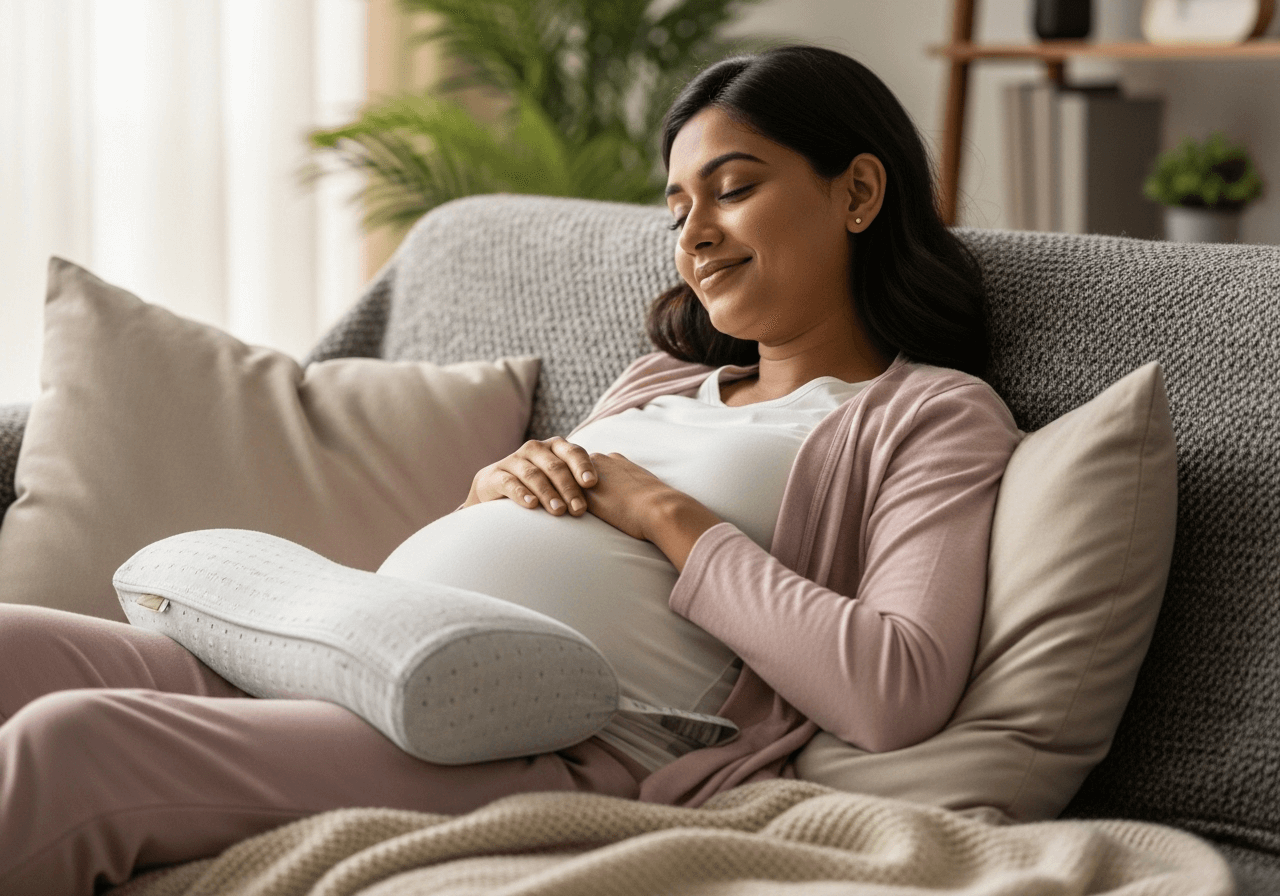
Welcome to Month 8 of pregnancy—you probably don’t even remember what it felt like not to be pregnant! The baby is putting on weight rapidly and your body is preparing for labour. This stage can feel physically challenging but also incredibly exciting. Let’s explore 8th month pregnancy symptoms, baby growth milestones, and the right care tips.
Preparing Mentally for Labour and Delivery
As your due date draws closer, it is natural for thoughts about labour and delivery to occupy more of your mind. Mental preparation is just as important as physical readiness.
Educate Yourself
Knowledge reduces fear. Attend a childbirth preparation class if you have not already. These classes explain the stages of labour, pain management options (including epidurals, natural techniques, and breathing exercises), what to expect during a caesarean delivery, and immediate postpartum care. Understanding the process helps you feel more in control when the time comes.
Create a Birth Plan
A birth plan is a document that outlines your preferences for labour and delivery. It can include your preferred pain management method, who you want in the delivery room, whether you want skin-to-skin contact immediately after birth, your breastfeeding preferences, and any cultural or religious practices you wish to observe. Share your birth plan with your doctor and birthing partner. Keep in mind that flexibility is important, as labour can be unpredictable and medical decisions may need to be made quickly.
Addressing Anxiety
Feeling anxious about labour is perfectly normal, even for experienced mothers. Talk to your partner, friends who have been through it, or a counsellor about your fears. Practice relaxation techniques such as deep breathing, progressive muscle relaxation, or guided meditation. Visualizing a positive birth experience can also help build confidence. Remember that your medical team is trained to handle any situation that arises, and their primary goal is the safety of you and your baby.
8th Month of Pregnancy Symptoms
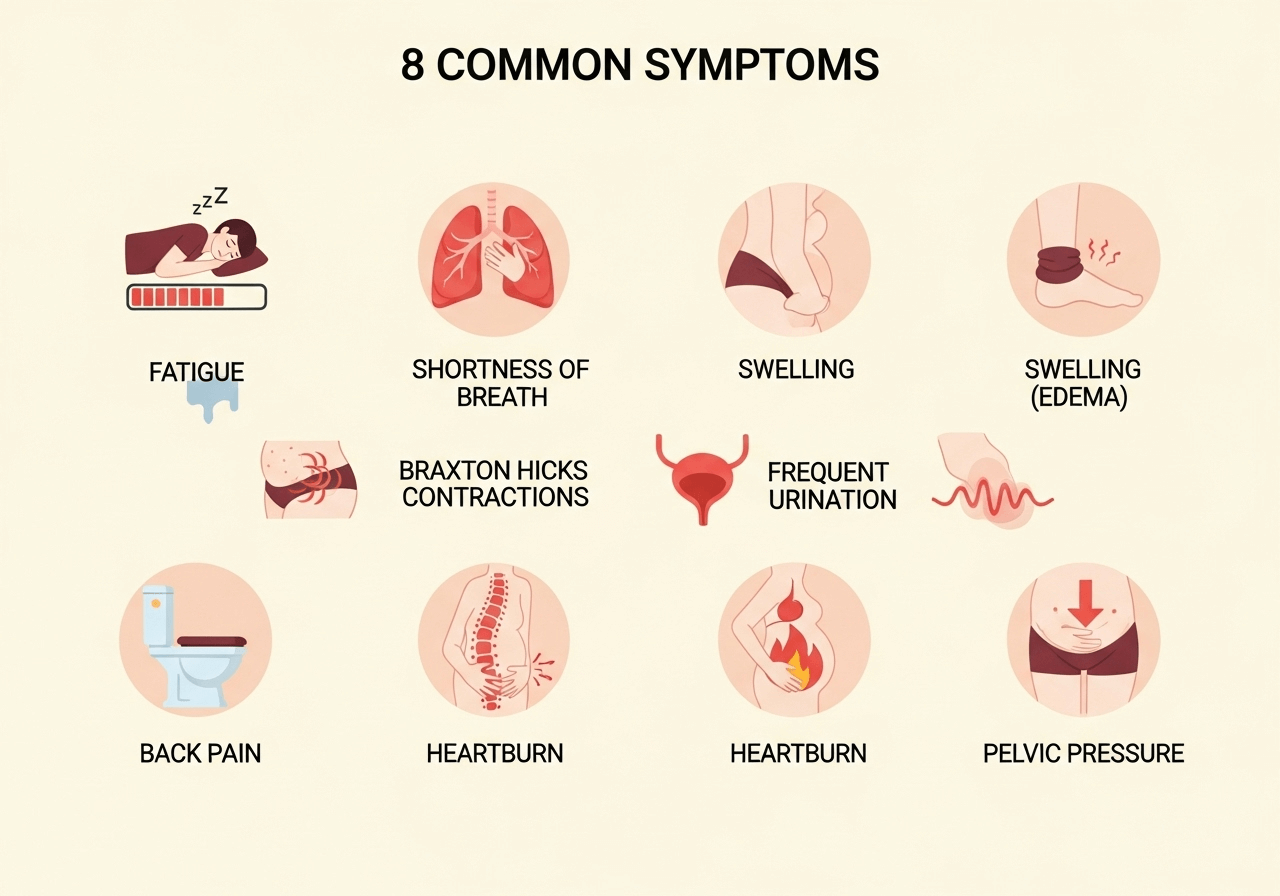 Braxton Hicks" style="width:100%; height:auto;" />
Common experiences:
- Stronger and frequent kicks
- Shortness of breath
- Increased fatigue and difficulty sleeping
- Frequent urination as baby presses on bladder
- Swelling in feet and hands
- Braxton Hicks contractions (more frequent now)
- Leaking colostrum (pre-milk from breasts)
When to Call Your Doctor
If you experience persistent contractions, vaginal bleeding or fluid leakage, or sudden/severe swelling, headaches, or vision changes, contact your doctor immediately. These could be signs of preterm labor or other complications.
Baby's Position and What It Means
During the eighth month, your doctor will start paying close attention to your baby's position in the uterus, as this affects how your delivery may proceed.
Head-Down (Cephalic) Position
This is the ideal position for a vaginal delivery. Most babies settle into a head-down position between weeks 32 and 36. You may feel hiccups low in your pelvis and stronger kicks near your ribs, which are signs that your baby is head-down. Approximately 96 percent of babies are in this position by the time labour begins.
Breech Position
A breech baby has their buttocks or feet pointing downward instead of their head. At 8 months, a breech position is not yet a concern, as many babies still turn on their own before delivery. Your doctor may suggest exercises to encourage turning, such as the hands-and-knees position, or a procedure called External Cephalic Version (ECV), where the doctor manually guides the baby into the correct position from outside your abdomen. If the baby remains breech, a planned caesarean delivery may be recommended.
Transverse Position
A transverse baby lies sideways across the uterus. Like breech, this usually resolves on its own as space decreases in the final weeks. If the baby remains transverse close to your due date, your doctor will discuss your delivery options.
How to Monitor Position at Home
Kick counting is a simple way to track your baby's activity and get a sense of their position. Set aside time each day to count movements. You should feel at least 10 movements within two hours. If you notice a significant decrease in movement, contact your doctor promptly.
What’s Happening in Your Body
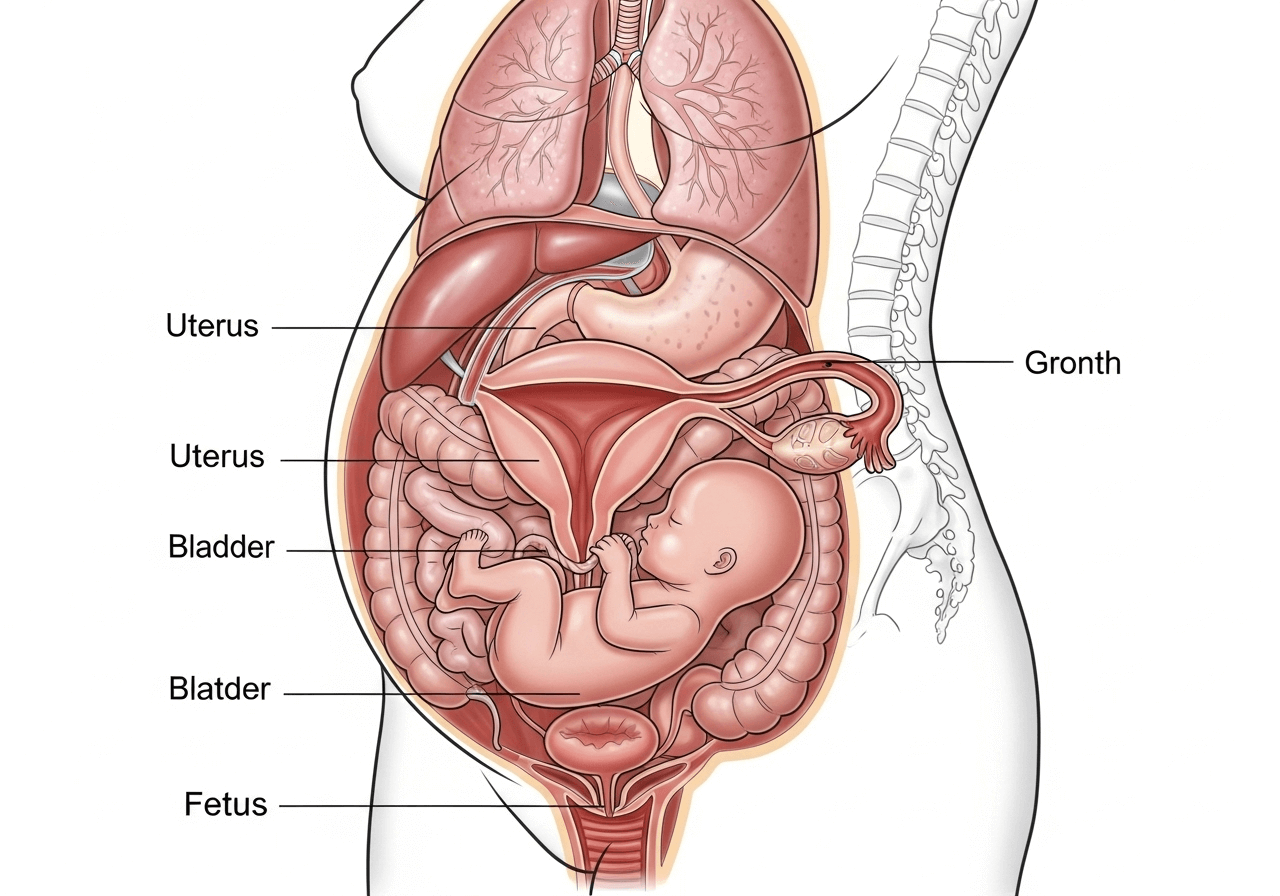
Uterus expands to maximum size, pressing on lungs and stomach.
- Increased pelvic pressure: As the baby moves lower.
- Heartburn and indigestion: May worsen.
- Breasts leak colostrum: In preparation for breastfeeding.
- Possible backaches, leg cramps, and swelling: Due to weight gain and circulation.
How Your Baby is Growing
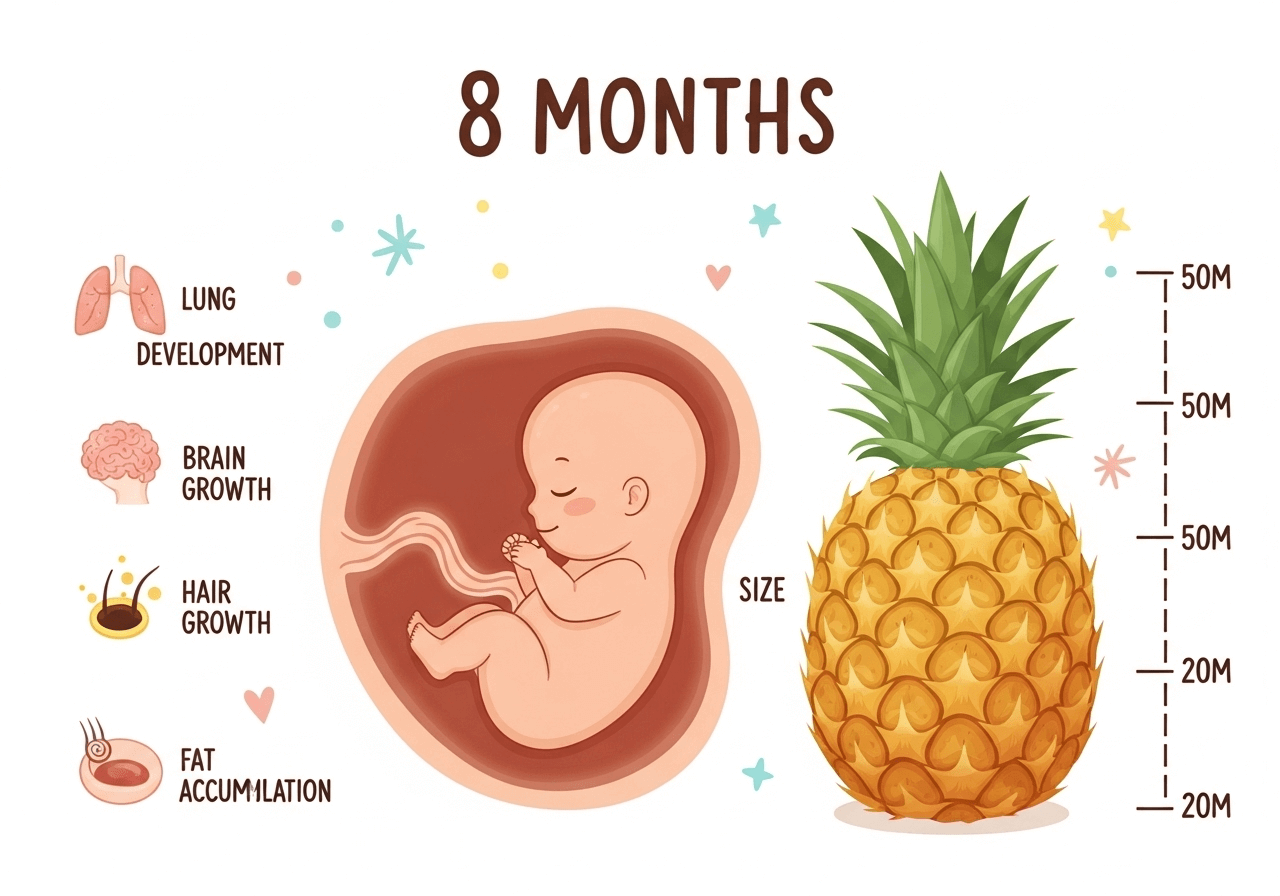
Size: By the end of month 8 of pregnancy, your baby may measure about 42–46 cm and weigh 1.8–2.7 kg—roughly the length of a pineapple and as heavy as a standard laptop.
Milestones
- The brain and nervous system: Continue developing rapidly.
- The baby's lungs: Are nearly mature but still strengthening.
- Kicks and rolls: Are powerful and noticeable.
- The baby is practicing: Sucking, swallowing, and breathing.
- Most babies turn head-down: In preparation for birth.
Hospital Bag Checklist for the 8th Month
With your due date approaching, packing your hospital bag this month ensures you are ready whenever labour begins. Having everything prepared in advance removes one source of stress during an already intense time.
For You
Pack comfortable nightgowns or pyjamas that open in the front for breastfeeding, a robe and slippers for walking the hospital corridors, nursing bras, disposable or comfortable underwear, toiletries (toothbrush, lip balm, hair ties, and your own shampoo and soap), your phone charger, snacks for during and after labour, and any comfort items like a pillow from home or a playlist of calming music. Bring loose, comfortable clothes to wear home, as your belly will still be larger than normal for several weeks after delivery.
For Baby
Your newborn will need a going-home outfit, a warm blanket or swaddle, a car seat (hospitals will not discharge you without one), diapers in newborn size, and wipes for those first nappy changes. Pack a hat and socks, as newborns lose body heat quickly. A changing mat is also useful for the hospital stay.
Important Documents
Keep your hospital registration papers, health insurance documents, ID proof, all prenatal test reports, and your doctor's contact information in a separate folder inside your bag. Having these organized and accessible saves time during admission.
Place your packed hospital bag near the door or in your car from week 36 onwards so you can grab it and go at a moment's notice.
Self-Care Tips + Nutrition
 prenatal vitamins" style="width:100%; height:auto;" />
Diet & Nutrition
- Eat smaller, frequent meals to ease indigestion.
- Focus on calcium, iron, protein, and fiber-rich foods.
- Drink plenty of water to reduce swelling and prevent dehydration.
- Limit caffeine and avoid alcohol, raw seafood, and high-mercury fish.
Lifestyle Habits
- Sleep on your left side with pillows for support.
- Practice breathing and relaxation exercises for labor prep.
- Gentle prenatal yoga or stretching can ease back pain.
- Avoid standing for long periods; elevate feet to reduce swelling.
Safety Guidelines
- Sleep on your left side for better circulation.
- Avoid heavy lifting or high-risk exercises.
- Continue avoiding alcohol, smoking, and raw foods.
Doctor Checklist
 hospital bag prep" style="width:100%; height:auto;" />
Tests & Scans
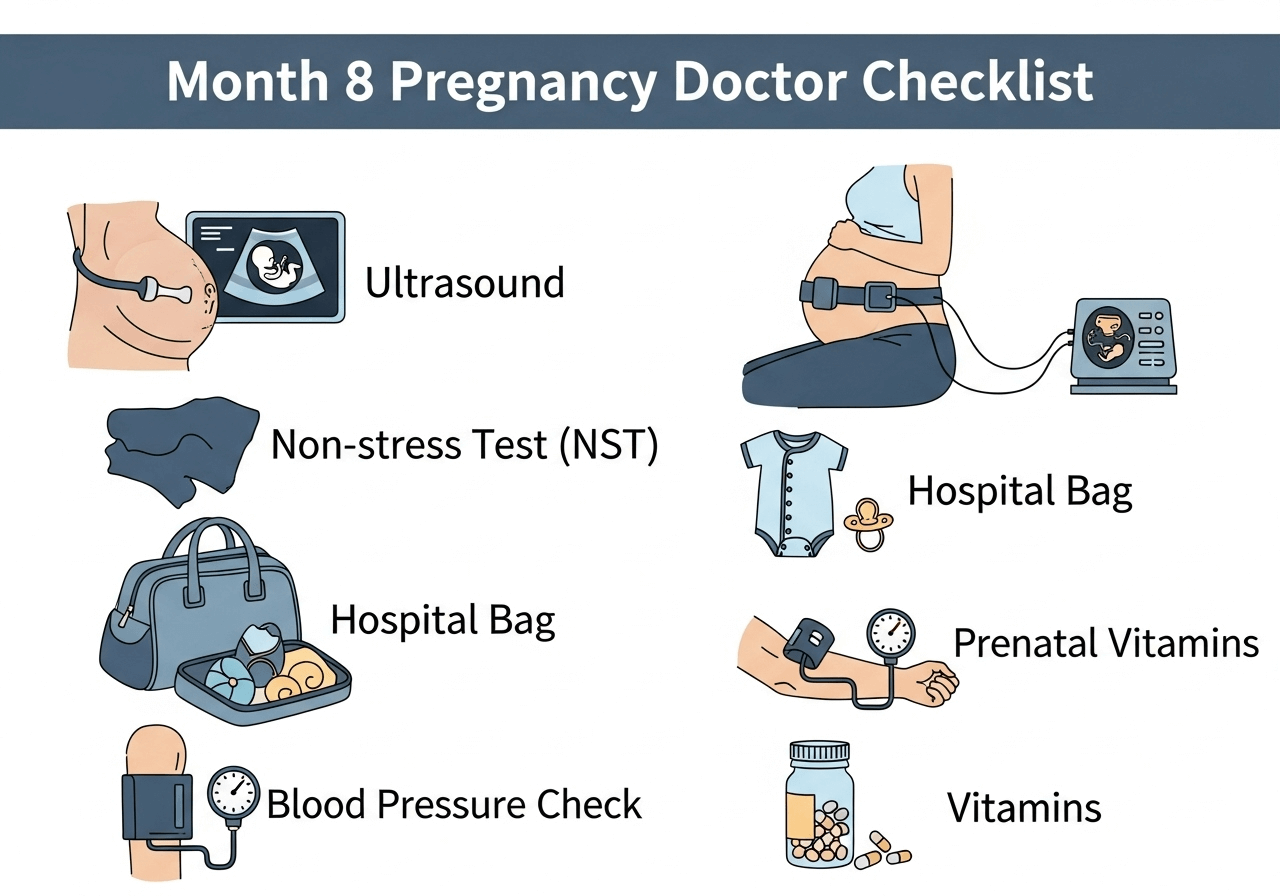
- Growth scan (ultrasound) to check baby’s size and position.
- Non-stress test (NST) if high-risk pregnancy.
- Routine checks: blood pressure, urine, weight, and heartbeat.
Questions to Ask
- Ask about signs of preterm labor and when to call.
- Prepare for labor classes and hospital bag essentials.
Reminders
- Continue prenatal vitamins.
- Track baby’s movement daily.
Related Guides
With delivery approaching, bookmark our 1-month baby care guide for essential newborn care tips you will need soon. Continue your pregnancy journey with our month 9 pregnancy guide.
FAQs
1. What are the common 8th month pregnancy symptoms?
In the 8th month of pregnancy, symptoms often include stronger baby kicks, fatigue, shortness of breath, heartburn, swelling in feet or hands, frequent urination, and Braxton Hicks contractions. Sleep may become more difficult as the belly grows. While most are normal, sudden swelling, severe headaches, or fluid leakage may signal complications and should be reported to your doctor right away.
2. How big is the baby at 8 months pregnant?
By the 8th month, your baby measures about 40–45 cm and weighs 2–2.2 kg, roughly the size of a pineapple. For more on earlier development, see 7 month old baby milestones. The baby's brain and nervous system are maturing rapidly, and fat layers are forming under the skin. Most babies settle in a head-down position this month, preparing for birth. Kicks and rolls are stronger, often making movements clearly visible on your belly.
3. Can I travel during the 8th month of pregnancy?
Most airlines restrict long flights after 36 weeks, but even in Month 8, you should travel only if your doctor approves. If traveling, choose short trips, stay hydrated, and avoid sitting too long. Always carry your medical records in case of emergencies. High-risk pregnancies, signs of preterm labor, or complications make traveling unsafe at this stage. Consult your doctor before planning any trip.
4. What foods should I eat in the 8th month of pregnancy?
In the 8th month, focus on:
- Iron-rich foods (lentils, leafy greens, beans)
- Calcium & protein (dairy, eggs, lean meats)
- Omega-3s (walnuts, salmon, chia seeds)
- Fiber-rich foods (whole grains, fruits, vegetables)
5. What foods should I avoid in the 8th month of pregnancy?
Avoid raw or undercooked meats, unpasteurized dairy, high-mercury fish like swordfish or shark, raw sprouts, and processed junk foods. Alcohol, smoking, and excessive caffeine (over 200 mg daily) should be strictly avoided as they can affect your baby’s brain and organ development. To reduce risks of infection, wash fruits and vegetables well before eating.
6. Can I go into labor in the 8th month of pregnancy?
Yes, preterm labor can happen in the 8th month, though many babies born at this stage survive with medical care. Signs include regular contractions, fluid leakage, vaginal bleeding, or sudden pelvic pressure. While not full-term, babies born at 34–36 weeks usually do well with neonatal support. Always seek medical help if you notice any labor-like symptoms this month.
7. What tests are done in the 8th month of pregnancy?
In Month 8, doctors may recommend:
- Growth ultrasound to check size and position
- Non-stress test (NST) for baby’s heartbeat
- Blood pressure and urine tests to check for preeclampsia
- Group B strep test (around weeks 35–37)
8. How can I relieve back pain in the 8th month of pregnancy?
To reduce back pain, maintain good posture, wear supportive shoes, and avoid standing for too long. Sleeping on your side with a pillow between your knees can help. Prenatal yoga, swimming, and light stretching relieve tension. A maternity support belt may provide added comfort. If pain is severe or persistent, such as postpartum pelvic pain, consult your doctor to rule out complications.
9. Is shortness of breath normal at 8 months pregnant?
Yes, shortness of breath is common in Month 8 because the uterus pushes against the diaphragm, leaving less space for your lungs. Try sitting upright, sleeping with extra pillows, and pacing activities to reduce discomfort. While mild breathlessness is normal, sudden or severe breathing difficulty should be reported to your doctor immediately to rule out other health issues.
10. How much weight should I gain by the 8th month of pregnancy?
By the 8th month, most women gain 10–14 kg (22–30 lbs) depending on pre-pregnancy BMI. A healthy weight gain supports your baby’s growth and helps maintain your energy. Doctors track your weight at each visit to ensure steady progress. Too little or too much weight gain can cause complications, so follow your doctor’s nutrition and exercise advice.
11. Can I exercise in the 8th month of pregnancy?
Yes, gentle exercises like walking, swimming, and prenatal yoga are safe for most women in Month 8. These activities reduce swelling, improve circulation, and relieve stress. Avoid high-impact sports, heavy lifting, or exercises that strain your back. Always consult your doctor before starting or continuing exercise, especially if you have pregnancy complications or preterm labor risks.
12. How do I prepare for delivery in the 8th month of pregnancy?
The 8th month is the ideal time to prepare for labor. Pack your hospital bag, finalize your birth plan, and attend childbirth classes. Discuss pain relief options and delivery preferences with your doctor. Stock up on newborn essentials and set up a safe sleeping space for your baby. Knowing early signs of labor helps you respond calmly and confidently when the time comes.
Conclusion
The 8th month of pregnancy can feel challenging, but it’s also the final stretch before meeting your baby. Focus on nutrition, rest, and following your doctor’s advice. Stay mindful of preterm labor signs and start preparing for your delivery journey.