

By Nobel Hygiene Team | Last Updated: April 18, 2026
9-Month Baby Guide: Exploring, Learning & Growing Strong
9 Month Baby Development: What to Expect This Month
You know that moment when you turn around for a second and suddenly your baby is halfway across the room, proudly pulling themselves up like they have discovered a new superpower? That is life with a 9-month-old. Surprising, busy, and incredibly heart-melting.
At this stage, your little one is not just growing; they are unfolding before your eyes. New movements, new sounds, new quirks. You see their world getting bigger every day.
And while these 9 month baby milestones feel joyful, they also raise questions. Are they eating well? Sleeping enough? Is this clinginess normal? Do these changes match typical 9 month developmental milestones?
If you have been wondering about any of this, you are in exactly the right place. This month is full of exploration, learning, tiny victories, and moments that make you pause.
Teddyy is right here with you like a supportive older sister who understands what you are going through.
Let us walk through everything that usually happens at this age and what you can do to make this phase smoother for both you and your baby.
Growth & Milestones
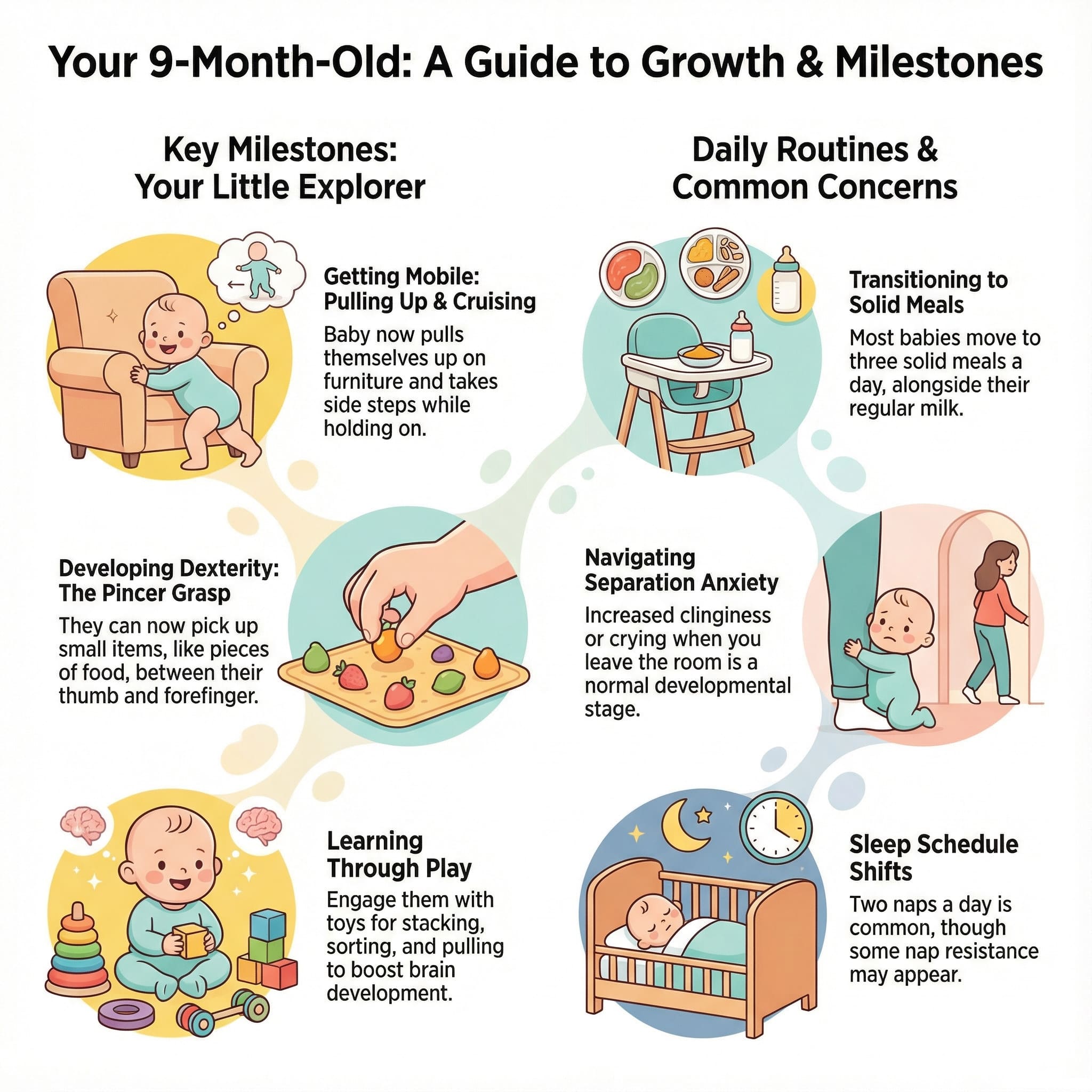
Around nine months, your baby becomes a little explorer, always on the move and curious about everything. You may notice that they pull themselves up on furniture and stand with support. These are key 9 month old milestones, and they show how much strength your baby has gained.
Many babies at this stage also practice cruising. That means they take tiny side steps while holding on to a sofa or table. This builds balance and confidence.
Another beautiful sign of progress appears in their hands. The pincer grasp develops, and your baby can pick up small pieces of food between their thumb and index finger.
This plays an important role in baby brain development by coordinating thinking, movement and curiosity together.
If you ever find yourself checking a baby boy growth chart out of worry, remind yourself that healthy growth is not a competition. Every child builds strength at their own pace.
Feeding & Sleep
This is the month when mealtimes look more structured. Most babies transition to three solid meals a day along with milk. Following your baby’s hunger signals keeps things simple.
You can offer mashed, minced or soft finger foods. Variety matters because food is one of the easiest ways to support baby brain development.
Your baby may also show more interest in holding food, tasting with their hands and exploring textures. It can get messy, but it is worth it. Mealtime is learning time.
Nighttime weaning often starts around this age. Some babies manage well with fewer night feeds, while others take a little longer.
Naps may change too. Two naps a day is common, but your baby might resist one occasionally. A calm pre-nap routine helps.
Common Concerns
Separation Anxiety: You may notice that your baby cries more when you leave the room. This is separation anxiety, and it is completely normal.
Short practice sessions help. Say a clear goodbye, step out briefly and return with reassurance.
Nap Resistance: Nap resistance appears because your baby is mentally active. Avoid overstimulation close to nap time and offer calming cues instead.
Diapering & Hygiene
A good diaper keeps your little one comfortable through movement, play and mealtimes. Teddyy diapers help your baby stay dry so they can explore without irritation.
At nine months, you can start gentle oral care. Introduce a soft baby toothbrush using only water and make it a fun ritual.
Basic hygiene habits matter now. Wipe hands frequently, trim nails regularly, and clean skin folds during bath time.
Doctor Visits & Vaccines
Routine doctor visits help evaluate growth, communication, motor skills and overall development at nine months.
If any vaccinations were missed earlier, this visit is a good opportunity to catch up.
Play and Stimulation
Your baby is active and curious. Play ideas that encourage movement build strength, while finger-based activities improve coordination.
When choosing baby brain development toys, look for stacking, sorting, pulling or turning actions.
Simple household items like bowls or measuring cups can be just as engaging as toys.
Parent Self-Care
This is a clingy phase, and it is okay to feel tired. Ask for help when needed and allow yourself short breaks.
Even ten minutes of rest, fresh air or quiet time can help you reset.
Conclusion
This month brings growth, emotion and discovery for both you and your baby. As you guide your little one through 9 month baby development, remember that you are doing enough.
Teddyy is here to support you through every milestone, challenge and joyful moment.
Related Guides
Our ninth month pregnancy guide covers labour signs and delivery preparation that every parent should know. Also, see what to expect next in our 10-month baby guide.
Frequently Asked Questions
1. How much solid food should a 9-month-old eat?
Most babies eat three small meals a day along with milk. Follow your baby’s hunger cues rather than fixed quantities.
2. What if my baby refuses to nap?
Offer a calming routine and reduce stimulation. If naps fail, an earlier bedtime can help.
3. How do I handle separation anxiety?
Say a clear goodbye, step out briefly and return with reassurance. Practice helps ease anxiety.
4. When should I start brushing my baby’s teeth?
As soon as the first tooth appears, using a soft baby toothbrush with only water.
5. Can my baby drink water now?
Small sips of water between meals are safe, but milk should remain the main source of hydration.
6. What are fun play ideas for 9-month-olds?
Stacking toys, musical toys, soft blocks, books and safe household items work well.