
Filter by Month

By Nobel Hygiene Team | Last Updated: April 18, 2026
9th Month Pregnancy: Labour Signs, Baby Growth & Delivery
 hospital bag before delivery" style="width:100%; height:auto;" />
Kudos to you, mumma! You’ve run the race (or maybe waddled through most of the way), and now you’re almost at the finish line! Your body is now preparing for the delivery, and your baby is almost ready for the outside world.
As you enter this final lap, we’re sure you’re very excited and maybe even a little anxious—don’t worry, it’s completely normal to freak out a little. We’re sure that once you reach the end of this guide, you’ll feel more at ease. Let’s explore 9th month pregnancy symptoms, baby growth milestones, and doctor’s checklist to guide you safely to delivery.
9th Month of Pregnancy Symptoms
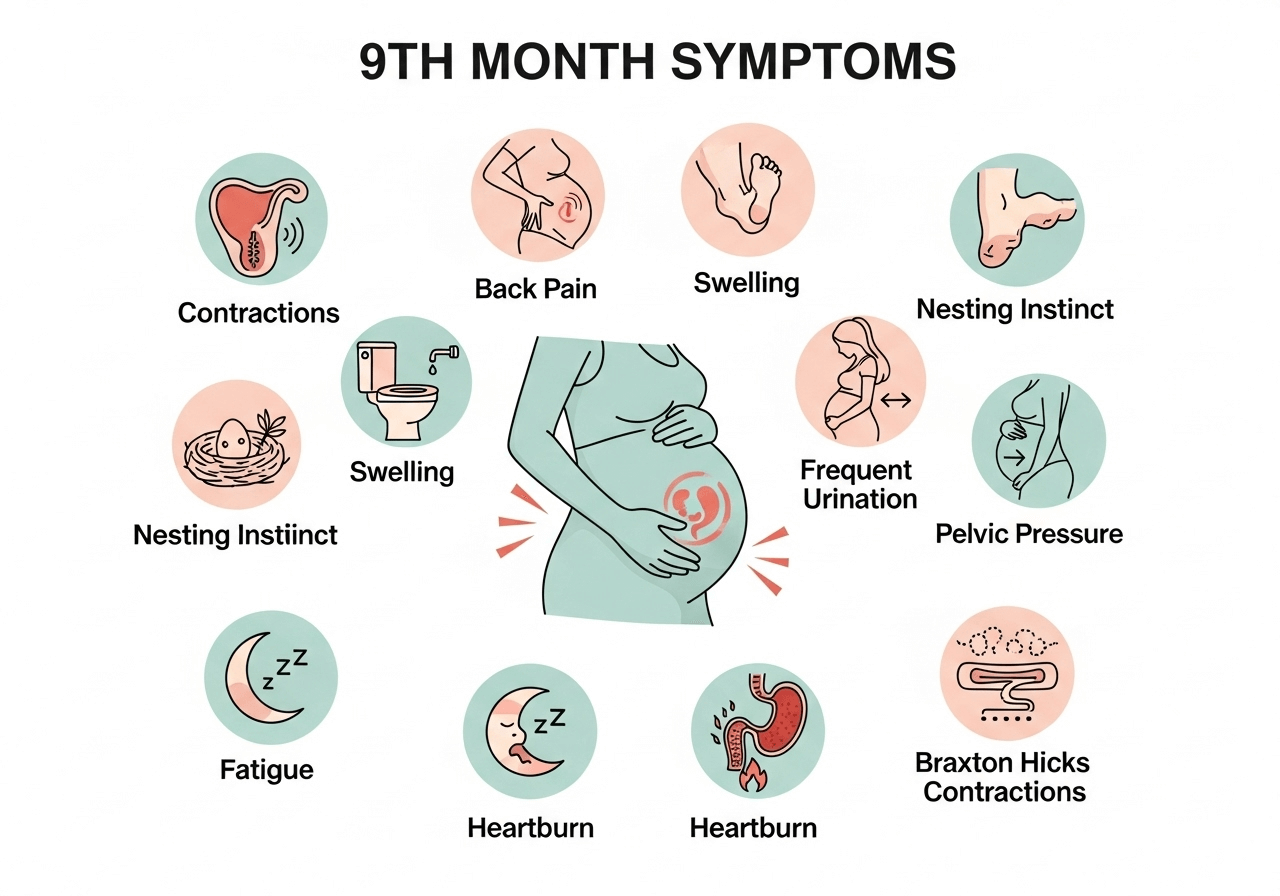
You may experience:
- Pelvic Pressure: Baby drops lower, creating heaviness in your pelvis.
- Frequent Urination: Baby’s head pressing on the bladder increases the urge to urinate.
- Back Pain: Extra strain and baby’s position can worsen your discomfort.
- Trouble Sleeping: Frequent bathroom trips, heartburn, and discomfort keep mums awake.
- Fatigue: Your body is working very hard at this point, so you will feel the need to sit or lie down more often.
- Braxton Hicks Contractions: You may feel strong cramp-like sensations, but they won’t be regular like real labor.
When to Visit Your Doctor
If you experience decreased baby movement/unusual kick patterns, regular contractions that increase in intensity, water breaking (a trickle or gush of fluid), heavy bleeding, severe headaches or blurry vision, contact your doctor immediately. These could be signs of preterm labor or other complications.
Signs That Labour Is 24 to 48 Hours Away
As you enter the final weeks, every twinge and ache may make you wonder whether labour is starting. While every woman's experience is different, there are several signs that suggest labour may be imminent.
Mucus Plug and Bloody Show
Throughout pregnancy, a thick plug of mucus seals the cervix to protect your baby from infection. As your cervix begins to dilate and thin (efface), this plug is released. It may come out as a single glob or gradually over several days. It can be clear, pink, or tinged with blood. A "bloody show" refers to mucus mixed with small amounts of blood, which indicates that your cervix is actively changing. Labour typically follows within hours to a few days.
Lightening (Baby Drops)
In the days or weeks before labour, your baby descends deeper into your pelvis. This is called lightening or "dropping." You may notice that breathing feels easier and heartburn improves, but you may also feel increased pressure on your bladder and pelvic area. For first-time mothers, lightening often occurs two to four weeks before delivery. In subsequent pregnancies, it may not happen until labour begins.
Nesting Instinct
Many women experience a sudden burst of energy and an overwhelming urge to clean, organize, and prepare their home in the days before labour. This nesting instinct is thought to be driven by hormonal changes. While it is fine to channel this energy productively, avoid overexerting yourself. Save your energy for the marathon ahead.
Other Signs to Watch
Loose stools or diarrhoea are common in the 24 to 48 hours before labour as your body releases prostaglandins that soften the cervix. Increased lower back pain, menstrual-like cramps, and restlessness or difficulty sleeping may also signal that your body is gearing up for delivery. When true contractions begin, becoming regular and progressively stronger, it is time to contact your doctor or head to the hospital.
What’s Happening in Your Body
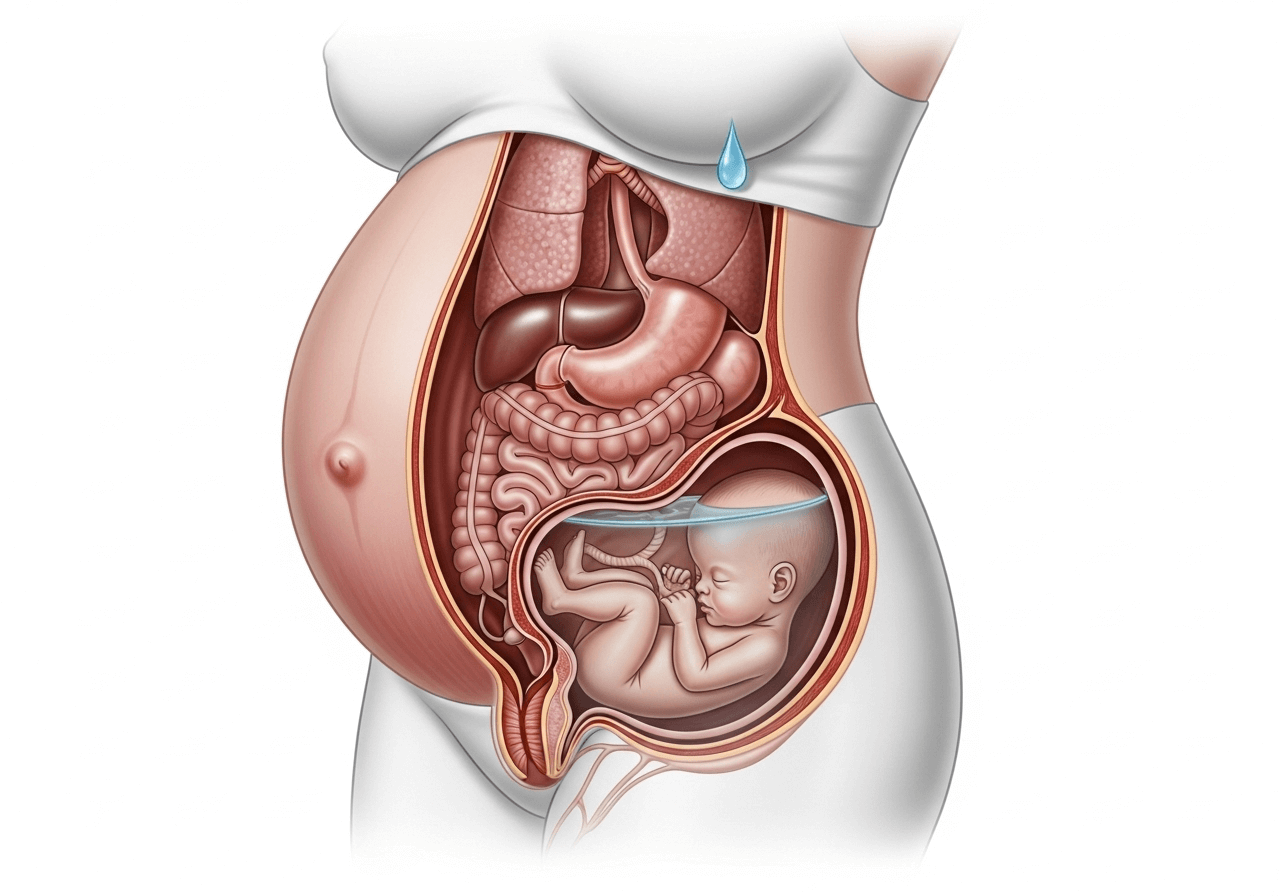
Uterus reaches maximum size, causing pelvic pressure.
- The baby's head: Often engages in the pelvis (“lightening”).
- Shortness of breath: May reduce as the baby moves lower.
- Colostrum leakage: May increase.
- Increased vaginal discharge: Is common.
How Your Baby is Growing
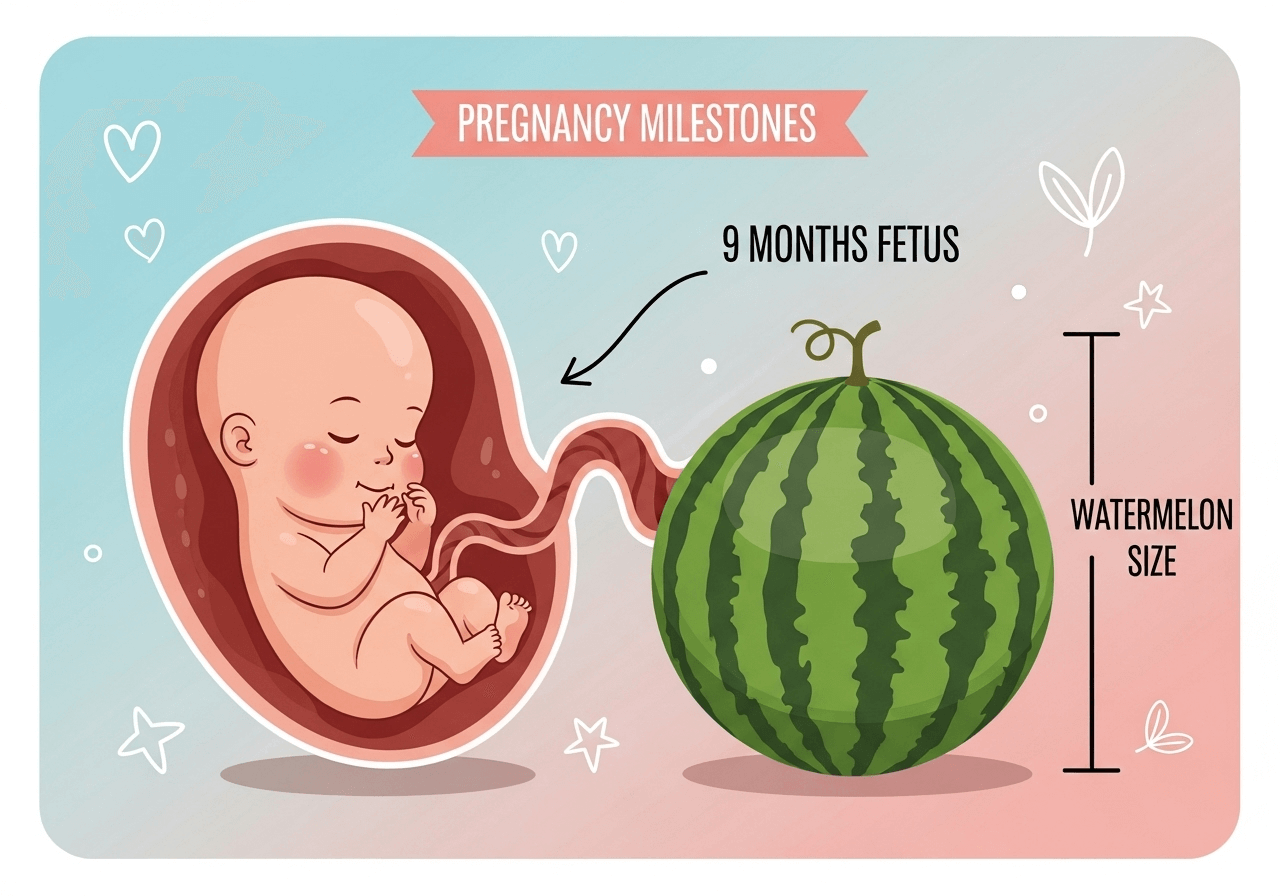
Size: By the end of month 9, your baby may measure about 45–50 cm and weigh around 2.5–3.5 kg—roughly the size of a watermelon.
Development Milestones
- Lungs: Fully mature and ready for breathing.
- Fat layers: Form to regulate body temperature.
- Movements: May feel more like rolls than kicks due to limited space.
- Position: The baby is usually in a head-down position.
- Organ Development: All organs are fully developed. Learn more about baby milestones and development
Pain Management Options During Delivery
Understanding your pain relief options before you go into labour allows you to make informed decisions rather than reactive ones during an intense moment.
Epidural Anaesthesia
An epidural is the most common form of pain relief during labour. An anaesthesiologist inserts a small catheter into the epidural space near your spinal cord, delivering continuous pain medication to your lower body. It significantly reduces or eliminates labour pain while allowing you to remain awake and alert. You can still feel pressure and the urge to push, which helps during delivery. Epidurals are generally safe, though potential side effects include a drop in blood pressure, headache, and temporary difficulty moving your legs.
Natural Pain Relief Techniques
Many women manage labour pain without medication using techniques such as focused breathing, hydrotherapy (labouring in a warm bath or shower), massage and counter-pressure on the lower back, movement and position changes, birthing balls, and visualization or meditation. These methods are often most effective when practised in advance during prenatal classes. Having a supportive birthing partner who knows these techniques makes a significant difference.
Other Medical Options
Gas and air (Entonox) provides mild pain relief that you control by breathing through a mouthpiece during contractions. Pethidine or other opioid injections can take the edge off pain but may cause drowsiness. In the case of a caesarean delivery, spinal anaesthesia provides complete numbness from the waist down while you remain conscious throughout the procedure.
Discuss your preferences with your doctor during your prenatal visits. Remember that choosing to accept or decline pain relief is a personal decision with no right or wrong answer.
Nutrition & Self-Care

Eat Nutrient-Rich Foods:
- Continue eating foods that are rich in protein, iron, and calcium.
- Consume small, light meals to reduce indigestion.
- Stay hydrated and eat fiber-rich foods to avoid constipation.
- Avoid high-salt foods that may increase swelling.
Hydrate & Rest:
- Stay hydrated with 8–10 glasses of water daily.
- Rest frequently and use pillows for support.
Gentle Exercise:
- Gentle walks can ease pelvic pressure and improve circulation.
- Practice breathing and relaxation techniques for labor.
- Discuss your birth plan with your doctor and your family.
Safety Guidelines:
- Do not consume raw or undercooked meat, high-mercury fish, unpasteurized dairy, raw sprouts, alcohol, and caffeine.
- Refrain from lifting heavy objects.
- Avoid strenuous exercise or sudden movements like standing up.
- Stay away from direct or secondhand smoke.
- Do not take any medication without consulting with your doctor.
The First 24 Hours After Birth
After months of anticipation, your baby is finally here. The first 24 hours are a whirlwind of emotions, medical checks, and bonding moments.
Immediately After Delivery
If both you and your baby are healthy, skin-to-skin contact is encouraged immediately after birth. Placing your naked newborn on your bare chest regulates their body temperature, heart rate, and breathing while promoting bonding and initiating breastfeeding. Your baby may instinctively crawl toward your breast and attempt to latch within the first hour, a phenomenon called the "breast crawl."
Newborn Checks
Your baby will receive an Apgar score at 1 and 5 minutes after birth, which assesses their heart rate, breathing, muscle tone, reflexes, and skin colour. The medical team will also weigh and measure your baby, administer vitamin K to prevent bleeding disorders, and apply antibiotic eye ointment. These procedures are routine and usually completed within the first few hours.
Your Recovery
After a vaginal delivery, you may experience cramping as your uterus begins contracting back to its pre-pregnancy size. These afterpains are stronger during breastfeeding. You will have vaginal bleeding (lochia), similar to a heavy period, which gradually decreases over the following weeks. If you had a caesarean delivery, you will be monitored in a recovery room while the anaesthesia wears off. Pain medication will be provided to manage surgical discomfort.
First Feeds
Colostrum, the thick yellowish milk your breasts produce in the first few days, is packed with antibodies and nutrients essential for your newborn. Even small amounts are incredibly valuable. Breastfeeding can feel challenging at first, so do not hesitate to ask a nurse or lactation consultant for help with latching and positioning. Whether you choose to breastfeed or formula feed, what matters most is that your baby is fed and you feel supported.
Doctor Checklist
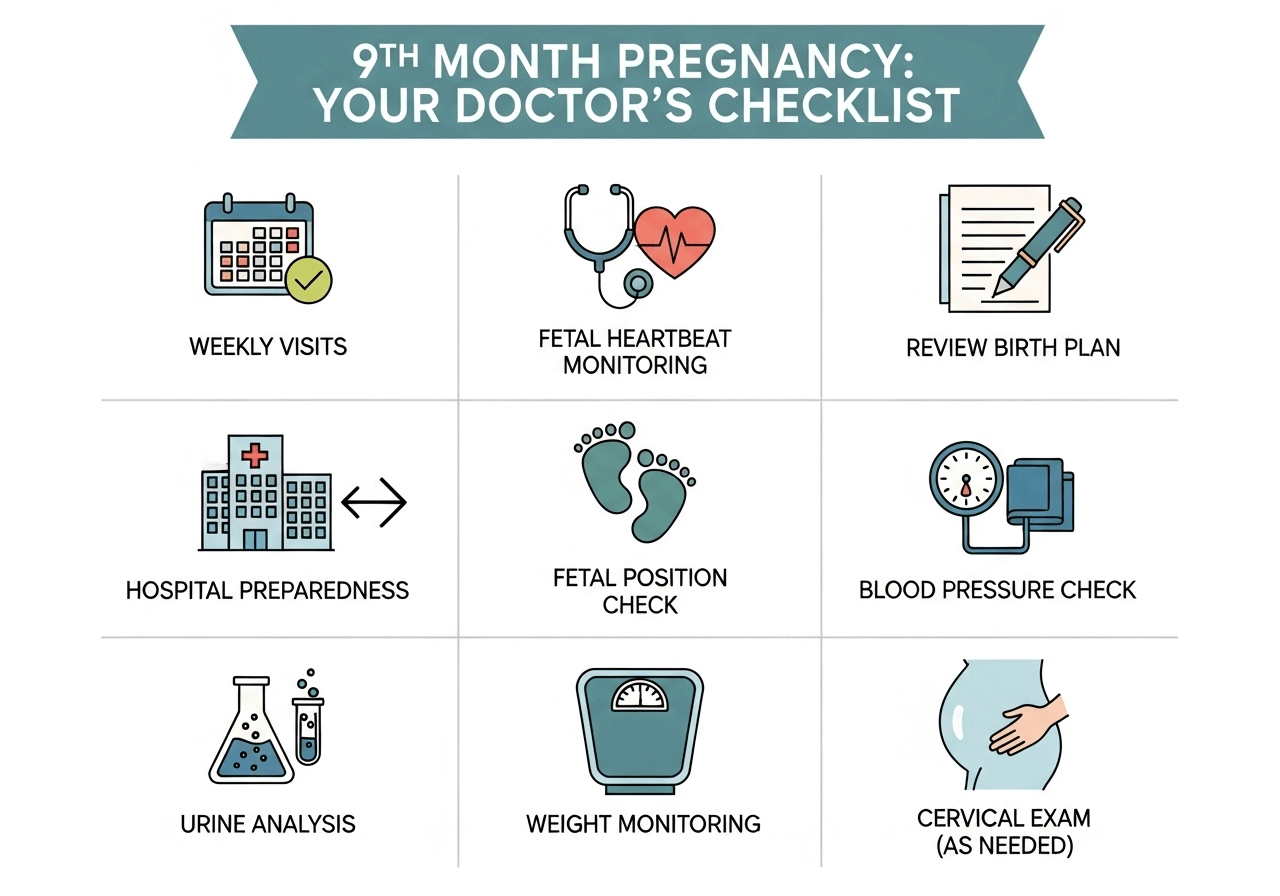
Tests & Scans
- Weekly checkups until delivery.
- Pelvic exam to check cervical dilation.
- Monitor baby’s heartbeat and movements.
- Ask about signs of labor and when to go to hospital.
- Discuss pain relief options for delivery.
- Final review of birth plan.
Related Guides
Almost there! Our 1-month baby care guide is your go-to resource for those first days with your newborn.
FAQs
1. What are the common 9th month pregnancy symptoms?
In the 9th month, symptoms include stronger Braxton Hicks contractions, pelvic pressure, back pain, swollen feet, frequent urination, and difficulty sleeping. While these are normal, call your doctor if contractions become regular, your water breaks, or you notice decreased baby movement.
2. How big is the baby in the 9th month of pregnancy?
By Month 9, your baby is about 48–52 cm long and weighs 2.8–3.2 kg, which is roughly the size of a watermelon. The baby’s lungs are mature, fat layers are built up, and movements may feel more like stretches and rolls due to limited space. Most babies are head-down, ready for delivery.
3. How do I know if labor has started in the 9th month?
Signs of labor include water breaking, vaginal bleeding, mucus plug discharge, pelvic pressure, and regular contractions that get stronger and closer together. Back pain that comes in waves can also be an indicator. If you notice these symptoms, especially regular contractions or fluid leakage, contact your doctor or go to the hospital immediately.
4. What foods should I eat in the 9th month of pregnancy?
In Month 9, focus on having light, nutritious meals:
- Protein: chicken, beans, eggs
- Iron-rich foods: leafy greens, lentils
- Calcium: milk, yogurt, almonds
- Fiber: whole grains, fruits, vegetables
5. What foods should I avoid in the last month of pregnancy?
Avoid raw or undercooked meat, high-mercury fish, unpasteurized dairy, raw sprouts, alcohol, and excess caffeine. Spicy and oily foods may worsen heartburn and indigestion. Also limit salty snacks to reduce swelling. Eating clean, well-cooked meals ensures both your comfort and your baby’s safety as you approach delivery.
6. Can walking in the 9th month help induce labor?
Yes, gentle walking in the 9th month may help the baby descend into the pelvis, which can encourage natural labor. Walking improves circulation, relieves back pain, and helps prepare the body for delivery. However, it should be light and comfortable—avoid overexertion. Always check with your doctor before trying any labor-inducing activities.
7. Is back pain normal in the 9th month of pregnancy?
Yes, back pain is common in the last month due to increased belly weight, loosened ligaments, and the baby’s low position. Relief methods include gentle stretching, prenatal yoga, using a maternity support belt, and sleeping on your side with a pillow between your knees. Severe or sudden back pain may indicate labor and should be discussed with your doctor.
8. How much weight should I gain by the 9th month?
By the 9th month, most women gain 11–15 kg (25–35 lbs) depending on pre-pregnancy BMI. Weight gain slows down as you near delivery. Doctors monitor this closely to ensure baby growth is steady. Gaining too little may indicate growth restriction, while excessive weight gain can raise risks of complications. Balanced nutrition and maintaining healthy weight gain during pregnancy are key at this stage.
9. Can I still exercise in the 9th month of pregnancy?
Yes, light exercises such as walking, stretching, and prenatal yoga are safe in the 9th month unless your doctor advises otherwise. Exercise can reduce swelling, ease back pain, and improve stamina for labor. Avoid high-impact activities, heavy lifting, or lying flat on your back. Listen to your body and stop if you feel pain, dizziness, or contractions.
10. What tests are done in the 9th month of pregnancy?
Doctors usually schedule weekly check-ups in Month 9. These may include:
- Pelvic exams to check cervical dilation
- Ultrasounds to confirm baby’s position
- Fetal monitoring for heartbeat and movement
- Blood pressure and urine tests for preeclampsia
- Review of Group B strep test results
11. What are the signs of preterm labor at 9 months pregnant?
Preterm labor is less likely in Month 9, but signs include regular painful contractions, water breaking, vaginal bleeding, or intense pelvic pressure before week 37. If you experience these, seek medical care immediately. At this stage, most babies are developed enough to survive outside the womb, but medical support may still be necessary.
12. How should I prepare for delivery in the 9th month?
In Month 9, finalize your hospital bag with essentials like clothes, baby items, and documents. Review your birth plan with your doctor, attend prenatal classes if available, and discuss pain relief options. Keep emergency contacts ready and know the signs of true labor. Preparing mentally and physically helps reduce stress when labor begins.
Conclusion
As your due date draws near, you might feel a twinge of sadness about this journey coming to an end. But the good news is: you’re also at the start of a whole new journey! And this time, you get to see your little one hitting their milestones in real time!
You’ve done an amazing job so far, and we’re sure you’re absolutely going to ace motherhood. So, don’t worry about anything now. Just enjoy this month resting and spending time with your family and friends (maybe even go on a few special dates?)
All the best for this new adventure of motherhood–Teddyy is here for you and your baby at every step of the way!