
Filter by Month

By Nobel Hygiene Team | Last Updated: January 6, 2026
7-Month Baby Guide: Textures, Sitting Steady & Early Mobility
Breakfast time. You set down a bowl of mashed banana, turn your head for just a second, and somehow, it's in your baby's hair, on the bib, and splattered across the dining table. You laugh, wipe it off, and try again — because that's what these days are all about: messy, marvellous discovery.
At seven months, your little one is full of surprises. They're sitting more steadily now, grabbing toys (and spoons!) with purpose, and maybe even starting to pivot or scoot across the mat. Every day brings a new "first," and every moment reminds you how fast they're growing.
This is such an exciting stage, full of 7 month baby milestones that blend curiosity with movement, food exploration, and connection. But it's also a stage of questions: How much solid food is enough? What about those restless nights? Is it okay if they're not crawling yet? Don't worry, we'll walk through it all, one reassuring step at a time.
Growth & Milestones
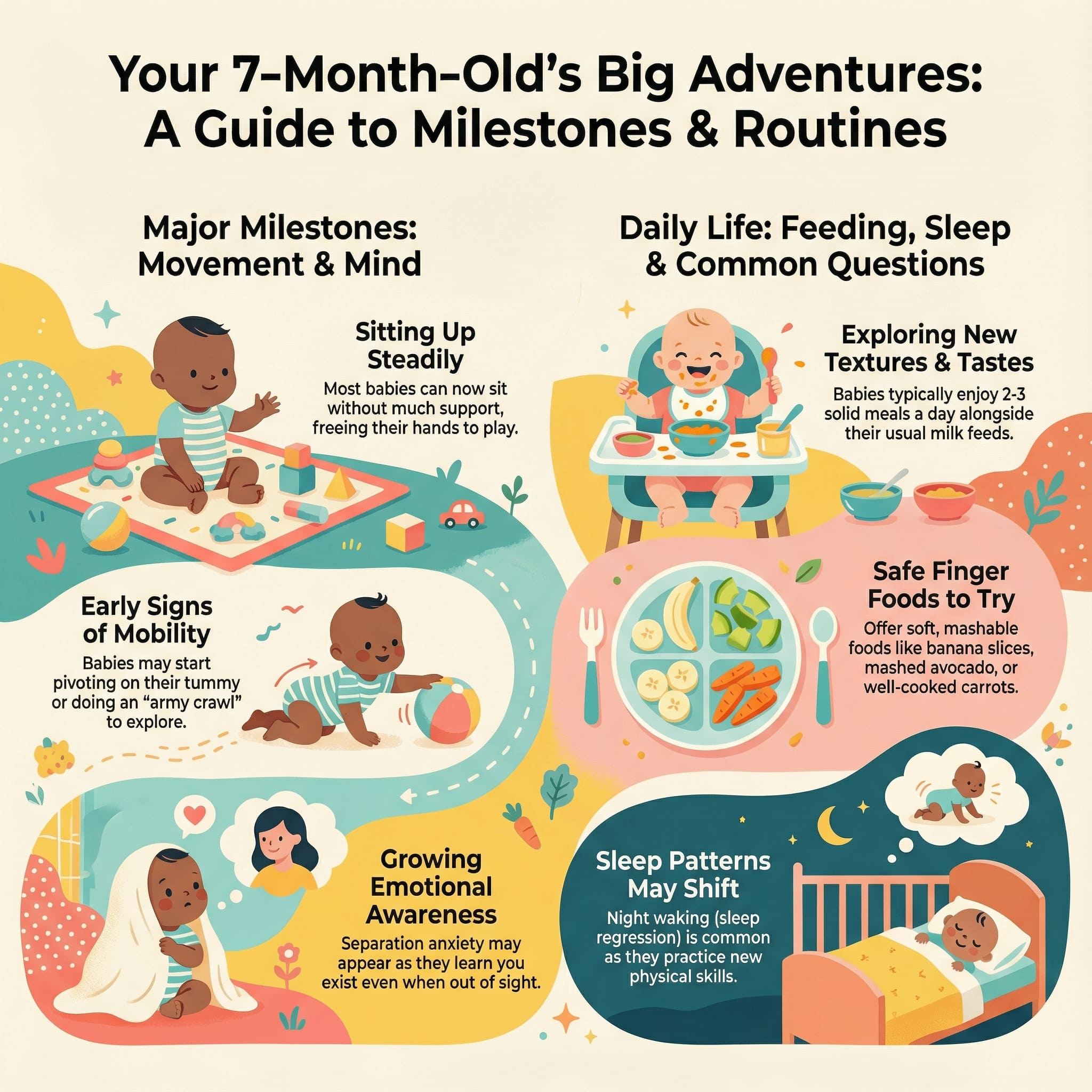
At this stage, your baby is really coming into their own. Those tiny muscles have been working hard, and you'll see it in every twist, turn, and grin. Most babies can now sit steadily without much support, reach and grab toys, and even transfer them from one hand to another — a big sign of growing coordination.
Your little one might also start pivoting on their tummy or doing an adorable "army crawl." These early mobility attempts are part of natural baby development at 7 months, helping them explore safely and build confidence. You might also notice your baby turning when you call their name, which is a sweet sign that they recognise your voice and are engaging more socially.
Each of these 7 month old milestones marks progress in your baby's physical and emotional world. Most babies can now sit steadily without much support, reach and grab toys, and even transfer them from one hand to another — a big sign of growing coordination.
Feeding & Sleep
Your baby's appetite is expanding along with their curiosity. Around now, many babies enjoy two to three solid meals a day in addition to milk feeds. Keep milk — whether breastmilk or formula — as their main source of nutrition, and use solids as a chance to explore textures and tastes.
Soft finger foods like mashed avocado, banana slices, or well-cooked carrots are great starters. Mealtime might get messy, but that's part of the sensory fun! You'll also see changes in their feeding patterns — more distracted feeds or playful throwing are all part of learning independence.
As for sleep, most babies still take 2–3 naps a day, gradually trending toward two longer ones. Some may experience brief night waking or separation fussiness. A calming bedtime routine, dim lights, gentle rocking, and a quiet song can help your baby feel secure.
Common Concerns
You're probably seeing a few new quirks this month, and they're all part of healthy 7 month old baby development.
Separation anxiety may start showing up at bedtime or when you step away. This is your baby's growing awareness that you exist even when you're not in sight, a sign of emotional maturity, not mischief.
Constipation can happen as foods thicken. Offer water sips with meals and fibre-rich options like pears or oatmeal.
Food throwing is another adventure—messy, yes—but it's your baby's way of learning cause and effect. Keep mealtimes calm and consistent.
Diapering & Hygiene
With more solids comes more... interesting diaper changes! Expect new colours, textures, and odours, all perfectly normal. You'll also need to keep up with drool and mealtime mess.
Wipe your baby's face and hands after each meal to prevent rashes.
Offer safe, soft teething toys to soothe sore gums.
Begin gentle tooth care if the first tooth has appeared, a soft brush or gauze with a tiny smear of fluoride toothpaste (if recommended).
Encourage open-cup sips with water to help with swallowing and hydration.
You'll likely go through more frequent diaper changes as your baby's digestion adapts. Teddyy Diapers are designed for exactly this stage, soft, breathable, and leak-proof, so you can focus on those smiles instead of constant outfit changes.
Doctor Visits & Vaccines
Your baby's 7 month milestones are best tracked during routine doctor's visits. The doctor may:
Review weight, height, and head circumference.
Check progress using a 7 month old baby development chart.
Catch up on any pending vaccinations.
Discuss baby-proofing now that mobility is increasing.
If you have concerns about nutrition or feeding schedules, now is a great time to discuss it with your doctor. Many parents also discuss allergen introduction, especially if solids have already begun.
Parent Self-Care
Between spoon-feeding attempts, diaper changes, and late-night snuggles, it's easy to forget yourself. But your well-being matters too.
Try doing some meal preps over the weekend so weekday baby meals are easier to manage.
Take turns for early mornings or bedtime routines.
And remember, not every day will go as planned. Some days, you'll feel like you've got it together; on other days, you'll just celebrate getting through the day with coffee and cuddles. Both are wins.
Conclusion
At seven months, your baby is in full discovery mode, and so are you. Every giggle, every spill, and every new sound adds up to a beautiful rhythm of growth. Celebrate each of these 7 month baby milestones, big or small, and know that you're doing a wonderful job guiding your little explorer through it all.
And when you need a dependable partner through the mess and magic? Teddyy Diapers has your back, keeping your baby dry, comfy, and ready for their next little adventure.
Frequently Asked Questions
1. How many solid meals should a 7-month-old have?
By now, your little one is exploring the world through taste and texture! At this stage, most babies are ready for 2–3 solid meals a day alongside regular breastmilk or formula feeds.
2. What finger foods are safest to start?
Your 7-month-old may be eager to grab and explore food with tiny hands. The safest finger foods are soft, easy-to-hold, and mashable between two fingers. Think steamed carrot sticks, soft potato chunks, ripe banana slices, or tiny pieces of avocado.
3. How to handle separation anxiety at bedtime?
Separation anxiety is common around this age —it's actually a sign of healthy attachment! Try keeping the routine consistent: a warm bath, gentle cuddles, and a soft lullaby before you step out.
4. Is night waking returning — what can I do?
Yes, sleep regressions can happen around the 7 month milestones. As your baby learns new skills like sitting or rolling, they may wake more often. Stick to a predictable bedtime routine and ensure your baby's tummy is full before sleep.
5. How much water can my baby have now?
Once your baby starts on solids, you can introduce small sips of water in an open cup or sippy cup—usually a few tablespoons (around 60–120 ml) a day is enough. Water helps prevent constipation, especially when thicker foods are introduced.
6. What signs show baby is ready to crawl?
Most babies start crawling sometime around 7 to 10 months of age. However, every baby's timeline differs, especially if you're tracking 7 month premature baby development. Early signs of crawling readiness include pivoting in circles, pushing up on arms, rocking on hands and knees, or scooting backward.