
7 Tips for Moms to Shop for Their Newborn
By Teddyy Editorial Team | Last Updated: April 23, 2026

When new parents shop for their newborn for the first time, it can feel exciting and overwhelming in equal measure.
Shopping for newborn essentials can feel overwhelming, especially for first-time parents.
With so many products available, knowing what to buy and what to skip saves both money and stress. This guide makes shopping for newborn items simple with practical tips every mom needs.
Bringing a newborn baby into the world is an exciting and joyous experience. As a new mom, you want to make sure you have everything your new family member needs to keep them comfortable and happy.
“I was so excited in the last few months of pregnancy. I bought every cute little thing I could find online. How could you not? Just look at baby things… so tiny and adorable. Mittens, tiny shoes, jumpers, hats, my little one had a walk-in closet prepared even before he was born! Well, he outgrew them all in three months. Just three months and I had to shop for everything all over again! Guess who has not a single penny in their bank account?” Let’s all learn from Meghna’s mistake in this blog. 😛 More on this later.
7 Tips for Shopping for Newborn Baby Essentials
Shopping for a newborn can be overwhelming, especially with so many options available in the market. To help you navigate through the baby aisles of the supermarket and make the best choices for your baby, we’ve compiled a list of seven tips for new moms to shop for their littles ones.
1. Comfort is key
Comfort should be your top priority when shopping for your newborn. Newborns have extremely sensitive and delicate skin that might react to rough, synthetic fabrics.
Instead, look for soft, breathable, and organic fabrics, such as cotton, that will keep your baby cozy and prevent any skin irritation. If the clothes you purchase have tags at the back, be sure to remove them before dressing your newborn. Additionally, it’s advisable to avoid outfits with irritating zippers or scratchy velcro.
2. Avoid the Trendy, Glittery, Highly Decorated Stuff
As a new mom, it’s natural to get tempted to buy heavily decorated baby clothes and accessories with rainbow bows, frills, lace, patches, and buttons. Who doesn’t want their newborn to look like a heavenly angel gracing us mere mortals?
These cute-looking clothes and accessories and their decorations can cause irritation and rashes to your poor little one. Instead, opt for simple, comfortable, and fuss-free options.
3. Consider the Weather
Babies are sensitive to temperature changes, so it’s important to dress them appropriately for the weather. Layering is the key to ensuring your little one stays comfortable in different weather conditions. Invest in a few lightweight onesies or bodysuits that can be layered with sweaters or jackets during cooler months. In warmer weather, opt for breathable rompers or dresses to keep your baby cool and comfortable.
4. Resist the Urge to Splurge on Expensive Items
As a new parent, it’s easy to get carried away and splurge on expensive and cute baby items like Meghna. However, keep in mind that babies grow in the wink of an eye. Spending a fortune on items they’ll outgrow in a matter of months is not the wisest investment. Instead, focus on finding reasonably priced, good-quality newborn baby essentials that serve their purpose effectively without breaking the bank.
Shopping for Newborn: Quality and Practicality
When shopping for newborn basics, focus on comfort, safety, and practicality rather than trendy or expensive items that your baby will quickly outgrow
5. Quality over Quantity
With your baby outgrowing outfits in mere months, avoid stocking up your child’s wardrobe. Buy new clothes only when your little one has outgrown their old clothes. Invest in a few well-made, durable pieces that will withstand multiple washes and maintain their shape until your baby outgrows them.
If possible, try to buy clothes that are slightly bigger than the actual clothing size of your little one. However, avoid buying overly fit or overly loose outfits for the comfort of your baby. Similarly, avoid buying clothes with smaller necks and stiff collars.
6. Buy Easy-to-Clean Clothes
Your baby will burp, drool, pee, and poop often, and as a result, your laundry load will be ever increasing. To make your life easier, select clothes that are machine washable and easy to care for. Steer clear of complicated garments that require hand washing or delicate cycles, as they can be time-consuming and impractical for busy moms. Opt for fabrics that can withstand frequent washing without losing their softness or colour.
As for washing clothes itself, use antibacterial detergents specifically designed for baby clothes. These detergents will keep the clothes clean and germ-free without making them rough from washing.
7. Invest in Baby Accessories
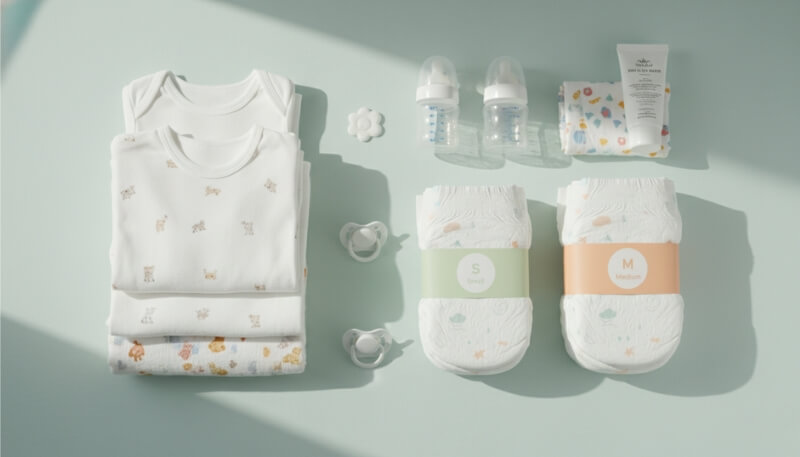
In addition to clothing, don’t forget to invest in other essential things for newborn baby that will make your life easier as a new mom. For one, stock up on diapers for newborns, as you’ll be changing them very frequently.
Teddyy Baby Diapers for Newborn is the perfect diaper you are looking for your little one’s sensitive skin. They fit well and snugly, eliminating any chances of leaks and spills. Teddyy Newborn Diapers also come equipped with a special navel protection feature that allows airing of the navel region, eliminate irritation, and help speed up healing after the umbilical cord stump falls off.
Other useful accessories include rattles, bibs, burp cloths, baby blankets, chew toys, baby wipes, hats, etc.
Shopping for your newborn can be an entirely different experience than shopping for yourself. You’ll be startled to see the range of choices in baby clothes and accessories, and your newborn baby shopping list will keep growing. But remember that babies grow fast and do not need everything in the store.
Make wise choices but do indulge in baby shopping once in a while. Happy shopping and congratulations on your new bundle of joy!
More Shopping for Newborn and Baby Care Tips
Smart shopping for newborn gear means reading reviews, comparing prices, and buying only what you truly need during the first few months
Check out these related articles:
With these tips for shopping for newborn necessities, you can prepare for your baby with confidence and avoid common first-time parent mistakes.
For trusted product safety information, check the HealthyChildren.org safety guide and the AAP Ages & Stages resources.
Newborn shopping list essentials by category
A practical newborn shopping list breaks down into 5 simple categories. Clothing, 6 to 8 onesies, 4 to 6 sleep gowns or rompers, 4 pairs of socks, 2 caps, and 2 hooded towels. Feeding, 4 burp cloths, a few bibs, and either nursing supplies or 2 small bottles plus formula if needed. Diapering, one pack of NB diapers, fragrance-free wipes, barrier cream, and a changing mat. Sleep, a firm crib mattress with 2 fitted sheets, a sleep sack, and a swaddle blanket. Health and grooming, a digital thermometer, baby nail file, soft hairbrush, mild soap, and a saline nasal drop. Skip nightlights, baby monitors with cameras, and shoes for the first 6 months unless you really want them.
What new moms regret buying for their newborn
Talk to any experienced mom and she will tell you about a few items that gathered dust. Designer newborn outfits worn once before the baby outgrew them. Wipe warmers that take up counter space and add no real value. Bottle warmers when warm tap water in a bowl works just as well. Multiple swings and bouncers when babies usually prefer just one. Crib bedding sets with bumpers and pillows, which are unsafe for newborns. Baby food makers before the baby is even on solids. Loud light-up toys for a sleepy newborn. Save your money for the first 3 months and then add only what your baby actually responds to.
Smart ways to save money on newborn shopping
Newborn essentials add up fast, but you can cut costs without compromising on safety. Borrow large items like the crib, bassinet, baby tub, and nursery glider from family or friends whose kids have outgrown them. Buy multipack basics from value brands instead of single boutique pieces. Shop end-of-season sales for clothing in sizes 6 to 9 months which your baby will grow into next year. Skip the gift registry on premium items unless they are truly daily essentials. Compare per-diaper cost across brands and pack sizes, jumbo packs are usually 20 to 30 percent cheaper. Sign up for parent loyalty programs at your favourite store for points and birthday discounts.
When to start shopping for your newborn
Most moms feel pressure to buy everything early, but timing matters. Start in the second trimester when energy is highest, focus on big items like the crib, car seat, and stroller. Wait until the third trimester for clothes, diapers, and feeding supplies, since your baby shower may bring many of these. Hold off on size 1 diapers until after birth, since you will know your baby’s actual size. Anything beyond the first 3 months can wait until you see what your baby actually needs. Buying everything in one go is overwhelming and often wasteful, spreading purchases across the pregnancy is calmer and cheaper.
References & Sources
- World Health Organization (WHO). Maternal and Newborn Health. who.int
- Indian Council of Medical Research (ICMR). National Guidelines for Maternal Care. icmr.gov.in
- American Academy of Pediatrics (AAP). Caring for Your Baby. aap.org
- Indian Academy of Pediatrics (IAP). Child Health Guidelines. iapindia.org
- National Library of Medicine. Diaper Dermatitis. pubmed.ncbi.nlm.nih.gov
- National Institute of Nutrition (NIN). Dietary Guidelines for Indians. nin.res.in
- AAP. Safe Sleep Recommendations. aap.org/safe-sleep
You May Also Like



Frequently Asked Questions
When should I start shopping for my baby?
It’s recommended to start shopping for your baby well in advance to ensure you have everything you need before the arrival. Ideally, aim to begin shopping during the second trimester of pregnancy, around the 20-week mark or even earlier if you prefer. Starting early allows you ample time to research, compare prices, and take advantage of sales and discounts.
What should you buy a newborn baby?
Here are some essential things to buy for newborn babies:
• Clothing: Bodysuits, sleepers, onesies, socks, and hats.
• Diapering: Diapers, wipes, diaper rash cream, and changing pads.
• Feeding: Breastfeedings or bottle-feeding supplies, such as bottles, nipples, burp cloths, nursing bras, breast pads, and a breast pump if necessary.
• Sleeping: Crib or bassinet, firm mattress, fitted sheets, and swaddles.
• Bathing and hygiene: Mild baby soap, shampoo, washcloths, hooded towels, baby brush or comb, and nail clippers.
• Health and safety: Thermometer, infant-safe sunscreen, baby first aid kit, and any prescribed medications.
When should I start shopping for baby?
It’s recommended to start shopping for a baby around the second trimester of pregnancy, between 12 and 24 weeks. Starting early allows you to plan and make purchases at a comfortable pace, without feeling rushed or overwhelmed. Researching products, comparing prices, and creating a budget can also be done during this time. Starting early gives you ample time to gather all the necessary items before your baby arrives, ensuring a smooth transition into parenthood.