
Leg Pain During Pregnancy : Causes and Relief Tips
By Teddyy Editorial Team | Last Updated: April 23, 2026

During pregnancy, our body undergoes a lot of changes. At such times, leg pain during pregnancy is a common occurrence and lots of different reasons contribute to this. In this blog we will walk you through the reason that leads to swelling and pain in the legs during pregnancy and how you can treat it .
Key Takeaways
- Most of the pregnant ladies suffer from leg pain during pregnancy.
- Leg pain during pregnancy is a common problem faced by most of the women during early as well as the later phase of pregnancy.
- Here’s how you can deal with leg cramps during pregnancy:.
- Now that you have become fully aware regarding what causes leg pain during pregnancy and leg cramps during pregnancy.
- You must be aware about why leg pain during pregnancy happens.
Common reasons for leg pain during pregnancy
Most of the pregnant ladies suffer from leg pain during pregnancy. We have listed down all the possible reasons that lead to this condition:
Gaining weight
Leg pain during pregnancy and leg swelling during pregnancy – are a common condition faced by pregnant women. It happens because during pregnancy, the baby grows, which leads to weight gain. It increases the weight that causes pressure on the legs and feet leading to pain and swelling in the legs.
Cramps in the leg
During pregnancy, many women face leg cramps, which causes leg pain during pregnancy. They may feel severe pain in their calf, foot or thigh.
Hormonal changes
When a woman is pregnant, many hormonal changes occur in her body. One of these is a new hormone called relaxin, which loosens the ligaments in the pelvic area for childbirth. However, it also causes joint discomfort, which is one of the reasons for leg pain during pregnancy.
These are the reasons that lead to leg pain during early pregnancy as well as at the later stage of pregnancy. However, you don’t have to ponder over it as it is a common occurrence during pregnancy.
When does leg pain during pregnancy happen?
Leg pain during pregnancy is a common problem faced by most of the women during early as well as the later phase of pregnancy. leg swelling in pregnancy starts somewhere between the 20th week of the pregnancy or during the second trimester and continues till delivery. The reason is that, during pregnancy, the female body retains water and as your belly continues to grow, it starts building pressure on your legs.
This pressure causes blood to collect in the legs, causing leg swelling during pregnancy. Therefore, it is important to know when swelling in feet occurs during pregnancy and pay attention to its causes.
Guide to deal with leg pain and swelling during pregnancy
Here’s how you can deal with leg cramps during pregnancy:
- Stay hydrated. Drink at least 3 litres of water. It helps calm down the swelling and muscle spasm.
- Don’t wear heels, switch to flats or Sneakers to support your legs and waist better.
- When you lie down, make sure to put a stack of pillows under your legs. It will help in easing swelling and pain in your legs.
These tips will prove helpful if you religiously follow them to ease pain, swelling and cramps in your legs during different stages of pregnancy.
Home remedies and natural remedies for pregnancy
Now that you have become fully aware regarding what causes leg pain during pregnancy and leg cramps during pregnancy. Here we are listing down a few home and natural remedies that can help you comfort during this challenging time.
- In leg cramps during pregnancy, take a large tub of hot water and put black salt/rock salt in it and dip your legs for around 20-30 mins. It will help ease swelling and pain.
- Give your feet some good massage with coconut, olive or Argan oil. It will help in better blood circulation, easing your spasm and cramps in leg muscles.
- Make a balanced plate: get yourself a balanced meal packed with protein, vitamins, minerals and fibres. It will help in maintaining your health and reducing pain.
These home remedies can help you go a long way during pregnancy, so make sure to adopt them.
When should you consult a doctor?
You must be aware about why leg pain during pregnancy happens. Because sometimes these are the indicators of underlying complications that you must not ignore. Here’s when you need to see a doctor while experiencing leg swelling during pregnancy:
- If alongside swelling in the legs, you are facing difficulty in breathing.
- Your legs swelled up unevenly (one leg has more swelling than the other).
- When you face sudden painful swelling in your feet.
These leg cramps during pregnancy might be an indication that your health is not faring well during pregnancy, so make sure to see a doctor if you are facing these conditions.
Trimester-Wise Leg Pain Patterns
Leg pain rarely shows up in the first trimester but can start with early pregnancy fatigue and calcium demand. By the second trimester, round ligament pain, increased blood volume and hormonal relaxation of joints start causing calf aches, hip strain and knee stiffness. Most women feel it most during the third trimester when weight gain, fluid retention and the growing uterus compress the sciatic nerve.
Night cramps peak between weeks 26 and 36 for about 30-40% of women, caused by circulation changes and mineral shifts. Walking feels heaviest in the final 6 weeks as the baby settles into the pelvis. Expect the pain to ease within 2 to 4 weeks postpartum once fluid volume normalises and hormones stabilise.
Foods and Minerals That Prevent Cramps
Calcium-magnesium imbalance is the top cause of pregnancy leg cramps. Add milk, curd, paneer, ragi, til seeds and green leafy vegetables for calcium. For magnesium, include pumpkin seeds, almonds, dark chocolate (small amounts), bananas, spinach and whole grains. Potassium from bananas, coconut water, sweet potato and oranges also reduces muscle cramping.
Hydration is critical — aim for 2.5 to 3 litres of water daily. Add coconut water or buttermilk for natural electrolytes. Avoid too much caffeine, which flushes calcium and magnesium. Your doctor may prescribe a magnesium supplement if cramps wake you more than twice a week — never self-medicate minerals during pregnancy.
Sleep Positions That Reduce Night Leg Pain
Sleep on your left side with a pillow between your knees from the second trimester onward. This keeps hips aligned and improves circulation to the legs. A small wedge behind your back stops you rolling flat. Slightly elevating your feet with a thin pillow under the calves drains fluid that pools during the day.
Avoid crossing legs while sitting, dangling feet off the bed, or pointing your toes hard in bed — all trigger calf cramps. If a cramp strikes, flex your toes back toward your shin for 30 seconds, then massage the calf with warm oil. Get up and walk for 2 minutes before returning to sleep to reset circulation.
Gentle Exercises and Stretches for Relief
A daily 20-minute walk after breakfast and dinner is the single best prevention. Add prenatal yoga three times a week — poses like supported butterfly, cat-cow, seated forward fold and legs-up-the-wall (modified) ease lower-body tension. Swimming and water aerobics are excellent for swollen, heavy legs in the third trimester.
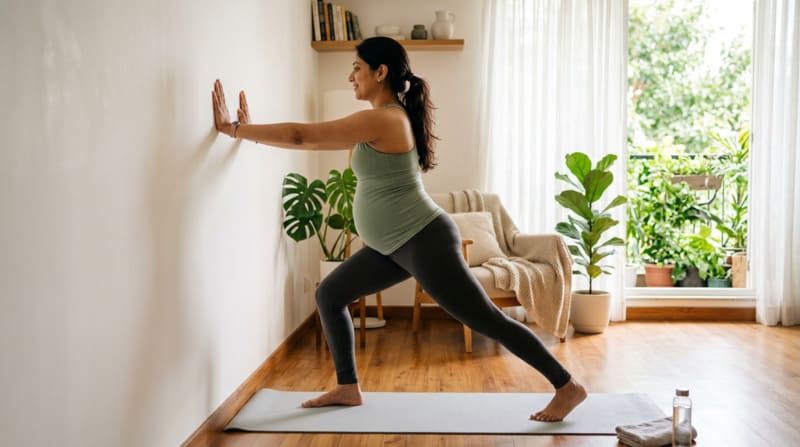
Simple daily stretches: calf stretch against a wall (30 seconds each side), ankle rotations while sitting (20 each direction), hip circles, and seated pigeon pose. Pelvic tilts and gentle squats support the sciatic nerve. Stop any exercise that causes sharp pain, dizziness or contractions, and always check with your obstetrician before starting new routines.
When Leg Pain Needs Urgent Medical Attention
Go to the hospital immediately for sudden one-sided leg swelling, warmth, redness or tenderness — these are signs of deep vein thrombosis (DVT), a pregnancy risk that needs urgent blood thinners. Severe unilateral leg pain with chest pain or breathlessness could indicate a pulmonary embolism. Both are medical emergencies.
Book a same-week visit for persistent numbness or tingling, foot drop, severe swelling above the calf, pain that doesn’t ease with rest and stretching, or any bilateral sudden swelling with headaches and high BP (possible preeclampsia). Leg pain with reduced fetal movement also needs same-day review. Never self-dismiss leg pain as just “pregnancy tiredness”.
Conclusion
Almost everyone experiences leg pain during pregnancy and swelling in their feet during pregnancy, so you do not need to worry about it. You can also treat swelling in feet during pregnancy with home remedies. But if the swelling is very severe, you should immediately consult a doctor.
Related Articles
- Pregnancy Precautions: Complete Guide
- Stretch Marks During Pregnancy
- Pelvic Floor Exercises After Delivery
- Managing UTIs During Pregnancy
For expert medical advice on leg pain during pregnancy, visit ACOG – Exercise During Pregnancy and WHO Maternal Health.
References & Sources
You May Also Like



Frequently Asked Questions
When do you experience swelling in legs during pregnancy?
Swelling in legs begins in the second trimester (4th month) of the pregnancy.
When leg swelling becomes a concern during pregnancy?
If you are facing severe swelling in your face and hands during pregnancy then it might be a critical condition.
What must a pregnant woman do when experiencing pain in the legs?
You need to drink water, support your legs while resting and see a doctor.
When swelling in legs could be dangerous?
If only one leg is swelling, then it is a matter of concern. Go see a doctor right away.