
After Pregnancy Belt Reduce Tummy: Can Postpartum Belts Help?
By Teddyy Editorial Team | Last Updated: April 23, 2026
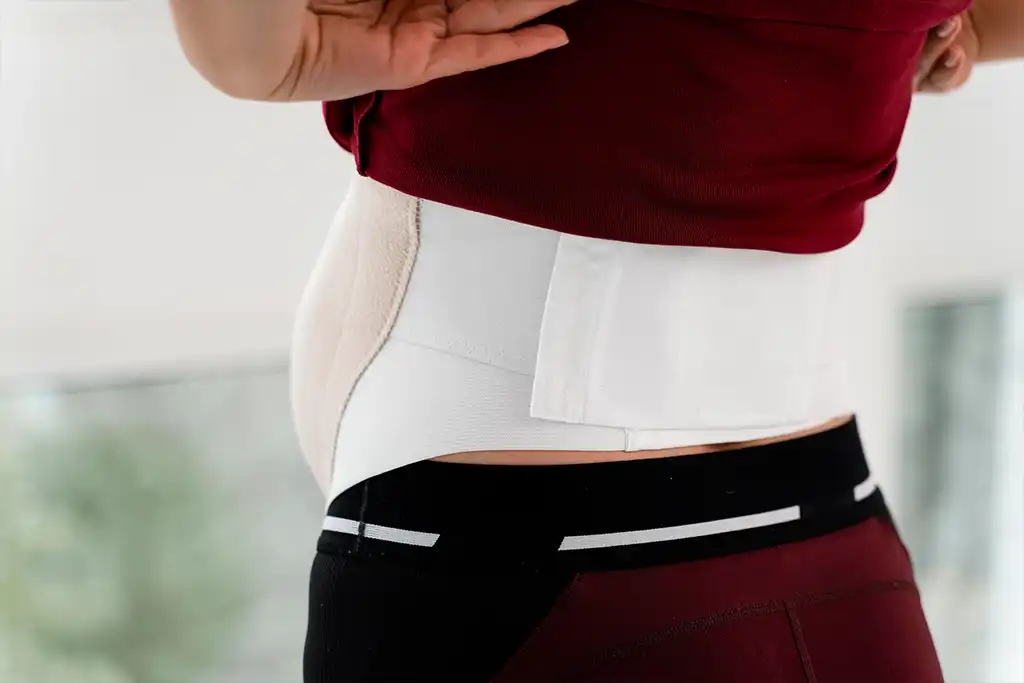
Are postpartum belts effective for reducing your tummy after pregnancy? Many new mothers turn to postpartum belts as part of their recovery routine. In this guide, we explore how postpartum belts work, their benefits, and what you should know before using one.
Hello, all you wonderful mothers! Kudos for bringing a new life into the world! Pregnancy is a miraculous journey that can leave noticeable changes in your body, including the “baby belly” or “mummy tummy”. This is medically known as diastasis recti – a separation of the abdominal muscles. Two-thirds of women experience a protruding belly after giving birth, and it is pretty natural to have a little extra belly post-pregnancy.
Some mothers are curious about the effectiveness of postpartum belts in helping them regain their pre-baby shape. This article explores postpartum belts, their ability to assist in getting rid of that belly pouch, and whether an after pregnancy belt reduces tummy effectively.

Introduction to Postpartum Support
After delivery, your body goes through many changes as it recovers from pregnancy and childbirth. Postpartum support is crucial during this time, helping new mothers manage discomfort and regain strength. One of the best tools for postpartum support is a postpartum belt. Whether you’ve had a vaginal delivery or a c section, using a postpartum belt can provide much-needed support to your belly, abdominal muscles, and back. This type of belt helps reduce pain, eases swelling, and supports your body as it heals, making it a valuable addition to your postpartum recovery routine.
What is a Postpartum Belt
A postpartum belt is a specially designed garment that wraps around your waist and abdominal area to provide gentle compression and support after childbirth. These belts are usually made from elastic, breathable materials and are adjustable to fit your changing body size. There are different types of postpartum belts, including belly wraps, abdominal binders, and waist belts, each offering varying levels of support. By supporting your lower back, abdominal muscles, and uterus, a postpartum belt can help reduce pain, improve posture, and make daily movements more comfortable as your body recovers.
Postpartum belts, girdles or belly wraps are elastic garments that support the abdomen and lower back after childbirth. They come in various shapes, sizes, and materials, such as cotton, spandex, or latex. These belts are fastened with Velcro or hook-and-eye closures.
When is it Too Late to Wear a Postpartum Belly Wrap
It is generally recommended that new mothers wait at least a day after delivery before using a postpartum belt. This product is specifically designed to provide support and aid recovery after childbirth. Experts advise using the belt for 2-12 weeks to achieve the best results.
In the case of a standard delivery, you can start using the post-pregnancy belt within a few hours after giving birth.
However, if you’ve had a C-section, waiting until your stitches are fully healed before tying your stomach is advisable. It can take 6-8 weeks to put on a belt after a c-section.
How Does a Postpartum Belt Work
A postpartum belt can compress and support your muscles after giving birth. During pregnancy, the uterus can cause the two muscles that run down your stomach to separate, known as diastasis recti. Although it is not a cure, a belly wrap can aid in compressing and supporting your muscles to return to their original position.
How Long Should I Wear Maternity Belt After Delivery in a Day
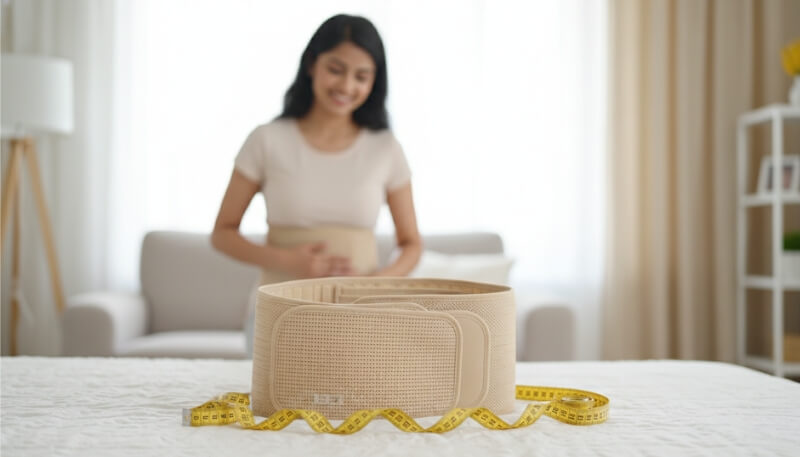
You can wear a maternity belt for 6-8 hours per day after delivery, depending on your comfort and your doctor’s advice. Start using it one week postpartum or as recommended. Gradual use supports your back and abdominal muscles, aids posture, reduces pain, and prevents over-reliance, allowing natural healing and recovery.
Timeline & Recovery Progression: What to Expect
- Weeks 1–2: Swelling gradually reduces; a light postpartum belt can offer comfort and support during daily movement.
- Weeks 3–6: Core muscles begin to re-engage, posture improves, and the belly pouch may slowly reduce with consistent support.
- Weeks 6–12: Abdominal strength and muscle tone continue to improve; belts work best when paired with gentle postpartum exercises.
- 3 months onwards: Natural recovery is largely complete; belts can be used occasionally for posture support or extended activity.
What Are the Benefits of Post-pregnancy Belts
Postpartum belts, often called belly wraps or belly binders, have the following benefits:
- Helps in relieving pain
- Helps in easy movement
- Helps in increasing the blood flow
- Helps in fixing your posture
If you’ve had a C-section, consult your doctor to ensure the belt doesn’t intervene in the healing process or cause any complications.
What Are the Risks of Postpartum Belts
While postpartum belts can offer significant support, it’s important to be aware of potential risks. Overusing a belt or relying on it too much can weaken your abdominal muscles over time, as your body may become dependent on the external support. Some belts, if worn too tightly or for too long, can cause pain, discomfort, or even restrict blood flow. It’s essential to choose an adjustable belt that fits your body size and to follow the recommended guidelines for use. If you’ve had a c section, always consult your doctor before using a postpartum belt to ensure it won’t interfere with your stitches or healing process.
While these belly wraps can be beneficial, sometimes they might have risks:
- Causing too much pain
- Too much pressure
- Itchy rashes
While these postpartum belts can provide support and comfort, there is no scientific proof that they are a miracle solution to get rid of belly pouches. Combining a healthy diet with moderate exercise is the best way to eliminate belly fat.
Safety Considerations for Different Body Types
Every postpartum body is unique, and a one-size-fits-all approach doesn’t apply to belly belts. Women with wider hips or a curvier frame should choose belts with adjustable compression for balanced support, while petite bodies benefit from lighter, flexible belts that offer gentle hold without over-compression. Those with higher BMI should prioritise breathable, stretchable fabrics to avoid discomfort or skin irritation. If you’re recovering from a C-section or have diastasis recti, opt for belts designed to support healing without pressing on sensitive areas—and always check with your doctor first. A good postpartum belt should feel supportive, not restrictive.
Things You Need to Consider About a Postpartum Belt
- Consult With Your Doctor: It’s vital to consult your doctor to determine if waist trainers are a good option for your body and when it’s safe to begin wearing them.
- Be Patient With the Results: Don’t expect immediate changes after wearing the belt for the first time. Ideally, you must wear the belt for 5-6 weeks before noticing any difference.
- The Belt Should Be Flexible: When buying a postpartum belt, make sure to choose a product that is flexible and adjustable to your comfort level. Selecting the right product is important to ensure it meets your needs and provides the necessary support. This will allow you to tighten or loosen the belt without risking injuries.
Other Ways to Reduce Post-pregnancy Belly Fat
Using a belt to reduce tummy fat is convenient, but doctors recommend adopting a healthy diet and moderate exercise to achieve optimal results. Yoga and brisk walks can also be excellent options to reduce tummy fat. For more natural options, check out these home remedies for weight loss after delivery. Remember to progress gradually and not to strain yourself.
Postpartum belts can be beneficial in your post-pregnancy journey. They provide comfort and support but are not a magic solution to immediately remove belly pouches. So, mamas, celebrate your post-pregnancy body, focus on eating healthy and exercising and wear the postpartum belt if required. You have given birth to a life, and that’s a miracle in itself.
Expert Resources on Postpartum Recovery
Best time to start wearing a postpartum belt
For a vaginal delivery, you can usually start wearing a postpartum belt within the first week, once initial swelling and soreness ease. After a c-section, wait at least 4 to 6 weeks until your incision has healed externally and you have your doctor’s clearance, since pressure on a fresh incision can slow healing or cause scar adhesions. The most effective window for belt use is the first 6 to 8 weeks after delivery, while your abdominal muscles and ligaments are still highly responsive to gentle support. Starting too late, after 12 weeks, gives more limited cosmetic benefit since tissues have already begun their natural realignment.
Different types of postpartum belts and which to choose
Three main types serve different needs. Wrap-style belts are made of soft cotton or bamboo and offer gentle compression, ideal for vaginal delivery moms in the early weeks. Brace-style belts have rigid panels and adjustable straps, providing firm support for diastasis recti or back pain. Three-piece systems include a belly wrap, a waist cincher, and a thigh wrap, used in sequence over 6 to 8 weeks for full body re-shaping. For c-section moms, look for belts with extra padding over the incision site and easy hook-and-loop closures that can be adjusted as swelling reduces. Avoid corset-style belts that compress the rib cage as they can interfere with breathing and breastfeeding posture.
How to wear a postpartum belt correctly
Correct use makes the difference between helpful and harmful. Wear the belt over a soft cotton vest or t-shirt, never directly on bare skin, to prevent rubbing and rashes. The belt should sit just below the rib cage and cover the full belly down to the hip line. Tighten only enough to feel snug support, you should be able to take a deep belly breath and slip a hand inside without strain. Wear for 4 to 8 hours a day during the first 6 weeks, longer use can weaken core muscles. Remove during sleep, while breastfeeding, and during meals. Take off immediately if you feel dizzy, short of breath, or numb in the legs.
Who should not wear a postpartum belt
Belts are not for everyone and certain conditions make them unsafe. Skip belt use if you have an unhealed c-section incision, severe diastasis recti without physiotherapy guidance, hypertension, breathing problems, urinary or stool incontinence, pelvic organ prolapse, or active mastitis. Mothers with very high BMI or skin conditions like eczema may experience more harm than benefit. Belt use is also not recommended for the first 24 to 48 hours after vaginal delivery while initial swelling resolves. Always check with your obstetrician before starting belt use, especially if you had any complications during birth or in the early postpartum period.
Beyond belts: what actually reduces postpartum belly
Belts give temporary support and a smoother silhouette under clothes but do not burn fat or shrink the uterus on their own. Real long-term reduction comes from a combination of approaches. Breastfeed if possible, it burns 300 to 500 extra calories per day. Eat a balanced postpartum diet rich in protein, fiber, and traditional Indian foods like methi, jeera, and ajwain that support digestion. Walk for 20 to 30 minutes daily once your doctor clears you. Add gentle pelvic floor and core rebuild exercises after 6 weeks under guidance. Get enough sleep, even short naps help regulate hunger hormones. Stay hydrated and reduce processed sugar. The belt is a helpful tool, not a substitute for these foundations.
References & Sources
- World Health Organization (WHO). Maternal and Newborn Health. who.int
- Indian Council of Medical Research (ICMR). National Guidelines for Maternal Care. icmr.gov.in
- American Academy of Pediatrics (AAP). Caring for Your Baby. aap.org
- Indian Academy of Pediatrics (IAP). Child Health Guidelines. iapindia.org
- National Library of Medicine. Diaper Dermatitis. pubmed.ncbi.nlm.nih.gov
- National Institute of Nutrition (NIN). Dietary Guidelines for Indians. nin.res.in
You May Also Like




Frequently Asked Questions
Do postpartum belts help reduce belly fat?
No, postpartum belts do not directly reduce belly fat. They provide support to abdominal muscles, improving comfort and aiding recovery.
What are the benefits of wearing a postpartum belt?
- Supports the back and abdomen, reducing pain.
- Helps provide comfort after a C-section.
- Supports abdominal muscles, especially in cases of diastasis recti.
Can postpartum belts help in weight loss?
No, belts alone do not cause weight loss. A healthy diet and exercise are necessary to lose weight postpartum.
Do postpartum belts flatten the belly?
They do not flatten belly fat but help compress and support abdominal muscles, aiding recovery and posture.
Are there any side effects of wearing a postpartum belt?
- Wearing too tightly can reduce blood circulation.
- Prolonged use may weaken abdominal muscles if relied on excessively.
How to use a postpartum belt correctly?
- Choose the right size for your body.
- Limit wearing to 8–12 hours a day.
- Remove if it feels uncomfortable.
Can I wear a postpartum belt during breastfeeding?
Yes, wearing a postpartum belt during breastfeeding is safe if it feels comfortable and doesn’t restrict breathing or movement. A breathable, adjustable postpartum belly belt can support your back and improve posture while nursing. Always avoid over-tightening, especially after a C-section.
Which are the best postpartum belt brands and where can I buy them?
Some of the best postpartum belt brands include Momcozy, Mothercare, FirstCry, DOLTAS, and 3-in-1 postpartum belts available on Amazon, Flipkart, FirstCry, and Meesho. Look for adjustable, breathable postpartum abdominal belts for daily use.
How much does a postpartum belt cost?
The cost of a postpartum belt in India typically ranges from ₹300 to ₹3,000. Basic postpartum belly belts are budget-friendly, while premium postpartum recovery belts with extra support may cost more depending on brand and features.
Medical disclaimer: This article is for informational purposes. Consult your gynecologist for medical advice.