
Recovery after Caesarean: The First 6 Weeks
By Teddyy Editorial Team | Last Updated: April 25, 2026
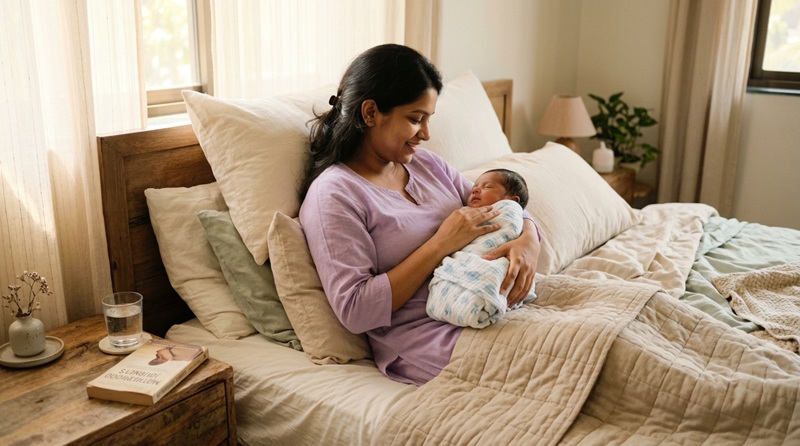
Recovery after a caesarean takes time, but knowing what to expect makes all the difference. It’s finally time for you to meet your baby that’s been growing inside your belly for the past nine months! Now you will make all the time in the world to spend with your little one whose only way of communicating was kicking hard.
While childbirth can be exciting, it can also be extremely tolling on your body, especially if you had a caesarean delivery (C-section) rather than a normal vaginal delivery. Since C-section is a major surgery, it can take as long as 4 to 6 weeks to make a full recovery. Caring for yourself and your wound from C-section delivery is also very important to make celebration merrier.
We asked ourselves: How we can help you in your life easier? By making a better diaper for your baby, of course! Teddyy baby diapers are one of the best disposable diapers in the country. They are:
- Made with materials so soft that rashes are eliminated forever.
- 100% free of any harmful chemicals and fragrances that might harm your baby.
- Enriched with Aloe Vera extracts for enhanced skin care and to keep your baby safe from rashes and infections.
- Equipped with a wetness indicator that shows the right time for a diaper change.
Teddyy Baby Diapers is every ma’s best friend.
In this blog, we are going to take a look at how your C-section recovery will look like and how you can expect things to progress.
Your feelings after caesarean birth
Some mothers will feel just fine after a C-section delivery, but some mothers will feel disappointed at themselves for not being able to give birth vaginally, especially if the C-section delivery was unplanned for. This change in plans at the last moment can be a source of great shock and depression for a lot of mothers.
But, whatever your feelings are, they are OK. As long as you don’t bottle them up and suffer alone. Talk with your partner and loved ones about your complicated feelings.
There are also many doctors and counsellors who can help you sort out your feelings toward caesarean birth. If you feel more comfortable expressing your feelings to people who don’t know you, you can surely give it a try.
Bleeding after caesarean
Even if you’ve had a C-section delivery, you will still have vaginal bleeding for the first 6 weeks after childbirth. This is how your body discharges all the extra tissues and blood your it developed during pregnancy.
This bleeding might be quite heavy in the very first week and should gradually become lighter and completely disappear by the 6th week after childbirth.
But if your bleeding doesn’t stop even after the 6-week period, contact your doctor.
Also contact your doctor if you are soaking through a sanitary pad in an hour or see a lot of blood clots in your discharge, this is not normal and could be a sign of something more.
Pain relief after caesarean
It’s completely fine to take pain relievers after childbirth. This might’ve come as a surprise to you, but we believe it was a good kind of surprise.
But can we really take pain relievers even if we’re breastfeeding? Yes, you can. Some pain relievers are completely safe for breastfeeding mothers and their babies! Just ask your doctor and they will take care of everything from there.
Practical help after caesarean
You will definitely need help with any work that includes stretching and lifting because of your caesarean wounds. Again, it’s completely fine to ask your partner, friends and family for help during the period of recovery.
Don’t feel bad about asking others to carry your weight, you have carried a lot of weight in the past 9 months and your friends and family will understand this. In fact, they will be glad that you reached out to them because being able to help your loved ones when they need it is a privilege.
Exercise, food and sleep after caesarean.
Exercising, eating well, and getting enough sleep can make all the difference you need in your life post birth. You don’t want to spend the months feeling sore and tired instead of spending them with your little one, do you? Then take care of yourself!
- Start with a 5-minute walk around the house and ask your doctor to recommend you some good exercises during your recovery.
- Eat healthy and plenty, there are many special diet charts floating around the internet for caesarean mothers, you can take a look at those to clear your doubts about what’s good for you and what should stay out of your plate or simply consult your doctor.
- Try to get as much sleep as possible. Life with a newborn can be very chaotic and tiring, so try to rest your eyes whenever your little one sleeps.
Life after C-section can be hard and you might feel guilty about having to rely on others in the first few weeks, don’t. Taking care of yourself in this 6-week C-section recovery time is very critical for you and your baby in the long run.
C-section recovery week by week: what to expect
Healing isn’t linear, but a rough timeline helps you know what’s normal:
Week 1 (hospital and first days home): Pain at the incision is sharpest. You’ll need help to sit up, walk to the bathroom, and lift the baby. Bleeding (lochia) is heavy and bright red. Catheter stays in for 12–24 hours, then short walks help prevent blood clots.
Week 2: Incision pain reduces but pulling sensations are common. Bleeding lightens to pinkish-brown. Many women feel emotionally low around days 5–10 — baby blues are normal, but watch for signs of postpartum depression.
Week 3: Most women can walk comfortably indoors. Stairs and bending still need care. Stitches dissolve or are removed if they’re external. Discharge becomes lighter and yellowish.
Week 4: Energy starts returning. Light household tasks are manageable. The scar may itch as nerves regenerate — don’t scratch.
Weeks 5–6: Most internal healing is complete. Your six-week postnatal check clears you for sex, driving, and most exercise (with your doctor’s OK). The scar is still tender — full healing takes 6 to 12 months.
How to care for your C-section incision
- Keep it clean and dry — gentle soap and water in the shower; pat (don’t rub) dry afterwards.
- Loose, high-waisted underwear sits above the scar; tight elastic against the wound is painful and can cause infection.
- Support the incision when you cough, sneeze, or laugh — press a folded pillow or your hand firmly over it.
- Skip baths, swimming, and strong creams on the scar for at least 4 weeks (or until your doctor clears you).
- Once healed (typically 6+ weeks), gentle silicone gel and scar massage can reduce thickness and itching.
Warning signs after a C-section: when to call your doctor
Most C-section recoveries go smoothly, but these symptoms need urgent medical review:
- Fever above 38°C (100.4°F) or chills
- Increasing redness, swelling, warmth, or pus from the incision
- Heavy bleeding that soaks more than one pad an hour, or large blood clots
- Foul-smelling vaginal discharge
- Severe abdominal pain that worsens instead of improves
- Painful, hot, swollen leg (possible blood clot — DVT)
- Chest pain or sudden breathlessness (call emergency services immediately)
- Persistent low mood, intrusive thoughts, or feeling disconnected from your baby beyond two weeks
When can you start exercising after a C-section
Gentle movement begins from day one — short walks around the room prevent blood clots and aid digestion. A safe progression:
- Week 1–2: Slow walks indoors, diaphragmatic breathing, gentle pelvic tilts in bed.
- Week 3–4: Walking outdoors, slowly increasing pace and duration.
- Week 5–6: Add gentle stretches and Kegels.
- After your 6-week clearance: Slowly reintroduce postnatal yoga, swimming, or low-impact strength work.
- Avoid for at least 12 weeks: sit-ups, crunches, planks, heavy lifting, running, and high-impact classes — these stress the scar and weakened core.
A pelvic health physiotherapist can build a personalised return-to-exercise plan and check for diastasis recti (abdominal separation), which is common after a C-section.
Eating well for C-section healing
The right foods speed up tissue repair, prevent constipation (a real concern after surgery), and support breastfeeding. Focus on:
- Protein at every meal — eggs, dal, paneer, chicken, fish, sprouts — to rebuild tissue.
- Vitamin C–rich foods — amla, oranges, guava, capsicum — help collagen formation for wound healing.
- Iron — leafy greens, jaggery, dates, raisins — replenishes blood lost during surgery.
- Fibre and fluids — whole grains, fruits, vegetables, plus 2.5+ litres of water — to prevent painful constipation.
- Healthy fats — ghee, nuts, seeds — provide energy and support hormone balance.
Skip very spicy, oily, or gas-producing foods in the first 1–2 weeks if you find them uncomfortable. Avoid alcohol while breastfeeding.
References & Sources
- World Health Organization (WHO). Maternal and Newborn Health. who.int
- Indian Council of Medical Research (ICMR). National Guidelines for Maternal Care. icmr.gov.in
- American Academy of Pediatrics (AAP). Caring for Your Baby. aap.org
- Indian Academy of Pediatrics (IAP). Child Health Guidelines. iapindia.org
- National Library of Medicine. Diaper Dermatitis. pubmed.ncbi.nlm.nih.gov
- National Institute of Nutrition (NIN). Dietary Guidelines for Indians. nin.res.in
- AAP. Safe Sleep Recommendations. aap.org/safe-sleep