
Understanding the Types of Twins: Identical, Fraternal, and Beyond
By Teddyy Editorial Team | Last Updated: April 23, 2026

Are you expecting twins or curious about what makes them unique? You’ve likely seen twins portrayed in movies or TV shows as telepathically connected beings who share every thought and feeling. But in reality, twins are far more complex and fascinating! Did you know identical twins aren’t always identical in every way, or that fraternal twins are no more alike than regular siblings? Whether you’re exploring the subject of types of twins out of curiosity or gearing up for your own twin adventure, this article breaks down the key aspects of identical twins vs fraternal twins, and other types of twins. Let’s unravel the science—and the surprises—of twinning!
Key Takeaways
- When it comes to identical vs fraternal twins, the key difference lies in how they’re conceived.
- Conjoined twins are a rare and fascinating type of twins that happen when an embryo only partially separates, leaving the two fetuses physically connected as they grow.
- When we talk about the types of twins, mirror twins are definitely one of the most unique and intriguing.
- Semi-identical twins are like nature’s rare masterpiece, blending traits of both identical and fraternal twins.
Identical Twins (Monozygotic)
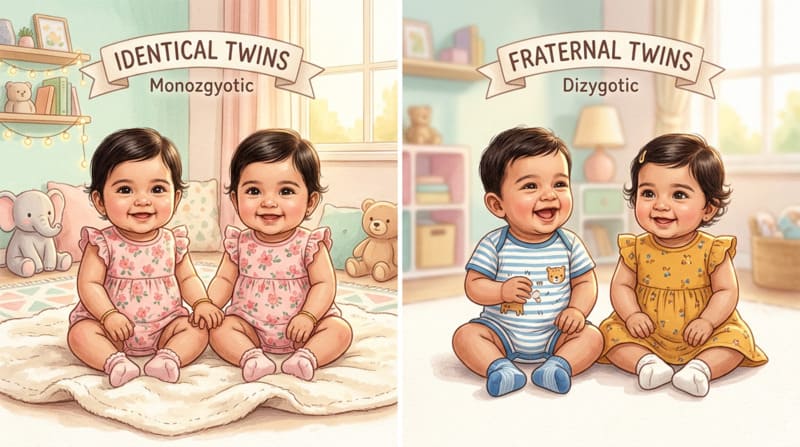
When it comes to the types of twins, identical twins, also known as monozygotic twins, are a fascinating example. These twins come from a single fertilised egg that splits into two embryos. While scientists still don’t know exactly why the split happens, the result is two babies with identical genetic material—coming from the same egg and sperm. This is why identical twins often look so much alike. But here’s the twist: even though they share the same genes, they may not look exactly the same. Factors like different lifestyles, environments, or even small genetic mutations in the womb can cause them to look a bit different. For instance, one twin could have a birthmark, mole, or even be slightly bigger if they received more blood from your placenta. So, while they may share the same genetic blueprint, their unique experiences can still shape their appearance in fascinating ways.
Fraternal Twins (Dizygotic)
When it comes to identical vs fraternal twins, the key difference lies in how they’re conceived. Fraternal twins, also known as dizygotic twins, develop when a woman releases two (or more) eggs during ovulation—a process called superovulation. If two separate sperm fertilize each egg, you get fraternal twins. Unlike identical twins, who share the same genetic material, fraternal twins are no more genetically alike than regular siblings. Each twin gets their own unique combination of genes from mom and dad, so one might have blue eyes and dimples while the other has brown eyes and no dimples. Simply put, fraternal twins are like siblings born simultaneously with their own distinct traits.
Conjoined Twins
Conjoined twins are a rare and fascinating type of twins that happen when an embryo only partially separates, leaving the two fetuses physically connected as they grow. This connection can occur in different areas of the body, like the abdomen, chest, or hips. In some cases, conjoined twins might even share internal organs. While the survival rate is lower, with many conjoined twins not making it to full term or living for a short time after birth, there are cases where surgery can successfully separate the twins, giving them a chance at a more independent life.
Mirror Twins
When we talk about the types of twins, mirror twins are definitely one of the most unique and intriguing. These rare twins are a form of identical twins that occur when the embryo splits a little later than usual. This delay gives the twins time to develop mirrored features. For example, if one twin is right-handed, the other might be left-handed. Or if one has a dimple on the right cheek, the other will have one on the left. This phenomenon happens because the later split allows the fetuses to develop distinct right and left sides. Even though mirror twins might have physical differences like birthmarks or opposite hair whorls, they are still genetically identical.
Semi-identical Twins
Semi-identical twins are like nature’s rare masterpiece, blending traits of both identical and fraternal twins. Here’s how it works: two sperm fertilize a single egg, and then the egg splits into two embryos. So, while these twins share identical genetics from their mom, they only inherit half of their dad’s genes. This makes them different from traditional identical twins, who come from one fertilized egg splitting, and fraternal twins, who result from two separate eggs fertilized by two different sperm. Semi-identical twins are extremely rare, and they show just how wonderfully unique the process of twinning can be.
How Often Each Twin Type Occurs
Fraternal (dizygotic) twins are the most common type worldwide, accounting for roughly two-thirds of all twin births. These happen when two separate eggs are fertilised by two separate sperm. Identical (monozygotic) twins make up the remaining one-third and form when a single fertilised egg splits in the first two weeks.
Conjoined twins are extremely rare — about 1 in 50,000 to 200,000 births. Mirror image twins occur in roughly 25% of identical twins. Semi-identical (sesquizygotic) twins are so rare that only a handful of cases have been medically confirmed worldwide. Fraternal twin rates are also influenced by geography, genetics and fertility treatments.
Chorionicity: Shared vs Separate Placentas
Chorionicity describes how your twins share (or don’t share) the placenta and amniotic sacs — this is the most important factor for pregnancy monitoring. Dichorionic-diamniotic (DCDA) twins have two placentas and two sacs; this is the safest setup and always the case for fraternal twins. Monochorionic-diamniotic (MCDA) twins share one placenta but have two sacs.
Monochorionic-monoamniotic (MCMA) twins share both the placenta and the sac — this is rare and needs very close monitoring because of cord entanglement risk. An early ultrasound between weeks 10 and 14 is the best window to confirm chorionicity. Your obstetrician will tailor scan frequency, delivery timing and fetal monitoring based on this finding.
Health Considerations Unique to Each Twin Type
Identical twins sharing one placenta have a 10-15% risk of twin-to-twin transfusion syndrome (TTTS), where blood flow is unequal between the babies. This requires fortnightly doppler scans from week 16. Selective growth restriction, where one twin grows noticeably smaller, also affects monochorionic twins more often.
Fraternal twins have lower pregnancy complication rates but still face higher risk of preterm labour, gestational diabetes and preeclampsia than singleton pregnancies. Conjoined twins need specialist care from diagnosis, with detailed imaging to plan surgery if separation is possible after birth. Most singleton twin birth outcomes have improved significantly with modern monitoring.
Can You Influence the Chance of Twins
Identical twins are a completely random event — no genetics, age, food or supplements change the odds, which stay at about 3-4 per 1000 births globally. Fraternal twins, however, are influenced by multiple factors. A family history on the mother’s side raises the chance 2 to 5-fold. Maternal age above 30 naturally increases FSH, making hyperovulation more likely.
Fertility treatments are the biggest modern factor — IVF with two embryos transferred makes twins possible in 20-30% of successful cycles, and ovulation-stimulating drugs like Clomid raise the chance to around 10%. Certain ethnic backgrounds (West Africa highest, East Asia lowest) show different baseline rates. Tall women and mothers who have already had multiple pregnancies also have slightly higher fraternal twin rates.
Differentiating Twin Types After Birth
For fraternal twins of different sexes, the diagnosis is obvious at birth. For same-sex twins, placenta examination immediately after delivery is the first clue — one shared placenta strongly suggests identical, though not always. Blood group differences confirm fraternal, but matching blood groups don’t rule in identical either.
The definitive test is DNA zygosity testing — a simple cheek swab from each twin compared in a lab. Many parents choose to do this in the first year since identical vs fraternal affects health planning later (organ donation compatibility, shared disease risk). Around 15-20% of same-sex twins initially assumed to be identical turn out to be fraternal after DNA testing.
Conclusion
Understanding the various types of twins can add a whole new layer of appreciation for the marvels of human development. From identical twins (monozygotic), who come from one fertilized egg splitting into two, to fraternal twins (dizygotic), who result from two separate eggs being fertilized, the world of twins is filled with fascinating possibilities. There’s also the rare and remarkable occurrence of conjoined twins, mirror twins, and even semi-identical twins—each showing how unique and diverse twin pregnancies can be. While the difference between monozygotic twins and dizygotic twins lies in how they form, the types of twins are a perfect example of nature’s endless creativity. Whether you’re a twin or simply curious, exploring these different types opens up a whole new world of wonder.
Related Pregnancy and Baby Articles
- Pregnancy Precautions: A Comprehensive Guide
- Pregnancy Diet Plan Month by Month
- Importance of Prenatal Vitamins
- How to Be a Better Parent
For scientific information about twin pregnancies, visit the American College of Obstetricians and Gynecologists multiple pregnancy guide.
References & Sources
You May Also Like




Frequently Asked Questions
What are the different types of twins?
The main types of twins are identical (monozygotic), fraternal (dizygotic), conjoined twins, mirror twins, and semi-identical twins.
What are 7 twins called?
Seven twins are referred to as septuplets.
What type of twin is the rarest?
The rarest twin type is semi-identical twins, which develop when one egg is fertilized by two sperm, and the egg splits.
What's the difference between identical twins vs fraternal twins?
Identical twins come from one egg and sperm that splits, sharing the same genetic material, while fraternal twins come from two separate eggs and sperm, each having unique genetic makeup.