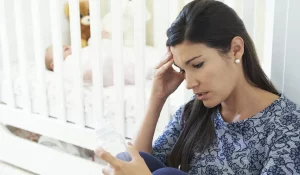
What Really Helps You Bounce Back After Pregnancy
By Teddyy Editorial Team | Last Updated: April 25, 2026

Share The Load After Pregnancy
Learning how to bounce back after pregnancy takes time, patience, and the right support. A new addition to the family will naturally bring a lot of new changes, extra work and responsibilities. It is a daunting task, looking after a little baby and being charged after their health and safety. You are going to learn a lot of things along the way through trial and error. You are going to feel overwhelmed and in need of help.
Do not hesitate to reach out to friends and family at such times. Ask your parents how they managed. If their baby caught a cold, what helped? How did they know that their baby needs feeding before its actually feeding-time? Ask for help around the house, doing the laundry or maybe just to catch a break sometimes. Being a parent is a 24/7 job, but you are allowed to cheat sometimes without feeling guilty. While taking breaks have your kiddo wear Teddyy Baby Diapers, the best diapers for newborn in India.
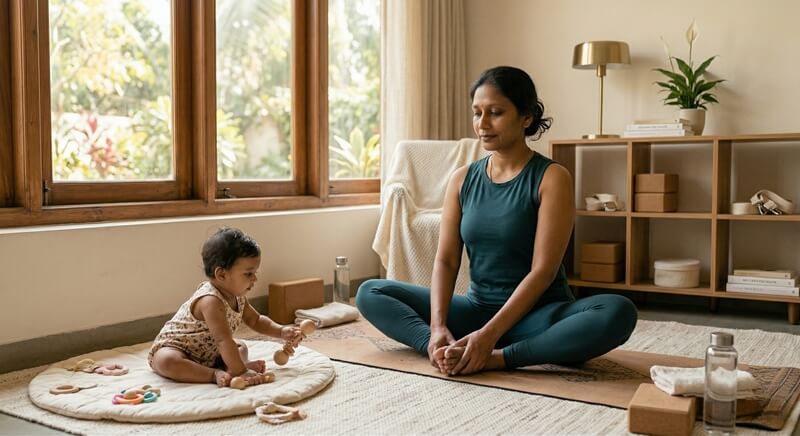
Losing the Baby Weight After Pregnancy
If there’s anything all mothers can agree on, it’s that losing weight after pregnancy is a real struggle. Taking care of a newborn, adjusting to a new routine, coping with the changes in your body; it’s a lot. Yet, many mothers successfully bounce back after pregnancy with the right approach.
But, losing the baby fat is important not just to feel like yourself again, but also for health reasons.
If you keep the weight, you might be at risk of:
- Diabetes and heart diseases
- Facing complications during your next pregnancy
- Other health risks for women with gestational diabetes
You are likely to lose a lot of weight right after birth. This is because the following things were contributing to your weight:
- The baby and its placenta
- amniotic fluid
- blood
- uterus enlargement
- extra fat stores for the baby
- breast tissue
Let’s go over a few things that might help you lose excess weight.

Breastfeeding to Burn Calories After Pregnancy
Breastfeeding is recommended by the World Health Organization (WHO) for both the baby’s and mother’s health. Here’s why:
- Breastfeeding your baby gives them all the nutrition they need for at least the first six months of their life.
- Breast milk supports your baby’s immune system and helps them fight bacteria they might otherwise be prone to during the formative months of their life.
- Breastfed babies have lesser chances of developing diseases in the future.
- It protects the mother from many diseases such as type 2 diabetes, breast cancer, ovarian cancer and high blood pressure.
- Breastfeeding helps you lose weight more quickly postpartum. It burns up to 500 calories a day. This is not to say that you should depend solely on breastfeeding to lose weight. Make sure you’re hydrating yourself, having nutritional meals and also exercising daily.
Taking proper breast care after delivery is very important, especially if you breastfeed your baby. Give them massages every now and then, cold compresses work really well for swollen, painful breasts.
Post Pregnancy Workouts: Bouncing Back After Pregnancy
Finding time to exercise with a baby can be difficult. There are training videos available online if you’re finding it hard to fit working out at the gym into your routine.
Taking a simple walk in a park can go a long way. You can try resistance training along with core strengthening exercises to lose weight and tone down. Pairing resistance training with proper diet is the best way to reduce weight and improve heart health — and it is one of the most effective strategies to help you bounce back after pregnancy.

Postnatal Vitamins After Pregnancy
After a demanding nine months, the nutrient stores in your body need replenishing. Supplements help in recovering after delivery. You should ideally keep taking postnatal vitamins for at least up to 6 months or the duration of breastfeeding. Continue taking pre- or postnatal vitamins with folate, DHA, Vitamin D and iodine. These nutrients are essential as you bounce back after pregnancy. These can help your baby’s brain development, processing skills and visual acuity while you are breastfeeding them.
Don’t be illusioned by unrealistic standards of ‘bouncing back after a pregnancy’ on the internet today. Chances are you might never get your pre-pregnancy body back. So, instead look after and nourish your body in a way that facilitates healing and recovery.
Set realistic expectations for your bounce-back timeline
Your body took 9 months to grow a baby — give it at least that long to recover. Most women feel close to their pre-pregnancy self around 9–12 months postpartum, but full recovery (especially for the pelvic floor and core) often takes 18 months or longer. Comparing your progress to celebrity timelines or another mother’s journey usually does more harm than good.
The first six weeks are about healing, not fitness. Bleeding, hormonal swings, and tissue repair are still happening. By weeks 6–12, gentle activity becomes safe for most women. Real strength and stamina rebuild between months 3 and 12.
Prioritise sleep and stress recovery
Sleep deprivation slows healing, raises cortisol, and makes weight loss harder. While uninterrupted nights aren’t realistic with a newborn, you can stack short rest periods strategically:
- Sleep when the baby sleeps — at least one nap a day, even 30 minutes helps.
- Take turns with your partner on night feeds where possible (express milk if breastfeeding).
- Limit caffeine after midday so naps come easier.
- Protect your wind-down routine: dim lights, no screens 30 minutes before bed.
If you feel persistently low, anxious, or unable to sleep even when the baby does, speak to your doctor — these are early signs of postpartum depression, not just “new mom tiredness.”
Rebuild your core and pelvic floor first
Crunches, planks, and intense workouts before your core has reconnected can worsen diastasis recti (abdominal separation) and cause pelvic floor problems including prolapse and incontinence. Start with:
- Diaphragmatic breathing — 5 minutes, twice a day, from week 1
- Kegels — gentle pelvic floor contractions starting day 2-3 after birth
- Pelvic tilts and bridges — from week 4-6 if comfortable
- Walking — start with 10 minutes a day, build gradually
A pelvic health physiotherapist (postnatal women’s health PT) is the gold standard — even one session can identify issues you’d miss on your own.
When to talk to your doctor
Some bounce-back struggles need professional input, not more willpower. See your doctor if you notice:
- Bleeding that gets heavier instead of lighter, or returns after stopping
- Pelvic pain, leaking urine, or a heavy/dragging feeling in the vagina
- A bulge or visible gap in your abdominal wall when you sit up
- Persistent low mood, intrusive thoughts, or inability to enjoy your baby
- No weight loss after 6 months despite balanced eating and gentle movement (could signal a thyroid issue)
- Hair loss in patches, or extreme fatigue beyond normal newborn tiredness
Your six-week postnatal check is not optional — it’s the single most important appointment for catching recovery issues early.
Related Reads on Postpartum Recovery
Read more about postpartum recovery:
- Self-Care Tips for New Mums
- Taking Care of Yourself After Birth
- Pelvic Floor Exercises After Delivery
Quick Recovery Tips for the First Six Weeks
Getting back to your pre-pregnancy self takes patience. Focus on gradual progress rather than quick fixes. Gentle walking, proper nutrition, and adequate sleep form the foundation of a healthy recovery after pregnancy.
For medical guidance on recovery after pregnancy, visit the American College of Obstetricians and Gynecologists.
References & Sources
- World Health Organization (WHO). Maternal and Newborn Health. who.int
- Indian Council of Medical Research (ICMR). National Guidelines for Maternal Care. icmr.gov.in
- American Academy of Pediatrics (AAP). Caring for Your Baby. aap.org
- Indian Academy of Pediatrics (IAP). Child Health Guidelines. iapindia.org
- National Library of Medicine. Diaper Dermatitis. pubmed.ncbi.nlm.nih.gov
- National Institute of Nutrition (NIN). Dietary Guidelines for Indians. nin.res.in
- AAP. Safe Sleep Recommendations. aap.org/safe-sleep