10 Proven Baby Skin Care Tips for Summer to Beat the Heat
By Teddyy Editorial Team | Last Updated: July 7, 2026

Skin care for your baby becomes a top priority with the approach of scorching summers. As a parent, knowing the right baby skin care tips for summer can make a huge difference in keeping your little one comfortable and rash-free. Many new parents wonder how to protect their little one’s delicate skin from the harsh sun, rising temperatures, and humidity. Whether it is your baby’s first summer or your toddler is stepping out more often, taking the right precautions can prevent sunburns, heat rashes, dehydration, and overall discomfort.
The good news is that a few simple baby skin care habits, when followed consistently, can help manage most summer skin problems in infants and toddlers. From choosing the right fabrics to adjusting bath routines, every small step matters. Below are 10 proven baby skin care tips for summer that every parent should follow. These baby skin care tips for summer are simple, effective, and paediatrician-approved.
1. Choose Airy and Soft Cotton Clothes
The clothes your baby wears play a huge role in how comfortable they feel during summer. Always choose light-coloured, loose-fitting clothes made from natural fabrics like cotton. Cotton is breathable, absorbs sweat well, and reduces the chances of heat rashes and skin irritation.
Avoid synthetic fabrics such as polyester or nylon, as they trap heat and moisture against the skin. Also, resist the urge to overdress your baby. A single layer of soft cotton clothing is usually enough during warm days. If you are stepping out, a light cotton cap or hat can provide additional sun protection for the head and face.
For babies who are still in diapers, make sure the diaper is breathable and fits well. A tight or poor-quality diaper can trap moisture and lead to painful diaper rash, especially in summer. Consider using premium diapers with high absorbency and a soft inner lining.

2. Use Baby-Safe Sunscreen When Stepping Out
Going outdoors is sometimes unavoidable, but you should always protect your baby’s skin before heading out. For babies older than 6 months, apply a baby-safe, broad-spectrum sunscreen with SPF 30 or higher at least 20 minutes before going outside. Choose a sunscreen that is fragrance-free, hypoallergenic, and specifically formulated for infants.
For babies younger than 6 months, the American Academy of Pediatrics recommends avoiding direct sunlight altogether. Instead, use physical barriers like a stroller canopy, an umbrella, or lightweight full-sleeve clothing to shield them.
Reapply sunscreen every 2 hours if your baby is outdoors for an extended period, and always reapply after sweating or water exposure. Don’t forget commonly missed spots like the ears, back of the neck, tops of the feet, and hands. Sun protection is one of the most critical baby skin care tips for summer that parents often underestimate.
3. Keep Your Baby Well Hydrated
Dehydration is one of the most common and dangerous concerns for babies during summer. Babies lose more fluids through sweat in hot weather, and since they cannot communicate their thirst clearly, parents need to be proactive.
If you are breastfeeding, increase the frequency of feeds during summer. Breast milk provides complete hydration and nutrition for babies under 6 months. For formula-fed babies, you may offer small sips of water between feeds after consulting your paediatrician.
For older babies and toddlers (above 6 months), offer water regularly throughout the day. You can also include hydrating foods in their diet such as watermelon, cucumber, muskmelon, and fresh fruit purees. Watch for signs of dehydration like fewer wet diapers, dry lips, sunken eyes, or unusual fussiness, and consult your doctor immediately if you notice them. Keeping your baby hydrated is an essential baby skin care tip for summer that supports overall skin health too.
4. Give Frequent Lukewarm Baths
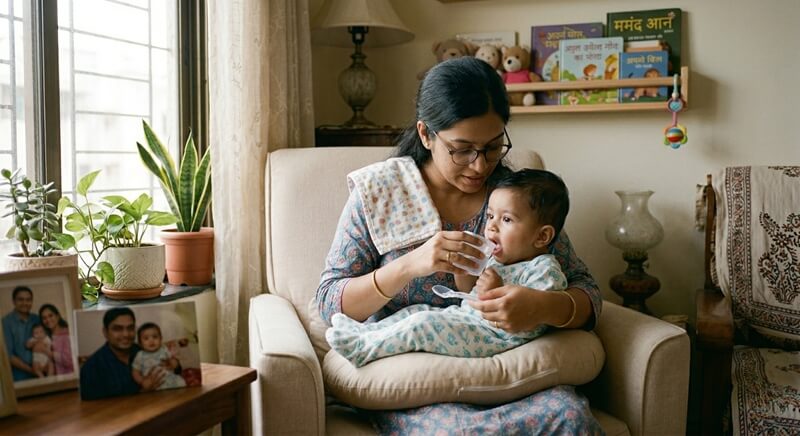
Bathing your baby more frequently during summer helps wash away sweat, dirt, and bacteria that can clog pores and cause rashes. However, it is important to use lukewarm water rather than cold water, as cold water can shock a baby’s system.
Use a gentle, pH-balanced baby wash that is free from harsh chemicals, sulphates, and artificial fragrances. Avoid scrubbing the skin vigorously. Instead, use a soft washcloth and pat the skin dry with a clean towel. Pay special attention to skin folds around the neck, armpits, behind the ears, and the diaper area, as these spots are most prone to sweat accumulation and rashes.
After bathing, let your baby air-dry for a few minutes before dressing them. Following these baby skin care tips for summer consistently can prevent most common skin problems during the hot months. This helps cool down the body naturally and allows the skin to breathe.
5. Moisturise with a Lightweight Baby Lotion
Even in summer, a baby’s skin needs moisture. Air conditioning, sun exposure, and frequent bathing can strip the skin of its natural oils. However, you should switch from thick winter creams to a lightweight, water-based baby moisturiser during the warmer months.
Apply the moisturiser immediately after a bath while the skin is still slightly damp to lock in hydration. Look for products that are dermatologically tested, fragrance-free, and formulated for sensitive baby skin. Avoid petroleum-based products in summer as they can clog pores and trap heat, potentially worsening rashes. This is one of the most overlooked baby skin care tips for summer that dermatologists recommend.
6. Protect Your Baby from Insect Bites
Summer also brings mosquitoes, flies, and other insects that can bite and irritate a baby’s sensitive skin. Insect bites can cause swelling, redness, itching, and in some cases even infections or allergic reactions.
Use a baby-safe mosquito repellent when heading outdoors, but avoid applying it on the hands or near the eyes and mouth. At home, use mosquito nets over the crib and ensure windows have proper mesh screens. Dress your baby in light, full-sleeve clothing during the evening when mosquitoes are most active.
If your baby does get bitten, apply a gentle calamine lotion to soothe the area and prevent scratching. If any bite shows signs of infection such as pus, increasing redness, or swelling, consult your paediatrician promptly. Insect protection is often overlooked as a baby skin care tip for summer, but it is equally important.
7. Change Diapers Frequently
In summer, sweat and heat combined with a wet diaper create the perfect environment for diaper rash and fungal infections. This is why frequent diaper changes become even more critical during the hot months.
Check your baby’s diaper every 1 to 2 hours and change it immediately after every bowel movement. During diaper changes, clean the area gently with fragrance-free baby wipes or plain water, and allow the skin to air-dry before putting on a fresh diaper. Applying a thin layer of zinc oxide-based diaper rash cream can also provide a protective barrier.
Whenever possible, give your baby some diaper-free time each day. Letting the skin breathe and air out for 15 to 20 minutes can significantly reduce the risk of rashes and keep the diaper area healthy. This diaper-free routine is one of the most effective baby skin care tips for summer for preventing nappy rash.
8. Avoid Stepping Out During Peak Sun Hours
The sun’s ultraviolet rays are strongest between 10 AM and 4 PM. During these hours, the risk of sunburn and heat exhaustion is at its highest, especially for babies whose skin has less melanin and is far more vulnerable to UV damage than adult skin.
Plan outdoor activities such as walks, park visits, or errands for early morning (before 10 AM) or late evening (after 4 PM) when the temperatures are lower and the sun is less intense. If you do need to go out during peak hours, keep the trip as short as possible and ensure your baby is well-covered with a hat, sunglasses (for toddlers), and loose clothing.
Always carry a shade-creating accessory like an umbrella or stroller canopy, and make sure the car seat area is cool before placing your baby in it. A hot car seat buckle or surface can burn a baby’s delicate skin. Timing outdoor activities wisely is one of the most important baby skin care tips for summer to prevent UV-related damage.
9. Spot and Treat Heat Rashes Early
Heat rash, also known as prickly heat or miliaria, is extremely common in babies during summer. It appears as small red bumps or tiny blisters, usually on the neck, chest, back, diaper area, and skin folds. Heat rash occurs when sweat gets trapped under the skin due to blocked sweat ducts.
To prevent heat rash, keep your baby cool, dress them in breathable clothing, and avoid overheating. If you notice signs of heat rash, move your baby to a cool, air-conditioned room and remove excess clothing. You can apply a cool, damp cloth to the affected area for relief.
Avoid using talcum powder on heat rashes as it can further block pores. Instead, let the skin air out and keep the area dry. Most heat rashes resolve on their own within a few days, but if the rash worsens, develops pus, or if your baby develops a fever, seek medical attention immediately.
10. Maintain a Cool and Comfortable Sleeping Environment
Quality sleep is essential for a baby’s growth and immune system, and summer heat can seriously disrupt their sleep patterns. A hot, stuffy room can make your baby restless, cranky, and more susceptible to heat rashes.
Keep the nursery or bedroom at a comfortable temperature between 24°C to 26°C using an air conditioner or fan. If using a fan, ensure it is not blowing directly on the baby. Dress your baby in a single layer of light cotton sleepwear and use a thin cotton sheet instead of heavy blankets.
Make sure the crib mattress has a breathable, cotton cover. Avoid placing too many stuffed toys or extra bedding in the crib, as these can trap heat. A cool, well-ventilated room helps your baby sleep better and keeps skin problems at bay. Creating the right sleep environment is one of the underrated baby skin care tips for summer that paediatricians recommend.

Related Skin Care and Baby Care Articles
Taking care of your baby’s skin during summer is important for both mothers and babies. Following the right baby skin care tips for summer will ensure your little one stays healthy and happy throughout the season. Check out these helpful resources for more expert advice on baby skin care tips for summer:
- Self Care Tips for New Mums
- Diaper Rash: Causes, Symptoms and Remedies
- Taking Care of Yourself After Birth
For expert skin care advice and dermatology guidelines, visit the American Academy of Dermatology sun protection guide.
References & Sources
- World Health Organization (WHO). Maternal and Newborn Health. who.int
- Indian Council of Medical Research (ICMR). National Guidelines for Maternal Care. icmr.gov.in
- American Academy of Pediatrics (AAP). Caring for Your Baby. aap.org
- Indian Academy of Pediatrics (IAP). Child Health Guidelines. iapindia.org
- National Library of Medicine. Diaper Dermatitis. pubmed.ncbi.nlm.nih.gov
- National Institute of Nutrition (NIN). Dietary Guidelines for Indians. nin.res.in
- AAP. Sun Safety and Protection Tips. aap.org/sun-safety