
Breathing Techniques for Labour Pain: Natural Methods to Stay Calm & In Control
By Teddyy Editorial Team | Last Updated: April 23, 2026

A quiet moment with your partner—laughter, small talk, a final check of the hospital bag—can be abruptly interrupted by a contraction. As your body tightens and your breathing shifts, the reality of labour settles in. Sounds feel sharper, your heartbeat quickens, and the intensity of the experience can feel overwhelming.
In that moment, when everything seems to take over at once, learning to work with your breath instead of fighting it can make all the difference. Your breath becomes your steady anchor, guiding you through each wave of labour with more calm, focus, and control.
Key Takeaways
- Breathing does not only involve inhaling oxygen.
- There isn’t one “perfect” method that works for everyone.
- Early labour is when contractions become regular but are still manageable.
- Active labour is intense.
- Pain during labour isn’t just physical, it’s emotional and psychological too.
Why Breathing Is Important During Labour
Breathing does not only involve inhaling oxygen. During labour, your breathing pattern directly affects your body’s response to pain. Breathing slowly and deeply sends your brain the signal that you are safe. This helps reduce panic, tension, and unnecessary stress.
Regular breathing keeps your muscles relaxed, helps your uterus work efficiently, and ensures your baby receives a steady flow of oxygen.
Breathing is the natural pain-management tool you carry within you, one that requires no equipment, is free to use, and returns control to you. This is why breathing techniques for labour pain have been relied upon by mothers for generations, even before modern medicine.
Best Breathing Techniques for Labour Pain
There isn’t one “perfect” method that works for everyone. Labour changes phase by phase, and your breathing can change with it. The key is to stay flexible and listen to your body.
The most effective breathing techniques during labour focus on three things:
- Relax the jaw, shoulders, and pelvic muscles
- Prevent breath-holding during contractions
- Stay mentally present rather than fearful
When you breathe with awareness, the pain may not disappear, but it becomes more manageable. You stop fighting your body and start working with it.
Breathing Exercises for Early Labour
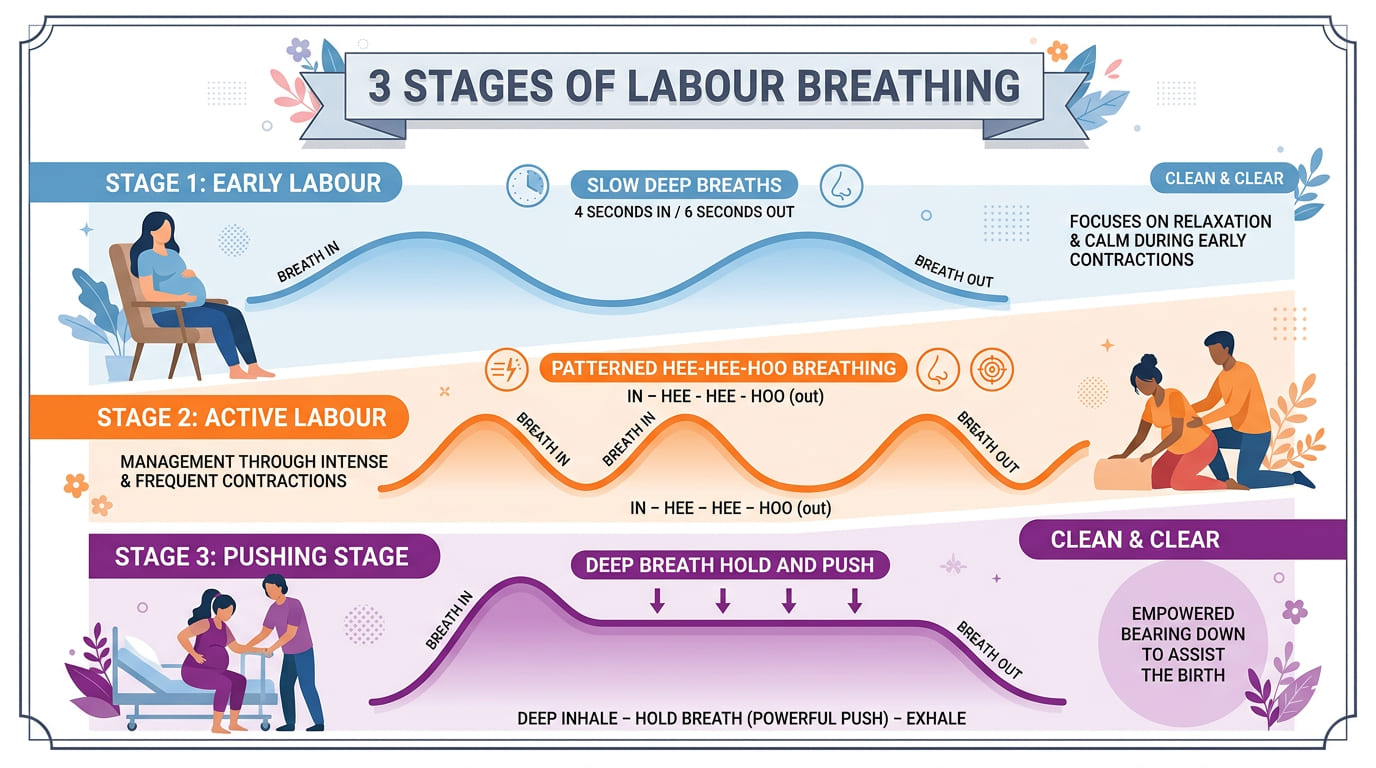
Early labour is when contractions become regular but are still manageable. This phase can last hours, sometimes even a full day. The goal here is simple: stay calm and conserve energy.
-
Slow Deep Breathing
As a contraction starts, breathe in slowly through your nose for four counts and let your belly expand. Then exhale gently through your mouth for six counts. This longer exhale naturally relaxes your nervous system.
This breathing exercise for labour is especially helpful when contractions are mild but frequent, as it prevents early tension.
-
Cleansing Breath
At the beginning and end of every contraction, take one deep, audible breath in and release it slowly. This signals your body that a contraction has started and ended. Many mothers find this technique comforting because it creates a steady rhythm they can rely on.
-
Breath Awareness
Instead of controlling your breath too much, simply notice it. Place one hand on your chest and one on your belly. Breathe naturally and ensure your belly rises more than your chest. This keeps your body relaxed, steady, and grounded.
Early labour is your warm-up. Practising breathing techniques for birth at this stage helps you feel more confident as labour progresses.
Breathing Techniques for Active Labour
Active labour is intense. Contractions grow stronger, longer, and closer together. This is where many mothers feel overwhelmed, but it’s also where breathing becomes most powerful.
-
Patterned Breathing
As a contraction builds, try a rhythm like: Inhale – exhale – inhale – exhale – long exhale
This gives your mind something to focus on besides the pain. Patterned breathing is one of the most effective breathing techniques during labour, especially when contractions peak.
-
Light, Shallow Breathing
When contractions feel too strong for deep breaths, shift to lighter breathing. Breathe in and out gently through your mouth, almost like you are blowing on a candle without putting it out.
This prevents breath-holding, which can otherwise increase pain and exhaustion.
-
Vocalised Exhalation
Letting out a low “ahhh” or “oooh” sound while exhaling relaxes your jaw, and when your jaw relaxes, your pelvic floor follows. This simple technique can significantly reduce tension during active labour.
Remember, pain often increases when you resist it. These breathing techniques for labour pain help you soften into each contraction rather than fight it.
How Breathing Helps Reduce Labour Pain
Pain during labour isn’t just physical, it’s emotional and psychological too. Fear tightens your muscles. Tension restricts oxygen. And restricted oxygen makes contractions feel more painful.
Breathing breaks this cycle.
When you practise controlled breathing:
- Your body releases endorphins, nature’s painkiller
- Blood flow to the uterus and placenta improves
- Your anxiety reduces, helping labour progress smoothly
- Your confidence increases, making you feel less helpless
Many mothers are surprised by how much breathing techniques for birth can reduce the intensity of pain—not by eliminating it, but by making it feel purposeful and manageable.
Breathing also helps you stay present. Instead of worrying about how long labour will last, you focus on getting through one contraction at a time.
Tips to Practice Breathing Before Delivery
Breathing is just like anything else; it should be practised. You do not have to spend hours; it only takes a routine.
- Practise daily from your third trimester for at least 5–10 minutes.
- Experiment with different techniques and see what feels most comfortable.
- Practise during mild discomfort, such as back pain or cramps.
- Join pregnancy yoga or antenatal breathing classes.
- Practise with your partner so they can guide you during labour.
Common Breathing Mistakes Women Make in Labour
The most frequent mistake is holding the breath at the peak of a contraction — this spikes blood pressure, drops oxygen to the baby, and intensifies pain. The opposite mistake is fast, panicky chest breathing, which causes hyperventilation, dizziness, and tingling in the hands. Some women clench their jaw, neck and shoulders while focusing on the lower body — tension travels and locks the pelvic floor, slowing dilation. Forgetting to breathe between contractions is also common; that recovery breath is when the baby gets a fresh oxygen burst. Practice with a partner who can remind you to drop the shoulders, soften the jaw, and exhale slowly during each surge.
Pairing Breathing With Movement and Position
Breathing works best when matched to the body’s position. Standing or leaning forward against a wall during early labour pairs well with slow, deep belly breathing. On a birth ball, slow rocking movements combine naturally with patterned 4-in-4-out breathing. Hands-and-knees position with light shallow breathing helps when the baby is in a posterior position and back labour is intense. During the pushing stage, take a deep cleansing breath, hold for 5 to 6 seconds while bearing down, and release with an open-mouth exhale — this protects the perineum and lowers the risk of tearing compared to forced breath-holding.
How a Birth Partner Can Lead the Breathing
A calm, steady birth partner is one of the most underrated pain management tools in labour. Practice together in pregnancy: have your partner sit facing you, hold your hands, and breathe in and out audibly so you can copy the rhythm without thinking. During contractions, your partner should keep eye contact and breathe slightly slower than you to gently pull your pace down. Simple cues like “in for four… out for six” or “soft jaw, soft shoulders” work better than long instructions. Avoid rubbing or talking at the peak of a contraction — most women want stillness and silence, only voice and breath.
Conclusion
Labour is a deeply personal experience, which is intense, unpredictable, and incredibly transformative. While you may not be able to control how each contraction feels, your breath gives you a powerful way to stay calm, present, and in control. By understanding why breathing matters, practising different techniques, and trusting your body, you can move through labour with greater confidence and ease.
Just as your breath stays with you through every moment, having gentle, dependable support like Teddyy alongside you throughout your motherhood journey can make all the difference. One breath, one contraction, one moment at a time, you are never truly alone.
References & Sources
You May Also Like




Frequently Asked Questions
Which breathing technique is best for labour pain?
There isn’t a single specific breathing technique that is “best” for managing labour pain. Patterned or shallow breathing can be more beneficial during an active labour, whereas slow, deep breathing is effective in early labour. Breathing techniques that help you remain calm and focused are the best to use during labour pain.
How does breathing help during labour?
Breathing helps relieve tension, enhance oxygen circulation, and relax your nervous system. This makes contractions feel easier to handle and helps you feel more in control of your body.
When should you start practising breathing exercises?
Breathing exercises can be practised at any point in time during either the second or third trimester. The sooner you start, the more natural it becomes during labour.
Can breathing reduce the need for pain medication?
For many mothers, yes. While breathing does not remove pain entirely, it can reduce its intensity enough to delay or avoid medication. Every labour is different, and breathing supports whatever choices you make.
Are breathing exercises safe during labour?
Absolutely. Breathing techniques during labour are natural, safe, and recommended by childbirth educators and healthcare professionals worldwide.
Can partners help with breathing techniques during labour?
Yes, and it helps immensely. Your partner can remind you to breathe, match your rhythm, or breathe with you during contractions. Their calm presence can make a big difference.