

By Nobel Hygiene Team | Last Updated: April 18, 2026
1-Month Baby Guide: Feeding, Sleep & First Checkups
It’s amazing how much life changes in just four weeks, isn’t it? You used to measure your day in hours; now it’s measured in naps, feeds, and diaper changes. The nights are still long, and the days might feel like one big blur, but in between the infant developmental milestones, there are also heart-melting moments to look forward to—a soft coo, a little stretch, or the way your baby’s fingers curl around yours.
At one month, your baby is growing faster than you think. From subtle head lifts to more alert gazes, these 1 month milestones are small but magical signs of healthy progress. Let’s take a gentle, real-world look at what’s happening right now–your baby’s feeding and sleep needs, common concerns, and how to make the most of this tender phase while also caring for yourself.
Growth & Milestones
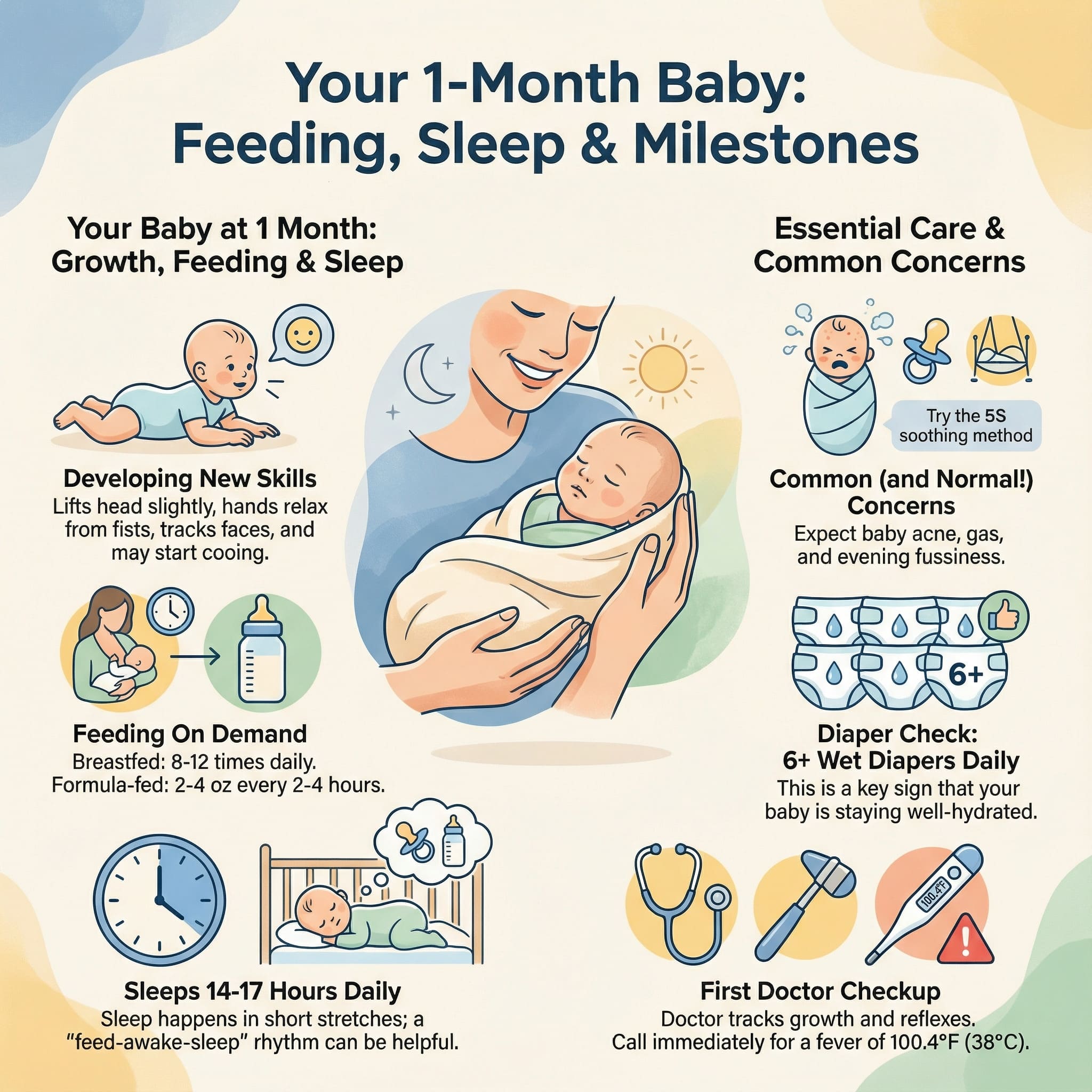
By the end of the first month, your baby is starting to feel a little stronger and more alert. One of the most noticeable 1 month baby milestones is head movement. Your baby might lift their head slightly during tummy time, but still needs full support when held upright.
Those tiny hands that were clenched into fists since birth will begin to relax, and you may even notice your baby tracking your face or following high-contrast patterns. They might respond to familiar voices, and some babies even start with their first “coos.” These 1 month old milestones are signs that your baby’s brain and body are developing beautifully.
Every baby grows differently, so don’t stress if yours reaches their one month old milestones a little later—development isn’t a race; it’s a journey. Your baby’s unique rhythm will unfold naturally with your love and care.
Feeding & Sleep
Feeding at this stage can still feel like a full-time job. Most breastfed babies feed 8–12 times a day, while formula-fed babies typically take about 2–4 ounces every 2–4 hours. Instead of focusing on the clock, watch for hunger cues such as rooting, sucking on hands, or fussiness, and fullness signs such as turning away or slowing down at this stage of one month old milestones.
There’s no need for a rigid 1 month baby food chart yet; it’s all about responsive feeding. Your baby’s tummy is still tiny, and their appetite will vary. Trust your instincts—no one knows your baby better than you.
When it comes to sleep, you can expect your little one to sleep for around 14-17 hours in a 24-hour period. It’ll come in short stretches, so naps and night feeds will continue. Try to follow a gentle “feed–awake–sleep” rhythm in this 1 month old milestones to help your baby learn when it’s time to rest.
And remember, safe sleep always matters. Avoid soft bedding or pillows in the sleep area, and let your little one rest peacefully.
Common Concerns
If you’re noticing tiny bumps, flaky skin, or extra fussiness, breathe. These are all part of early baby development at 1 month.
- Baby acne or cradle cap: These harmless skin conditions are common and usually fade on their own.
- Gas and spit-up: Babies’ digestive systems are still adjusting. Burp your baby after feeding, and keep them upright for a few minutes to ease discomfort.
- Poop patterns: Expect several wet diapers and at least a few dirty ones daily. Poop colour and consistency may vary from mustard yellow to greenish tones, all of which are normal for this stage.
- Evening fussiness: Many babies have a “witching hour” in the evening. Try soothing techniques like gentle rocking, swaddling, or white noise. The 5S method (Swaddle, Side-stomach position, Shush, Swing, Suck) can be a lifesaver.
If you ever feel unsure, it’s always okay to call your doctor. You’re not overreacting—you’re being a caring parent during these 1 month old milestones.
Diapering & Hygiene
By now, in these one month old milestones, you’ll probably have your diaper-changing routine down (or at least, almost figured out!). Most babies need six or more wet diapers a day, a good sign they’re well-hydrated.
If you notice redness on your baby’s bum, use a barrier cream and make sure the diaper fits snugly—not too tight, not too loose. A well-designed diaper, like Teddyy Diapers, keeps leaks and rashes at bay while keeping your baby comfortable throughout these 1 month baby milestones.
Bath time doesn’t need to be daily. 2–3 times a week is enough. Use a gentle cleanser and warm water. Keep the cord stump dry and clean until it falls off naturally during the baby development in 1 month.
Doctor Visits & Vaccines
Your baby’s 1-month checkup is an important milestone, not just for your little one, but for you too. During this visit, your doctor will check your baby’s weight, height, and head circumference to track growth. They’ll review reflexes, feeding patterns, and sleep through simple checks.
Depending on your local vaccination schedule, some babies get their first vaccines around the 6–8 week mark. You’ll also receive guidance on introducing vitamin D supplements, especially if you’re exclusively breastfeeding.
Keep a infant milestones chart handy or use a baby app to track progress. It helps you notice patterns and spot changes early. And if something worries you, no matter how small, bring it up at the next doctor’s visit. There’s no such thing as a “silly” question when it comes to your baby’s health.
Parent Self-Care
Yes, this part’s for you. Because your well-being directly supports your baby’s.
Sleep when you can; even short naps help. Keep snacks and water handy, and accept help when offered. Share night duties with your partner or loved ones if possible.
Watch your mood closely; it’s normal to feel emotional or overwhelmed. Still, if sadness, stress, or hopelessness last more than two weeks, it could be postpartum depression or anxiety, and it’s okay to seek help. You deserve support and rest, too.
Motherhood isn’t about perfection; it’s about presence, patience, and love. You’re already giving your baby everything they need!
Play & Stimulation
Even at 1 month, your newborn benefits from gentle sensory experiences. Hold your baby close and make eye contact while talking or singing softly — this builds early bonding and language foundations. High-contrast black and white images or cards placed 20 to 30 centimetres from their face stimulate developing vision. Short tummy time sessions of 2 to 3 minutes on a firm surface strengthen neck and shoulder muscles. Gently move a colourful rattle across their line of sight to encourage visual tracking. Skin-to-skin contact, gentle massage, and simply narrating your day all count as meaningful stimulation at this early stage.
Conclusion
This first month is about learning from each other. Your baby is discovering the world, and you’re discovering your strength and abilities as a new parent. Every feed, every diaper change, and every sleepless night count in your baby's developmental journey.
As you celebrate your baby’s 1 month milestones, take a quiet moment to acknowledge yourself, too. You’ve brought new life into the world and are doing an incredible job. The days and nights might seem like a hectic haze, but the love you’re building right now will last a lifetime.
Related Guides
Expecting another little one? Explore our 9th month pregnancy guide for tips on the final stretch before delivery. Also, see what to expect next in our 2-month baby guide.
Frequently Asked Questions
1. How much should a 1-month-old eat per feed?
Most breastfed babies feed 8–12 times in 24 hours. Formula-fed babies usually take 2-4 ounces every 2-4 hours. During these 1 month milestones, watch your baby’s cues; they’ll tell you when they’re hungry or full.
2. How long can a 1-month-old sleep at night?
Most one-month-olds sleep in short stretches of 2–4 hours. Night sleep will gradually increase over time, but frequent waking for feeds is still normal at this stage.
3. How many wet and dirty diapers are normal?
About six or more wet diapers a day show your baby is well-hydrated. Poop frequency can vary; some poop after every feed, while others only go once a day.
4. When should I worry about a fever?
If your baby’s temperature is 100.4°F (38°C) or higher, contact your doctor right away. Fever in a newborn needs prompt attention.
5. Is spit-up normal or is it reflux?
Small spit-ups after feedings are common, but if your baby is vomiting forcefully, isn’t gaining weight, or it seems like they’re in pain, consult your doctor.
6. What vaccines/checkups happen around 1 month?
The first checkup includes growth measurements, reflex checks, and a discussion of feeding and sleep. Some babies get early vaccines around 6–8 weeks, depending on your doctor’s advice.