
How Pregnancy Can Permanently Change Your Body
By Teddyy Editorial Team | Last Updated: April 25, 2026
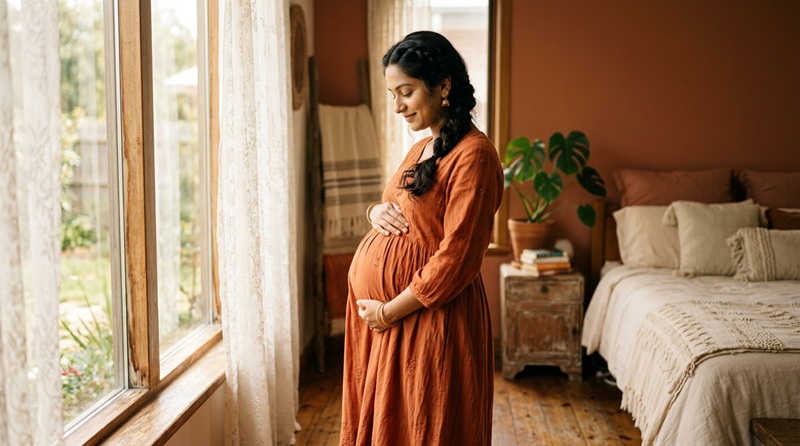
Pregnancy is beautiful! The moment you come to know you’re going to have a baby; you know your life’s about to change in wonderful ways.
With pregnancy, your body goes through some unbelievable changes too. At no other point in your life will you grow an entirely new organ (Hello placenta!) or force your heart to pump 50% more blood.
So now tell us, would you be surprised if this wonderful process leaves some permanent changes? You wouldn’t, or you shouldn’t! Here are some changes that can stick with you for the long term:
Strengthening your core starts with pelvic floor exercises after delivery.
Skin
Your skin changes a lot during pregnancy due to hormones. For instance, the usual color of your nipples, areolas (the circle around nipples) and moles may morph into a darker shade during pregnancy and stay that way forever.
Looking to get back in shape? Here are 5 ways to safely lose weight after having a baby.
The same goes for melasma – also known as ‘the mask of pregnancy’ – a skin condition that causes dark patches and spots to appear on your face. These patches will usually fade away within one year from childbirth, but for some mothers, it might not fade away for years or forever.
Stretch marks developed during pregnancy might grow smaller and fade away in a year or two after childbirth, but they don’t ever really disappear. Also, expect the skin of your stomach to grow saggy and be that way forever.
Hips
Your hips broaden during pregnancy, to be more precise, your pelvic bone widens slightly to let your baby pass through the birth canal. As a result, your jeans from before your pregnancy might not fit you anymore. But for some women, the hips might shift back to normal, for others, it won’t. A few lucky ones won’t even notice any changes with their hips.
Breasts
Breasts grow, shrink, then droop in the process of birthing a little human. For some lucky few, breasts after pregnancy might stay the same. The color of the nipples too goes a few shades darker. So, you can know for sure that pregnancy will change your breasts.
Your breasts grow during pregnancy due to pregnancy-related weight gain and in anticipation of nursing your baby. After delivery, they will continue to be large as long as you’re breastfeeding. Once you and your baby decide to call it quits and your breasts stop producing breastmilk, your breasts may go back to their pre-pregnancy state, or shrink even smaller than they once were. Some women’s cup size might permanently go one size up.
There’s also a good chance that the ligament tissues holding the breasts to your chest lose their elasticity and cause your breasts to droop.
Brain
Pregnancy can make changes in the neural networking of the brain which basically puts you in ‘mom mode’! The result is increased, or new-found focus on parenting, nurturing and protecting, with a marked reduction in feelings related to attracting partners and intimacy-seeking.
Studies have also found that this ‘mom mode’ has a direct connection with the reduced brain size in new mothers. Women’s brain shrinks during pregnancy, and a new mother’s brain has a reduced amount of grey matter!
Grey matter is largely responsible for performing high-level tasks like seeing, hearing and processing emotions and memories. Your brain basically eliminates certain grey matter, erasing certain connections along with it, and making space for new ones. This allows you to forget some not-so-pleasant memories like labor pain and recovery, so you can focus on being a mom and learn behaviors and activities needed to raise a baby.
Foggy and forgetful memories are a common symptom of these changes in your brain. So, if you’re a mom who’s left her toothbrush in the fridge, you’re not alone! Pregnancy does that to people.
It’s worth mentioning that these changes don’t happen to everyone. It’s also worth mentioning that these changes are completely normal. These are just some of the many things your body goes through to bring your baby into this world. So, go on mothers, give your body a round of applause!
We’re here to help you in your new journey called motherhood. And how do we do that? Of course, by making a better diaper for your baby. Teddyy diapers are one of the best diapers for newborns! With Teddyy taking care of your baby, you can have more time for your post-delivery care.
If you have any queries related to pregnancy, recovery or the complicated feelings that these bring in tow, you can always reach out to us for some advice, help and support. ?
How long do these body changes last after pregnancy
Most pregnancy-related body changes are temporary and ease over the first 6–12 months postpartum, especially with rest, balanced nutrition, and gentle exercise. Skin elasticity, weight, and hair loss usually settle by your baby’s first birthday. Some changes — like wider hips, foot size, stretch marks, and certain brain rewiring — tend to stick around for the long term, and that’s perfectly normal.
Recovery isn’t linear either. Some women bounce back faster physically but take longer emotionally; others feel mentally clear but find their stamina takes time to return. Comparing yourself to other mothers (or to your pre-pregnancy self) often does more harm than good.
When to talk to your doctor about postpartum body changes
Most changes are normal, but some warrant a check-in. Speak to your gynaecologist or GP if you notice:
- Heavy bleeding that soaks more than one pad an hour after the first week
- Severe pelvic pain, painful intercourse, or a feeling of “heaviness” in the vagina (possible prolapse)
- Persistent low mood, anxiety, intrusive thoughts, or trouble bonding with your baby beyond two weeks
- Sudden hair loss in patches, or hair that doesn’t recover after 9–12 months
- Painful or lumpy breasts even after weaning
- Numbness, tingling, or back pain that doesn’t improve with rest
Your six-week postnatal check is a good time to raise these — but don’t wait if something feels wrong sooner.
References & Sources
- World Health Organization (WHO). Maternal and Newborn Health. who.int
- Indian Council of Medical Research (ICMR). National Guidelines for Maternal Care. icmr.gov.in
- American Academy of Pediatrics (AAP). Caring for Your Baby. aap.org
- Indian Academy of Pediatrics (IAP). Child Health Guidelines. iapindia.org
- National Library of Medicine. Diaper Dermatitis. pubmed.ncbi.nlm.nih.gov
- National Institute of Nutrition (NIN). Dietary Guidelines for Indians. nin.res.in
You May Also Like



Frequently Asked Questions
What is the fastest way to lose weight after pregnancy?
To get back to your pre-pregnancy state:
- Start by walking.
- Do Kegel exercises and pelvic tilts.
- Do basic crunches.
- Breastfeed your baby.
- Try your hand at strength training.
Before you try anything related to weight loss, get your doctor’s approval.
Do hips permanently widen after pregnancy?
Yes, your hips widen to make it easier for your baby to pass through the birth canal, and for most women, they permanently remain the same.
Does everyone get saggy skin after pregnancy?
Saggy skin is a perfectly normal experience after pregnancy. During pregnancy, the skin stretches as your baby grows inside your womb. As a result, the skin around the stomach becomes loose after giving birth.