
Natural vs Chemical Diapers What Parents Should Know Before Choosing
By Teddyy Editorial Team | Last Updated: May 4, 2026
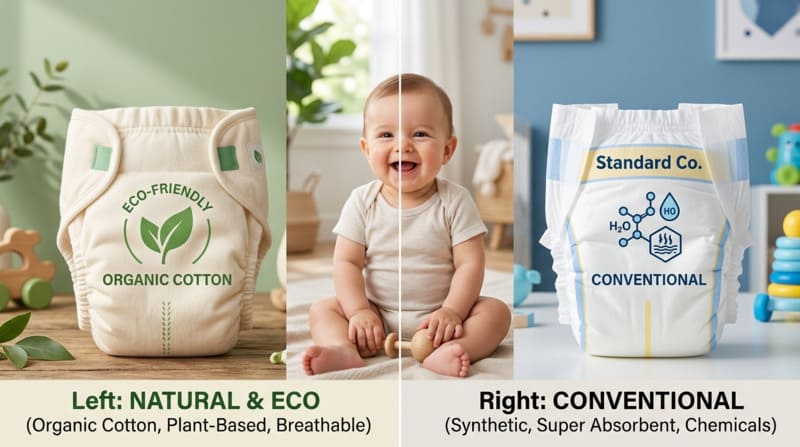
It usually starts in a supermarket aisle or on a late-night shopping app scroll. Your baby needs diapers, and suddenly you are staring at rows of options that all claim to be “gentle,” “safe,” or “natural.” You pick one, pause, put it back, then pick another. A quick thought crosses your mind. Will this one suit my baby’s skin? Will it cause rashes? Am I choosing what is best, or just what is convenient?
Explore the full range of Teddyy baby care products to find the perfect fit for your little one.
Most parents have experienced this moment. You read labels, compare prices, remember what a friend recommended, and still feel unsure. When it comes to something your baby wears all day, the choice can feel bigger than it seems.
This is where the natural vs chemical product debate begins. Understanding what each type really offers, and what to look for before choosing, can help you make a calmer, more confident decision for your baby’s comfort and skin health.
Key Takeaways
- Natural products are designed for parents who want to minimise their baby’s exposure to synthetic materials.
- Chemical variants are the most commonly used baby care products across India for a good reason.
- It all comes down to absorbency versus breathability and convenience versus gentleness when you compare these two types.
- Your baby’s skin is the first place where discomfort shows up.
- Baby hygiene products are a long-term expense.
What Are Natural Diapers
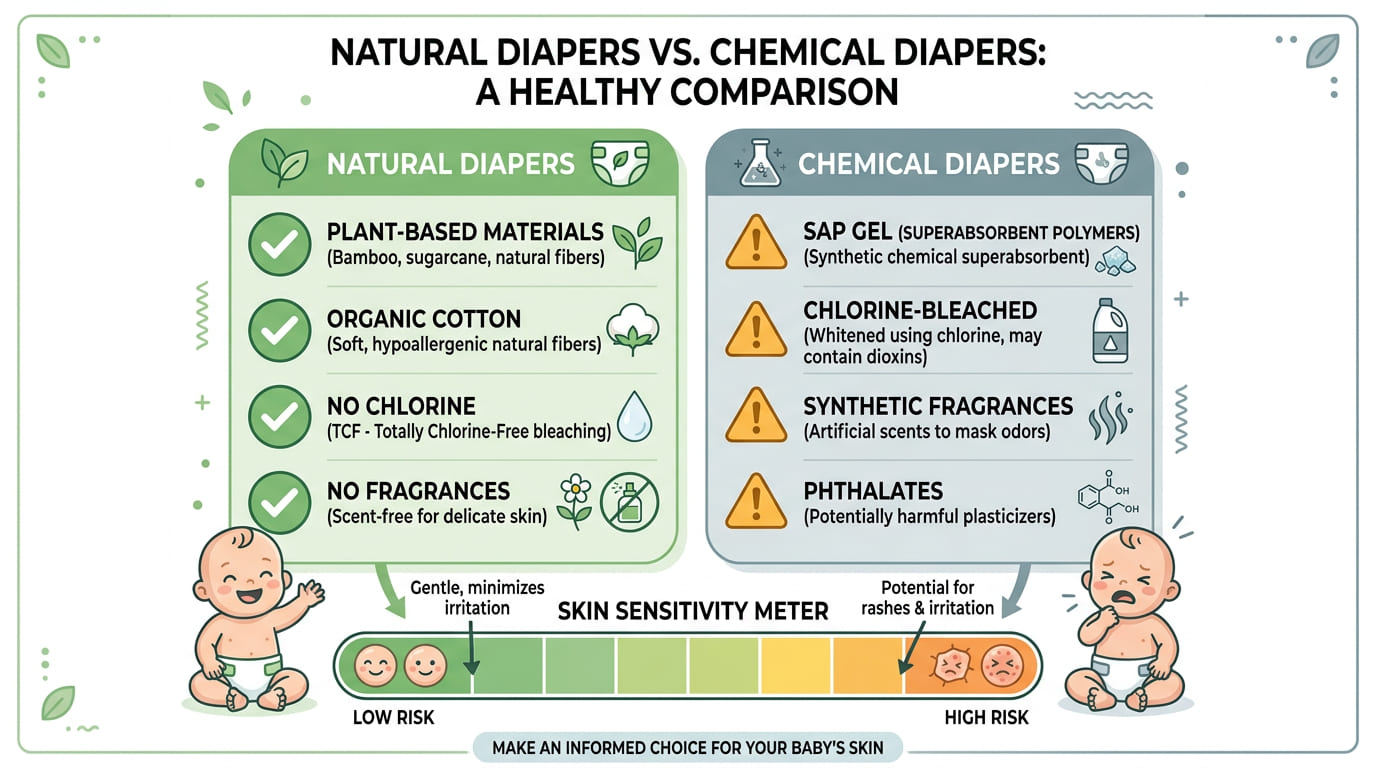
Natural care products are designed for parents who want to minimise their baby’s exposure to synthetic materials. These products are made with more plant-based fibres and fewer added chemical treatments compared to conventional options.
These aspects are especially important when shopping for newborn diapers. A newborn’s skin is delicate and reacts more quickly to moisture and irritants than adult skin. Small irritants in a diaper can cause redness. Many natural variants are free of chlorine bleaching, artificial fragrances, and latex, which can help reduce the risk of irritation for sensitive skin.
Your baby’s skin sensitivity can still be unpredictable as they grow, even when you move to larger diaper sizes. Some days, everything may seem fine, and then a rash may appear out of nowhere. Natural options are often softer and more breathable, allowing better air circulation and helping reduce prolonged moisture contact with the skin.
However, “natural” does not mean perfect. You will still need to select the correct size, whether it is M, L, or XL diaper size. The fit plays a big role in comfort and preventing leakage.
What Are Chemical Diapers
Chemical products are the most commonly used ones across India for a good reason. They are designed to absorb quickly and hold large amounts of liquid, which helps keep your baby feeling dry for longer.
These products use super-absorbent polymers that lock in moisture. They make daily life easier during naps, travel, or long nights. Chemical options are more useful after babies start crawling or walking. They are also easy to put on and take off. If you are wondering which style suits your baby better, our guide on taped diapers vs pant diapers breaks down the differences.
Some chemical variants contain added fragrances, dyes, or bleaching agents, depending on the brand. Many babies still tolerate them well, but some may develop sensitivity over time, especially during hot or humid weather. This can be due to trapped sweat and friction, which may increase skin irritation.
You may find chemical options convenient, but still worry about how your baby’s skin reacts after hours of wear.
Key Differences: Absorbency, Comfort & Safety
It all comes down to absorbency versus breathability and convenience versus gentleness when you compare natural and chemical products.
Chemical variants absorb faster and hold more liquid, reducing the risk of leaks. They can be useful at night when fewer changes mean better sleep for both you and your baby.
On the other hand, natural options are often chosen for comfort and breathability. However, they may require more frequent changes. But the trade-off can be worth it for healthier skin.
For parents who prioritise long hours of dryness and fewer night-time changes, diaper pants such as Teddyy are often chosen for their absorbency and comfortable fit across different sizes. Not sure whether to go with taped or pant-style? Read our comparison of which diapers are better: taped or pants.
Impact of Diapers on Baby’s Skin
Your baby’s skin is the first place where discomfort shows up. Red patches, constant scratching, or frequent diaper rashes can signal that something needs to change.
Chemical variants can trap heat and moisture if worn for long hours without changing. Fragrances and synthetic layers may irritate sensitive skin, leading to rashes or soreness.
Natural alternatives are often gentler for sensitive skin because they reduce exposure to potential irritants and allow better airflow.
Basic hygiene is important regardless of the diaper type you choose. Regular changes, cleaning, and allowing your baby to enjoy brief diaper-free moments can improve skin health. For more tips, check out our guide on diaper care, storage, and common mistakes parents make.
Cost Comparison: Natural vs Chemical Diapers
These are a long-term expense. Costs add up quickly, from newborn diapers to larger sizes like XL and XXL.
Here’s how the two options compare:
- Chemical options are more affordable and easier to source in bulk. They can feel like a practical and stress-free choice if you are managing monthly household expenses.
- Eco-friendly options cost more due to their materials and manufacturing processes. For some families, the higher cost feels worth it due to fewer rashes, reduced spending on creams, and better comfort for their baby.
- You can go for a mixed routine for balance. Use eco-friendly options during the day when changes are frequent, and switch to chemical diaper pants at night for absorbency and longer sleep stretches.
- There is no single right option. So, trust your judgement and take care of what your baby’s skin needs, your daily routine, and your budget.
Ingredients to Check on the Diaper Pack
Look for what is on the label and what is missing. Reassuring ingredients: SAP (sodium polyacrylate) for absorbency in safe, regulated quantities, fluff pulp from sustainably sourced wood, and a polyethylene back sheet that is breathable. Watch for and avoid: chlorine bleach (look for “TCF” or “ECF” — totally or elementally chlorine free), parabens, dioxins, latex (a known allergen), phthalates, and added fragrance. Most reputable Indian brands now declare ingredients on the back of the pack — if a brand only says “soft and absorbent” with no ingredient list, that is a red flag worth noticing. Hypoallergenic and dermatologically tested marks add an extra layer of assurance.
Natural Diapers and Skin Conditions: Eczema, Sensitive Skin
Babies with eczema, frequent diaper rash, or family history of skin allergies often respond better to natural or hybrid diapers — the main triggers (fragrance, dyes, chlorine bleach by-products) are reduced or absent. Look for “fragrance-free” and “dye-free” specifically; “natural” alone is not regulated. If your baby has had a reaction to one brand, switch and observe for 2 weeks before adding back any old diapers. Combine the diaper change with a thin layer of zinc oxide barrier cream and ensure 5 to 10 minutes of nappy-free time twice a day. If rashes persist beyond 4 weeks despite all changes, see a paediatric dermatologist — the issue may not be the diaper.
Environmental Impact: What Parents Should Know
A single disposable diaper takes 200 to 500 years to decompose in landfill, and the average baby uses around 6,000 diapers from birth to potty training. Natural and biodegradable variants break down in 2 to 5 years under composting conditions but only about 6 months in industrial compost — neither is a perfect solution. The most eco-friendly approach for many Indian families is hybrid: cloth diapers at home during waking hours, biodegradable disposables for naps and outings, and standard disposables only when needed. Even small reductions in disposable use over the first 2 years add up to thousands fewer items in landfill.
Conclusion
Choosing the right diaper for your baby starts with paying attention to their needs and comfort. It is also about what suits your routine and the choice that gives you peace of mind.
Every choice you make comes from love and care, whether you choose natural products, chemical options, or a thoughtful mix of both. And that, more than anything, is what your baby needs most.
Before you commit to one option, try a small pack across a couple of sizes and see how your baby’s skin responds. As your little one grows, you may also find our potty training guide helpful. Whether you choose everyday options like Teddyy or explore alternatives, the best product is the one that keeps your baby comfortable, dry, and happy.
Teddyy products are trusted globally and have been showcased at leading healthcare events, including the Arab Health Exhibition 2025 in Dubai and MEDICA 2023 in Germany.
Choosing the right diaper is especially important during summer when heat and humidity increase the risk of rashes. For seasonal baby care advice, check out our guide on baby skin care tips for summer.
References & Sources
You May Also Like




Frequently Asked Questions
Are natural diapers safer for babies?
They are often better suited for babies with sensitive skin because they avoid certain harsh additives. They avoid harsh chemicals and artificial fragrances.
Do chemical diapers cause diaper rashes?
They can if your baby has sensitive skin or wears the same diaper for extended periods. Changing the diaper often can reduce this risk.
Which diapers are best for sensitive baby skin?
Babies with sensitive skin respond better to fragrance-free or natural infant diapers, along with proper hygiene.
Are eco-friendly diapers really effective?
Many eco-friendly diapers have good absorbent ability, which is great for both your baby’s skin and the environment.
Is it worth switching to natural diapers?
It can be if your baby experiences frequent rashes or irritation.