

By Nobel Hygiene Team | Last Updated: April 18, 2026
5-Month Baby Guide: Rolling Both Ways & Solids Prep
Your baby is five months old already–can you believe it? The tiny newborn you once cradled so carefully is now rolling like a pro, grabbing their toes, and squealing with joy at the smallest things. Between all the feeding, giggles, and baby snuggles, your arms stay full — and so does your heart.
You've probably noticed how quickly your baby changes now—a new skill every week, a new sound every day. The 5 month milestones bring a mix of excitement (and a little nostalgia too). You're also starting to wonder, is it time to think about solids? Why are feeds getting messier? And how do you keep up with all that drool?
This phase is where curiosity takes over, for both you and your little one. Let's walk through everything you need to know about 5 month baby growth, from playtime rolls to first food prep, with simple, comforting tips to help you both enjoy this next leap.
Growth & Milestones
Your baby's personality is beginning to shine! Around this time, you'll see some wonderful 5 month developmental milestones that will make your heart explode with pride (and maybe a few tears too).
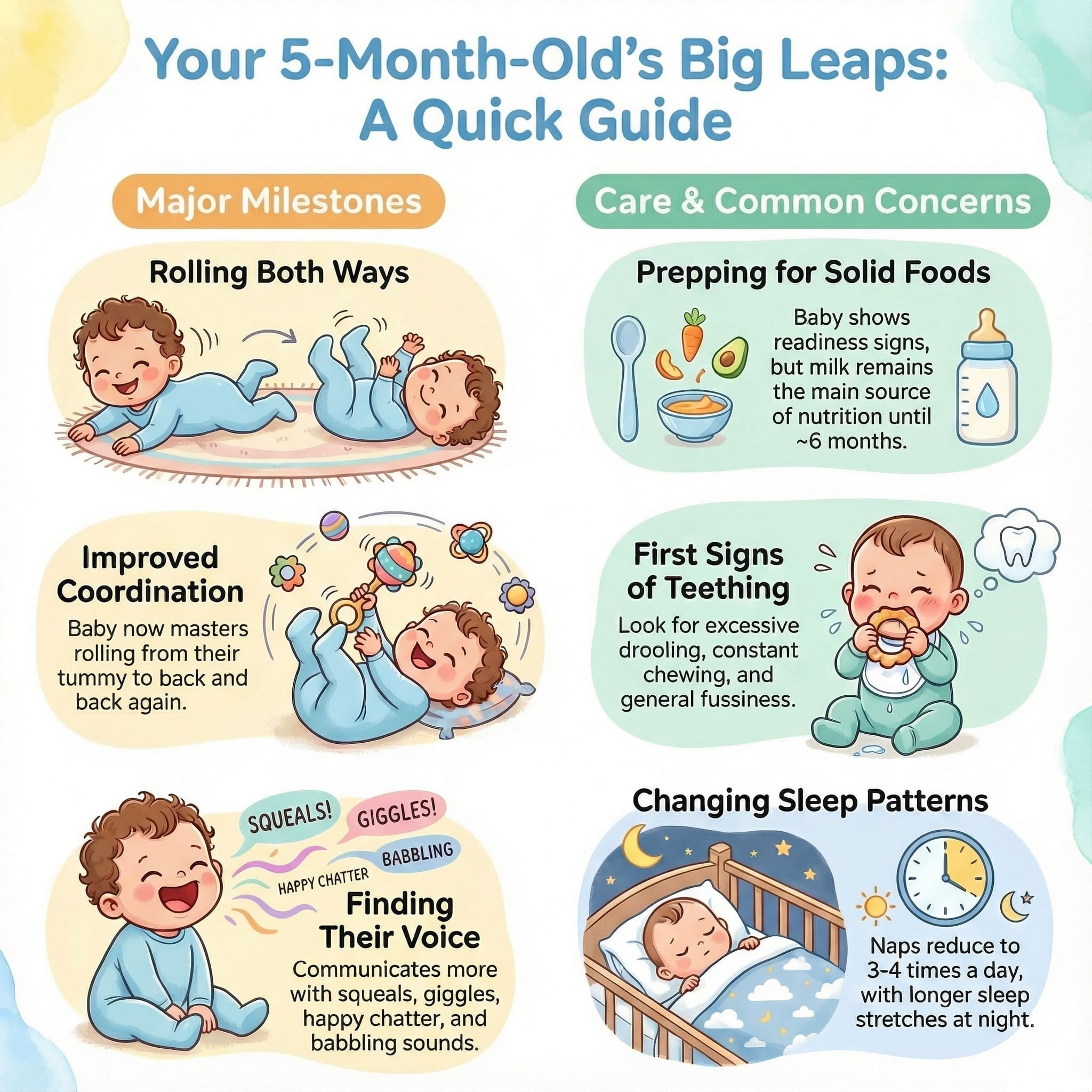
Rolling both ways: Most babies can roll from tummy to back, and now, many master the trick of rolling back onto their tummies. It's your cue to stay a little more watchful during diaper changes and naps.
Grabbing feet and toys: Your baby is exploring their world, and that includes their toes. This is one of the cutest 5 month old milestones (and makes for adorable photos).
Sitting with support: With improving muscle control, your little one may sit for short durations, with your help or with the support of a nursing pillow.
Hand-to-hand transfers: You'll notice toys moving from one tiny hand to another–a sign of growing coordination.
Squeals, giggles, and happy chatter: Their voice is their new favourite toy! Babbling and cooing are strong signs of baby development at 5 months.
Your baby might reach some 5 month baby milestones sooner or later than others, and that's perfectly normal. Celebrate progress, not perfection.
Feeding & Sleep
By now, your baby's feeding rhythm has likely settled into something more predictable (though "predictable" is still a generous word for parenthood!)
Feeding: Most 5-month-olds take around 24–32 ounces of milk in 24 hours, whether it's breastmilk or formula. You may notice some distraction during feeds; they might pull away mid-feed to grin at you or stare at a toy. Try feeding in a quiet, dimly lit space when needed.
Solids prep: You might be tempted to start solids soon, and that's great! Around this stage, babies start showing signs of readiness like better head control, sitting with support, and showing interest in your food. But it's usually best to wait until around 6 months for safety and digestion reasons. Keep your 5 month old baby development focused on milk as it's their main source of nutrition for now.
Sleep: Expect 3–4 naps a day, gradually reducing to three as your baby's awake windows lengthen. Many babies also begin sleeping for longer stretches at night — sometimes up to 6 hours at a time — giving you both a little more rest.
Regression check: If sleep suddenly feels chaotic, it could be a minor growth-related shift—just a temporary part of 5 month baby growth. Stick to a soothing routine, and things will stabilise soon.
Common Concerns
Every new phase brings new joys and new little worries. Here are some normal concerns many parents face around this time:
Teething signs: Excessive drooling, chewing on everything, and fussiness may begin, though some babies won't get their first tooth for another month or two. Keep soft, chilled (not frozen) teethers handy.
Distracted feeding: With so much to see and hear, your baby may nurse for shorter periods. Try feeding in calm, low-stimulation spaces when possible.
Constipation risk: Once solids start (soon!), keep an eye on bowel patterns. Offer extra milk feeds and gentle tummy massages.
Drool rash: Frequent drooling can irritate the skin around the mouth or neck.
Every mom faces these small challenges, and you're learning right alongside your baby. You've got this, truly.
Diapering & Hygiene
Your baby's activity level has likely doubled since last month, so diapering might start to feel more like a game of gentle wrestling!
Diapering: Expect more drool, spit-ups, and perhaps some diaper leaks from all that rolling. Make sure the diaper fits snugly but comfortably—not too tight around the waist or thighs—to prevent dribbles and blowout leaks.
Hygiene: Bathe your baby 2–3 times a week with a mild, fragrance-free cleanser. On other days, a quick wipe-down works just fine.
Drool care: Use soft bibs to protect your baby's clothing, and keep a spare bib handy during the day as your baby will be more active and might drool more.
Dental beginnings: Even before teeth appear, you can start wiping your baby's gums with a clean, damp cloth. It's a simple routine that builds great oral hygiene habits early on.
With more rolling and movement, it's also a good time to choose breathable diapers like Teddyy Diapers, designed to keep your baby dry and comfy through rest and activity.
Doctor Visits & Vaccines
The 5-month mark might not always include a major checkup, but it's a great time to touch base with your paediatrician if you have concerns.
Your doctor may:
Track 5 month baby growth, weight, head circumference, and length.
Review feeding and sleep routines.
Discuss signs that your baby is nearly ready for solids.
Check on teething and offer comfort tips.
Revisit any vaccinations missed earlier.
You can also ask for guidance on 5 month old baby developmental milestones and when to expect the next big leap, like sitting or crawling.
Parent Self-Care
By now, fatigue can start to creep in. You've been "on" for five months, feeding, soothing, adapting, and loving around the clock. So, let's talk about you for a moment.
If you're feeling drained, please know it's normal. The 15 weeks baby development phase often feels like a blur—your baby's growing fast, and you're constantly adjusting. Here are a few gentle reminders:
Rest when you can (even if it's just closing your eyes for ten minutes).
Keep easy snacks and water nearby during feeds.
Share nighttime duties when possible, even short breaks make a difference.
Don't hesitate to ask for help. You deserve it.
Your baby doesn't need a "perfect" mom— just a happy, rested one.
Play & Stimulation
At 5 months, your baby may be rolling both ways and is eager to reach everything in sight. Place toys just slightly out of reach during tummy time to encourage stretching and early movement. Introduce splash play during bath time with cups and pouring — water play is endlessly fascinating and builds sensory awareness. Soft stacking rings and textured balls are perfect for grasping and mouthing. Play simple games like covering a toy with a cloth and letting them find it — this introduces early object permanence concepts. Singing action songs and bouncing your baby gently on your knee builds rhythm, balance, and joyful bonding.
Conclusion
The 5 month milestones are filled with giggles, wobbly rolls, drooly grins, and endless wonder. This stage of 5 month old baby development is about curiosity, connection, and discovery, for both of you.
So, take it slow. Celebrate every roll, every laugh, every sleepy cuddle. These are the moments that will fill your heart long after the sleepless nights fade.
And through it all, remember, Teddyy is here for you, cheering you on as you navigate each new milestone with love and confidence.
Related Guides
Want to know about prenatal milestones? Check out our fifth month pregnancy guide for baby growth and symptom insights. Also, see what to expect next in our 6-month baby guide.
Frequently Asked Questions
1) When exactly can I start solids—4, 5, or 6 months?
It's safest to wait until around 6 months, when your baby can sit with support, hold their head steady, and begins to show real interest in food. Ask your paediatrician for guidance.
2) Best first spoons/bowls and seat setup?
Look for soft silicone spoons, shallow bowls, and a secure high chair with back support. Avoid propping your baby upright until they're ready.
3) How do I handle distracted feeding?
Try feeding in a quiet, dim room. Minimise toys, lights, and background noise so your baby can focus on the feed.
4) Are night feeds still needed?
Many babies still wake once or twice at night for milk. Some may sleep longer stretches, but it depends on 5 month old baby growth and feeding patterns.
5) What are safe teething remedies?
Cool teethers, gum massages, and soft washcloths to chew on work best. Avoid gels or tablets unless prescribed.
6) How do I know if constipation is an issue?
If your baby's stools are dry, hard, or less frequent, talk to your doctor. Most mild cases resolve with extra milk feeds or tummy massages.