

By Nobel Hygiene Team | Last Updated: April 18, 2026
4-Month Baby Guide: Rolling, Play & 4-Month Checkup
 Growth & 4 Month Milestones."
style="width:100%; height:auto;" />
Growth & 4 Month Milestones."
style="width:100%; height:auto;" />
Four months in, can you believe how far you've come? The sleepless nights still find their way in, but your baby's gummy smiles make it all worth it. You're watching tiny arms reach out for toys, little legs kick with excitement, and maybe… that first adorable roll from tummy to back!
This stage is full of surprises, laughter, and yes, a few new questions. From changing nap patterns to the upcoming 4-month checkup, there's a lot happening in your baby's world (and yours too). Let's walk through this exciting chapter together, one milestone (and giggle) at a time.
Growth & Milestones
At this stage, your baby's growth feels like it's happening in the blink of an eye. You might have already celebrated some important 3 month baby milestones and now you'll notice several 4 month milestones that show just how quickly those little muscles and senses are developing.
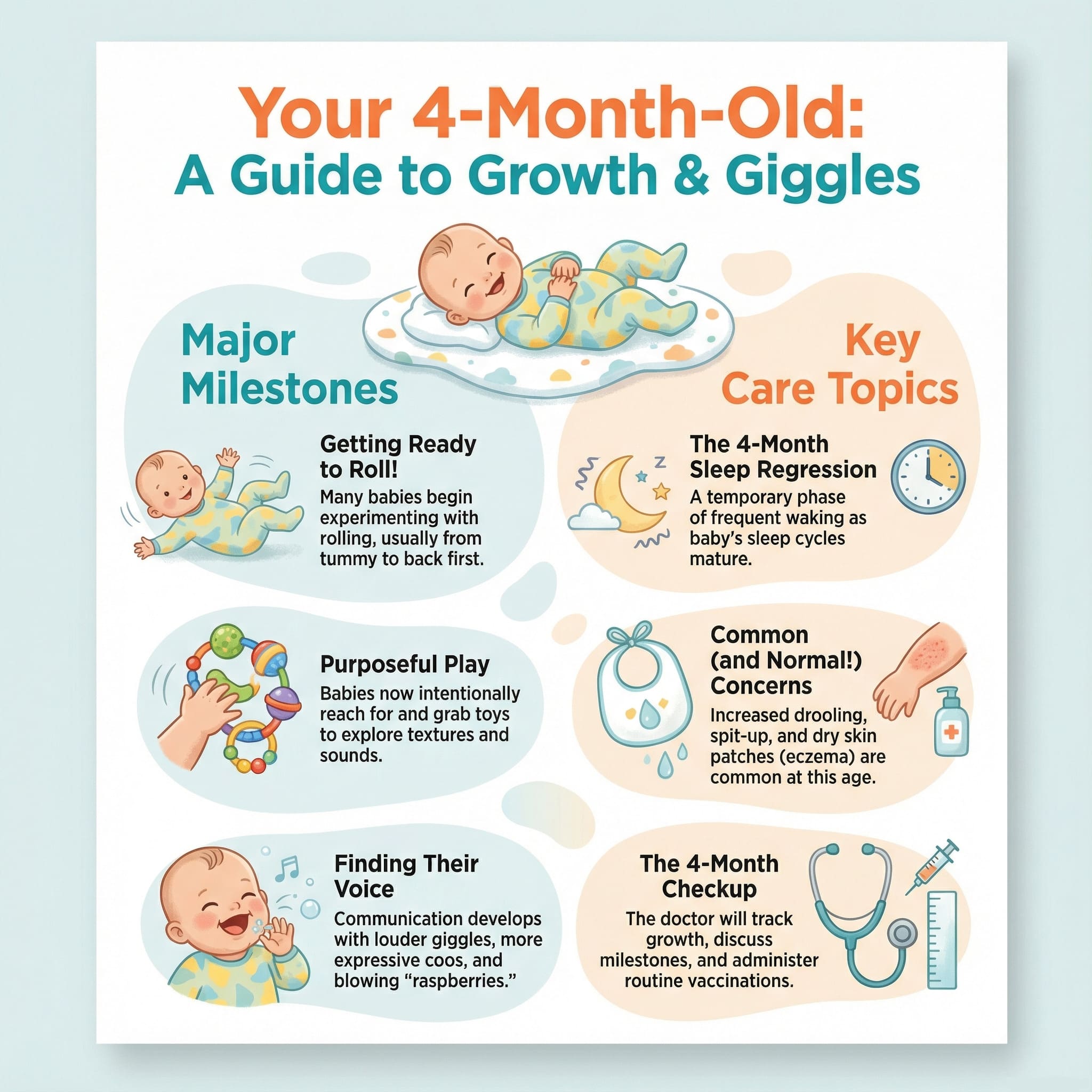
Many babies begin experimenting with rolling, usually from tummy to back first. Don't worry if your little one hasn't mastered it yet — every baby reaches 4 month baby milestones in their own time. What matters is that your little one is gaining strength and coordination every day.
You might also notice your baby reaching out and grabbing toys more intentionally. Those once-random hand movements now have purpose—they're exploring textures, colours, and sounds. This is a great time to introduce soft rattles and crinkly cloth books that encourage curiosity.
The giggles are louder, the coos are more expressive, and "raspberries" (those cute blowing sounds) may become a new favourite activity. These joyful noises are a sign of strong baby development at 4 months, especially in communication and social interaction.
Your baby's neck control is also much better now. During tummy time, they can lift their head high and look around confidently—a major step in 4 month old baby development. Celebrate each new skill; these moments are precious building blocks for the months ahead.
Feeding & Sleep
By four months, feeding patterns often start to feel more predictable. Most babies take about 24-32 ounces of milk in 24 hours, but this can vary. Whether you're breastfeeding, formula-feeding, or combining the two, the key is to follow your baby's hunger cues.
Sleep, on the other hand, might throw you a curveball. Welcome to the 4-month sleep regression. Just when you thought you had a rhythm, your baby may start waking up more frequently. This happens because their sleep cycles are maturing, and they're learning to transition between light sleep and deep sleep.
Try not to worry—it's temporary. A consistent bedtime routine will help your baby feel secure. A warm bath, gentle massage, lullaby, and dim lights can work wonders. Remember, naps are still important. Most babies this age take 3-4 naps a day, though the duration might shorten as their awake windows stretch.
And while it's tempting to try new tricks to "fix" sleep, sometimes the best thing you can do is offer comfort and patience. This stage passes, even if it doesn't feel like it when you're up with your baby at 3 AM.
Common Concerns
Every new month brings a new set of questions, and that's completely normal.
You may notice your baby drooling a lot more now. It's often part of 4 month baby growth, and not necessarily a sign of teething just yet. Keep a soft bib handy and change it often to prevent skin irritation around the neck.
Eczema may also appear around this time as tiny dry patches on the cheeks or arms. A mild, fragrance-free baby lotion can help keep their skin moisturised. If you notice redness or oozing, talk to your doctor before trying any medicated creams.
Spit-up might increase now that your baby is more active and moving around after feeds. Try keeping them upright for 15–20 minutes post feeding, and ensure they aren't overfed. Frequent, small feeds are easier on their tiny tummies.
Lastly, some parents worry about flatness on the back of their baby's head. This is common and preventable. Encourage more tummy time, hold your baby upright during play, and alternate head positions when they sleep.
Diapering & Hygiene
With baby development at 4 months, diapering becomes a bit more dynamic as those little legs love to kick during every change! It's a good idea to keep everything ready before you start: wipes, diapers, rash cream, and a spare set of clothes (because surprises happen).
Daytime diaper changes will likely remain frequent, but at night, you can use a super-absorbent diaper like Teddyy Premium Pants, designed to keep your baby dry through longer stretches of sleep. The breathable material helps prevent rashes and ensures your little one stays dry and comfortable.
Bath time can now be a fun bonding activity 2–3 times a week. Use mild baby cleansers and finish with a gentle lotion to lock in moisture. When you step outdoors, keep sun safety in mind, and opt for shade and a soft hat as sunscreen is usually to be avoided before six months.
Drooling also means more laundry! Keep bibs and burp cloths clean, and wash your baby's clothes with a gentle, hypoallergenic detergent to prevent irritation.
Doctor Visits & Vaccines
Your 4-month checkup is an important milestone. During this visit, your doctor will check your baby's growth percentiles, height, weight, and head circumference, to ensure steady 4 month baby growth .
You'll also discuss 4 month old baby milestones, such as rolling, reaching, and laughing, along with tummy time progress. Don't hesitate to ask about anything that's on your mind, whether it's feeding, sleep, or skincare.
Vaccinations are usually part of this visit. Your baby may receive follow-up doses for DTP, Hib, polio, and pneumococcal vaccines (depending on your local immunisation schedule). Mild fever, fussiness, or soreness around the injection site can happen afterward. A cool compress and extra cuddles help soothe discomfort.
Now is also a good time to talk about solids. While most babies start solids around six months, your doctor can help you recognise early readiness signs, like sitting with support and showing interest in food.
Parent Self-Care
You've been giving your all, day and night, and it shows. But remember, caring for yourself is caring for your baby too.
Fatigue can creep in at this stage, especially with sleep regressions and growth spurts. Try to grab micro-rests whenever you can, even if it's just a quiet cup of tea while your baby naps.
If you're returning to work soon, start planning your pumping routine and caregiver handoff. Label milk clearly, share your baby's sleep cues, and don't be too hard on yourself if things don't go perfectly right away.
Ask for help when you need it, and accept it when it's offered. A little rest, a little laughter, and the right support make all the difference.
Play & Stimulation
Your 4-month-old is more engaged than ever, laughing out loud and reaching purposefully for toys. Introduce activity mats with hanging toys that make sounds when grabbed — this teaches cause and effect. Offer different textures to explore with their hands and mouth, such as crinkly fabric, smooth teethers, and soft plush toys. Supported sitting in your lap while playing builds core strength and gives a new perspective on the world. Blow gentle raspberries on their tummy for delightful laughter. Reading time becomes more interactive as your baby grabs at pages and responds to your animated voice.
Conclusion
The 4 month milestones mark such a special turning point — your baby is now more aware, playful, and expressive than ever before. You're witnessing little leaps in movement, curiosity, and connection every single day.
So take a breath, mama. You're doing beautifully. Each laugh, each cuddle, and even each 2 AM feed is part of this unforgettable journey of growth, for your baby, and for you.
Related Guides
Interested in how babies develop before birth? Our fourth month pregnancy guide explores fetal growth and maternal care. Also, see what to expect next in our 5-month baby guide.
Frequently Asked Questions
1) What is the 4-month sleep regression and how to cope?
It's a temporary phase where your baby's sleep cycles mature, causing more night wakings. Stick to a consistent bedtime routine, keep the room calm and dark, and comfort your baby as needed.
2) Is my baby ready for solids yet?
Most babies begin showing signs of readiness for solids around the six-month mark, but the four-month checkup is a great time to start discussing it with your doctor. They can guide you on what to look out for — like good head control, showing interest in food, or losing the tongue-thrust reflex — so you'll know exactly when your baby is ready to take that next step.
3) How can I prevent flat spots on the head?
Encourage tummy time during the day, hold your baby upright often, and alternate head positions during sleep.
4) How much tummy time now?
Aim for around 20–30 minutes a day, broken into short, fun sessions when your baby is alert and happy.
5) Are early rolls normal/safe in the crib?
Yes, some babies roll early! Always place your baby on their back to sleep and keep the crib clear of pillows and toys.
6) What happens at the 4-month checkup?
The doctor will review your baby's growth, discuss 4 month old baby development, and give the next round of vaccines.