Filter by Month
By Nobel Hygiene Team | Last Updated: April 25, 2026

4th Month Pregnancy: Baby Bump, First Kicks & Symptom Relief
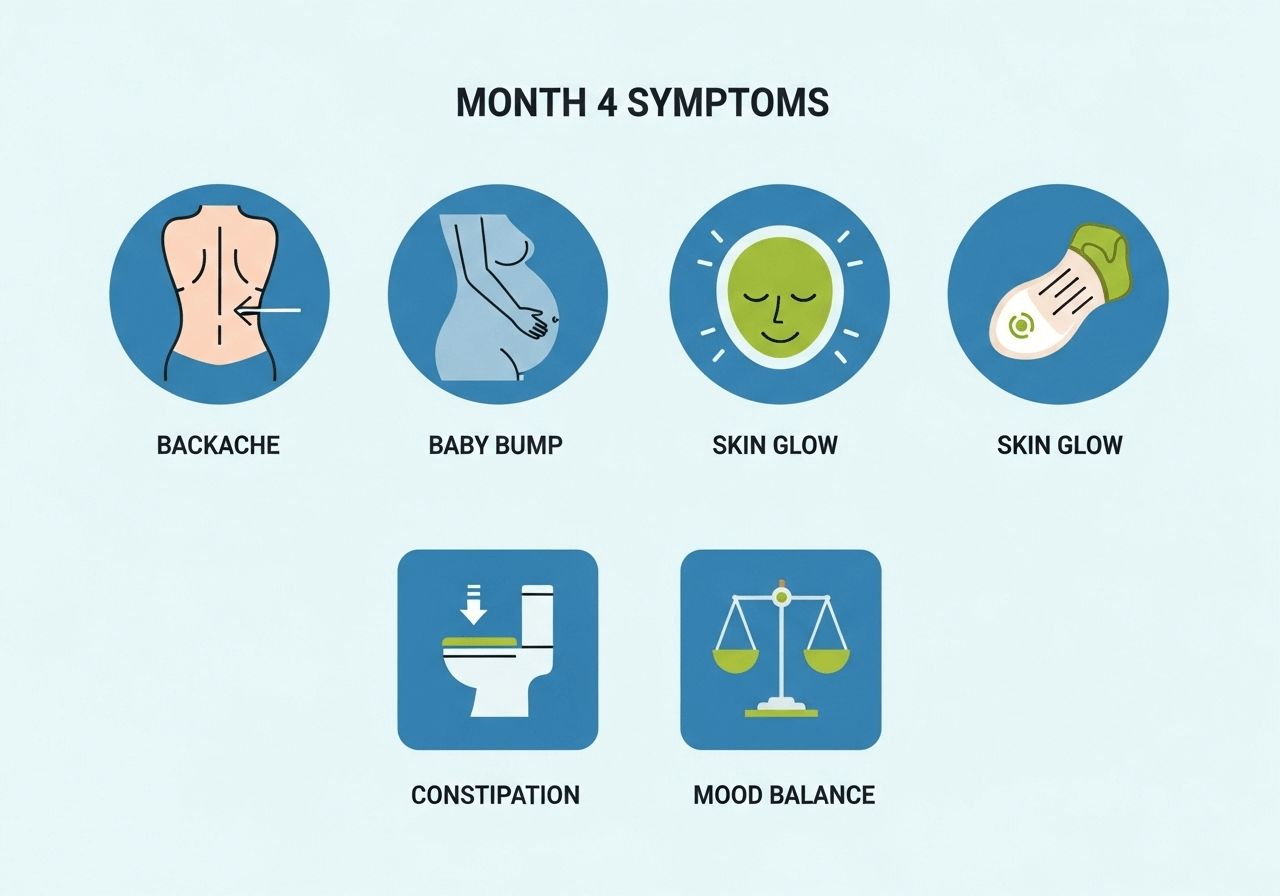
Congratulations, mumma—you’ve officially entered the second trimester! Month 4 is often called the “golden period” of pregnancy because many early discomforts fade, energy returns, and your bump begins to show.
By Month 4, your baby is developing facial features, fingerprints, and fine hair—an exciting time, indeed! This guide will explain 4th month pregnancy symptoms and how you can support baby growth in the fourth month with the right nutrition and care.

4th Month of Pregnancy Symptoms
You might notice:
- Increased Energy: Many moms feel less fatigued as nausea improves.
- Breast Growth: Breasts continue to enlarge and may feel heavier.
- Round Ligament Pain: Stretching uterine ligaments may cause sharp, brief pains in your lower belly.
- Constipation & Heartburn: Digestive slowdown plus pressure on your stomach may trigger discomfort.
- Nasal Congestion: Increased blood volume may cause swelling in your nasal passages.
When to Visit Your Doctor
If you have severe pain, heavy bleeding, sudden headaches/vision changes, or sudden swelling in the face, hands, or feet, please visit your doctor right away.
The Second Trimester Energy Boost
Welcome to what many women call the "honeymoon phase" of pregnancy. The fourth month often brings a welcome relief from the exhaustion and nausea of the first trimester.
Why You Feel Better
By now, the placenta has taken over hormone production from your ovaries, and your hCG levels have stabilized. This hormonal shift is the main reason why nausea typically fades and your energy levels return. Your body has also adapted to the increased blood volume and metabolic demands that felt so overwhelming during the first three months.
Making the Most of This Phase
This renewed energy is the perfect time to prepare for your baby's arrival. Many parents use the second trimester to set up the nursery, research baby products, and attend prenatal classes. It is also a great time to plan a babymoon trip if you wish, as most airlines allow pregnant women to fly domestically until around 36 weeks. Your appetite is likely returning too, so take advantage of this window to focus on nutrient-dense meals that support your growing baby.
Not every woman experiences this energy boost equally. If you are still feeling fatigued, do not compare yourself to others. Every pregnancy is unique, and what matters most is listening to your body's signals and resting when you need to.
What’s Happening in Your Body
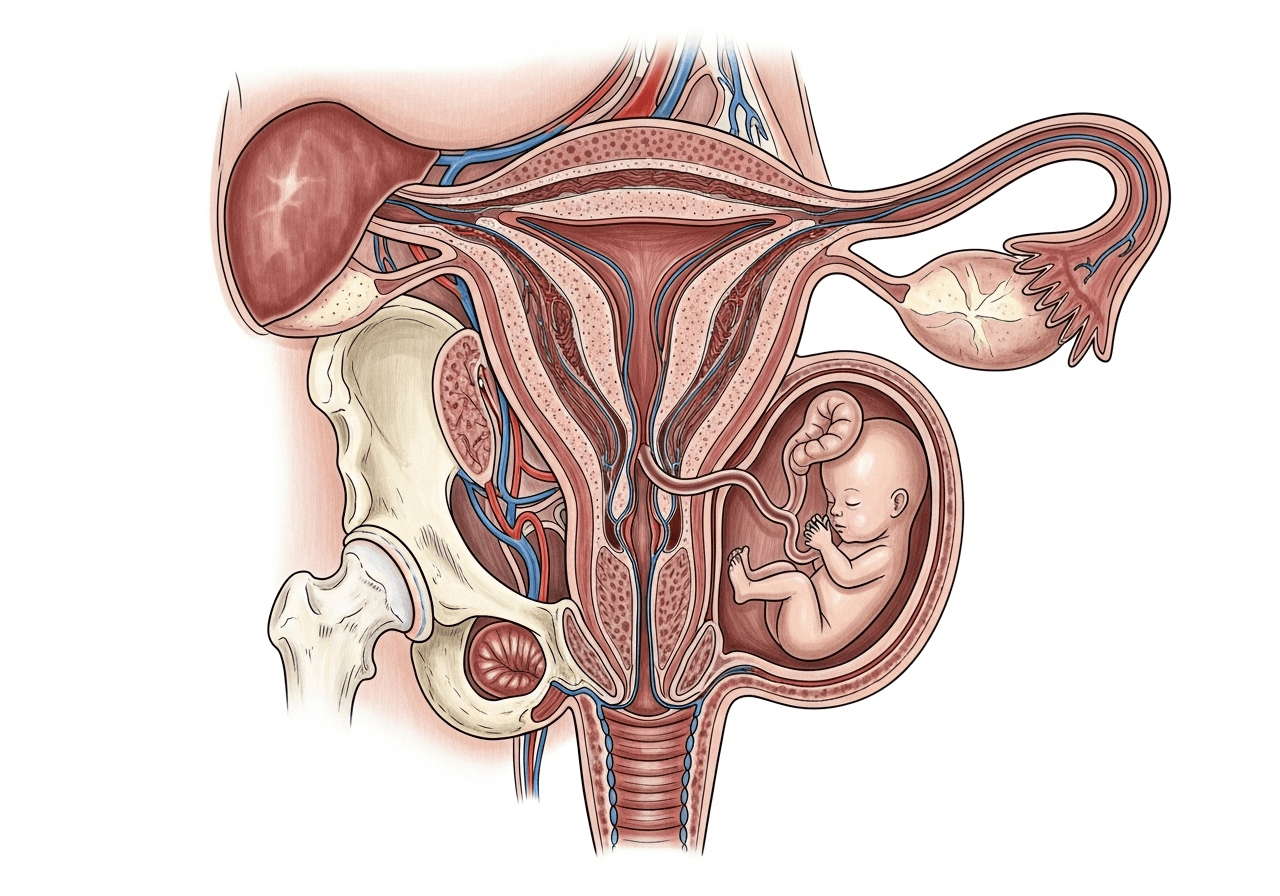
Uterus growth continues and rests above the pubic bone.
- Increased blood volume: This can make you feel warmer and flushed.
- Hormones: Hormones start to stabilize, reducing nausea and mood swings.
- Belly growth: Your belly becomes more prominent, making pregnancy more visible to others.
- Think of month 4 as “springtime” for your pregnancy—growth is steady, and energy is blooming. If you're interested in learning about early pregnancy symptoms, especially during the first month, check our detailed guide.
How Your Baby is Growing
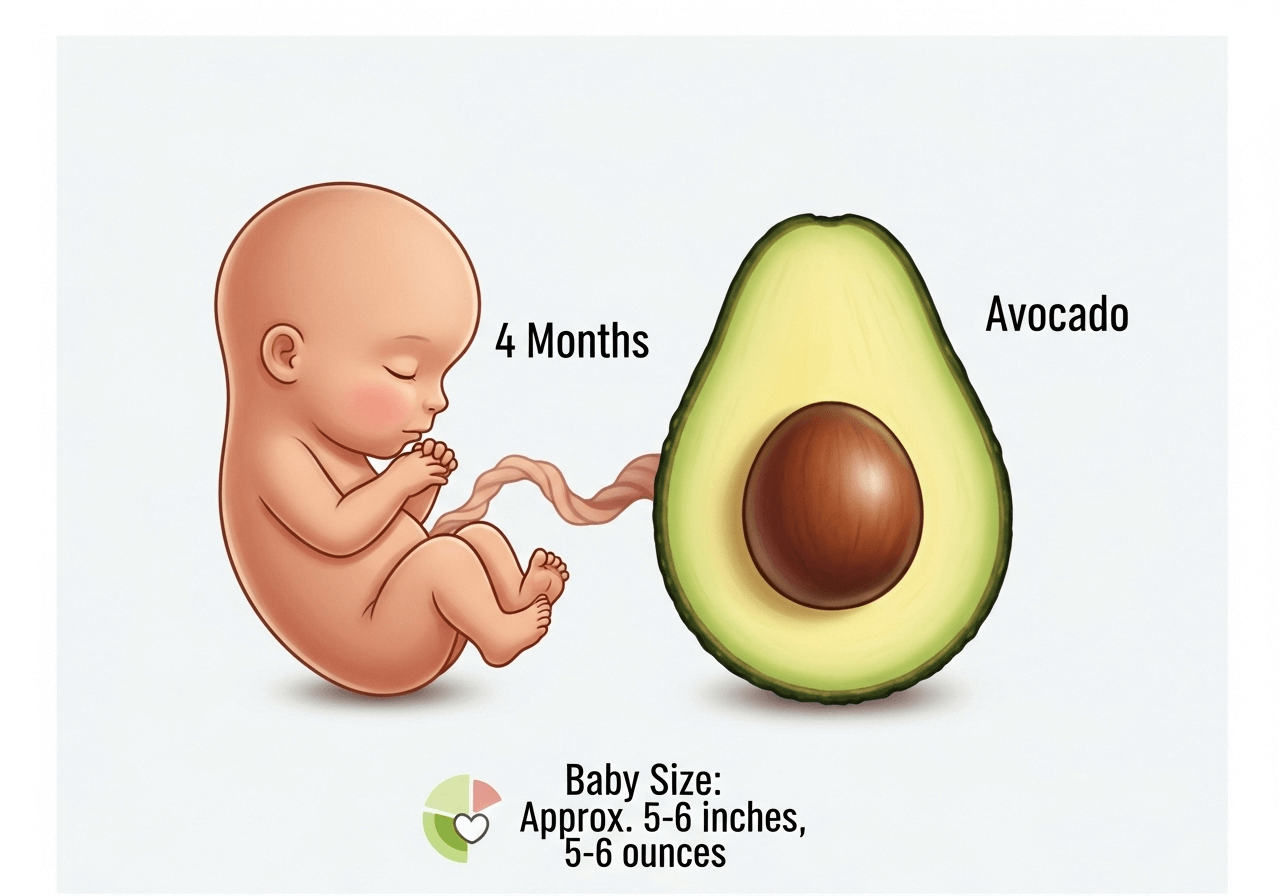
Your little one is making significant progress in month 4!
Size
- About 11–12 cm—roughly the size of an avocado and weighing around 100 grams.
Development Milestones
- Facial features become more defined.
- Fingerprints start forming.
- Fine hair (lanugo) begins to cover the body for warmth.
- Muscles strengthen, making movements more frequent (though still subtle).
Can You Feel the Baby Move at 4 Months?
One of the most exciting milestones of the second trimester is feeling your baby move for the first time. This sensation, called "quickening," often begins around month 4, though the timing varies.
What Does It Feel Like?
Early baby movements are subtle and easy to miss. Many women describe them as fluttering, bubbling, or a gentle tapping sensation low in the abdomen. First-time mothers often mistake these early movements for gas or digestive activity. As weeks pass, the movements become stronger and more recognizable.
When to Expect It
First-time mothers typically feel their baby move between weeks 18 and 22, while women in their second or subsequent pregnancies may notice movement as early as weeks 14 to 16. The difference is simply experience. Once you have felt fetal movement before, you recognize the sensation more quickly.
What If You Have Not Felt Anything Yet?
If you are in your fourth month and have not felt any movement, do not worry. The position of your placenta plays a role. An anterior placenta (attached to the front of the uterus) acts as a cushion between your baby and your abdominal wall, which can delay when you first feel kicks. Your baby's size, your body type, and how busy you are during the day also affect when you notice movement. By the fifth month, most women feel clear and unmistakable kicks.
Nutrition & Self-Care
 prenatal vitamins, and fetal heartbeat test."
style="width:100%; height:auto;" />
prenatal vitamins, and fetal heartbeat test."
style="width:100%; height:auto;" />
Prenatal Vitamins
- Continue folic acid, iron, and calcium supplements
Eat Nutrient-Rich Foods
- Lentils, spinach, and poultry to support blood production
- Include lean proteins like eggs, fish, and tofu for growth
- Add fiber-rich foods to ease constipation
Hydrate & Rest
- Stay hydrated with 8–10 glasses of water daily
Gentle Exercise
- Continue moderate exercise like walking or prenatal yoga
- Practice good posture to ease back discomfort
- Wear supportive bras for breast comfort
Safety Guidelines
- Avoid alcohol, smoking, and high-mercury fish
- Try not to lie flat on your back for long periods
- Limit caffeine to under 200 mg/day
Safe Exercises During the Second Trimester
Staying active during pregnancy benefits both you and your baby. The fourth month is an excellent time to establish or maintain an exercise routine, as your energy is higher and your bump is still manageable.
Best Exercises for This Stage
Walking is the simplest and most accessible form of prenatal exercise. Aim for 20 to 30 minutes of brisk walking most days of the week. Swimming and water aerobics are particularly beneficial because the water supports your body weight and reduces joint stress. Prenatal yoga improves flexibility, strengthens muscles used during labour, and teaches breathing techniques that help during delivery. Low-impact aerobics and stationary cycling are also safe choices.
Exercises to Avoid
Skip any activity that involves a risk of falling or abdominal impact, such as horseback riding, skiing, contact sports, and cycling on uneven terrain. Avoid exercises that require lying flat on your back for extended periods after the first trimester, as the weight of your uterus can compress a major blood vessel. Hot yoga and exercising in extreme heat should also be avoided, as overheating can be harmful to your baby.
Pelvic Floor Exercises
Kegel exercises strengthen the pelvic floor muscles that support your uterus, bladder, and bowels. These muscles come under increasing strain as your pregnancy progresses, and strengthening them now helps prevent urinary incontinence and supports recovery after delivery. To do a Kegel, squeeze the muscles you would use to stop urinating midstream, hold for five seconds, then release. Repeat 10 to 15 times, three times a day.
Doctor’s Checklist
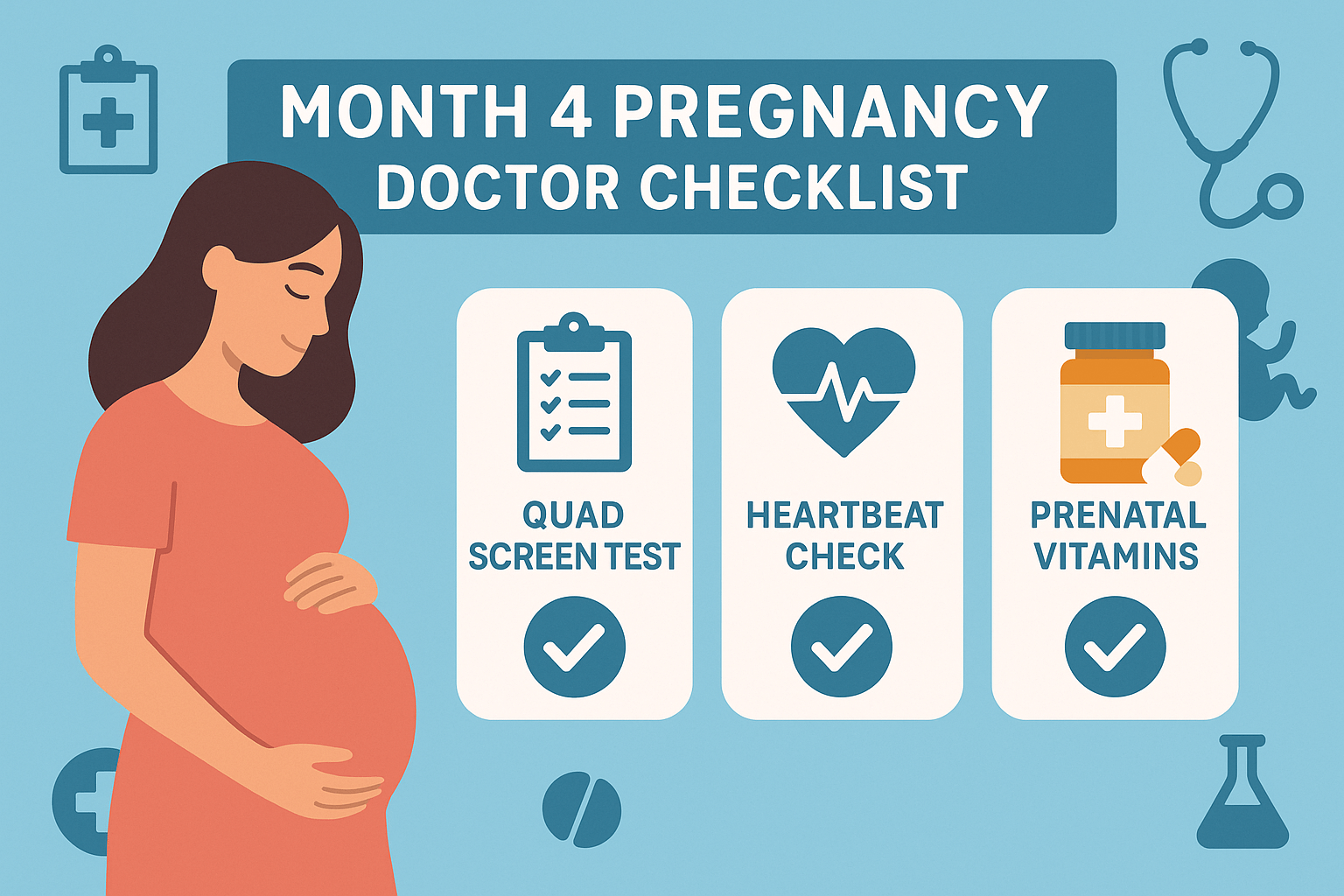
Tests & Scans
- Quad screen or triple test for genetic and neural tube defects
- Routine prenatal check-up to measure uterus size and hear the heartbeat
Questions to Ask:
- When will I feel consistent movements?
- What's my ideal weight gain rate for this trimester?
- Should I adjust my prenatal vitamins or supplements?
Reminders
- Keep up with daily prenatal vitamins
- Learn about the 3rd month of pregnancy, baby development, and care tips
- Continue maintaining your pregnancy journal to track symptoms and milestones
Related Guides
Start planning ahead with our 4-month baby care guide for insights on rolling, play, and developmental checkups. Continue your pregnancy journey with our month 5 pregnancy guide.
FAQs
1. What are the symptoms in the 4th month of pregnancy?
In the 4th month, most women experience increased energy, visible bump growth, breast changes, reduced nausea, mild backaches, constipation, and possible early baby movements (quickening). Skin changes like a “pregnancy glow” or pigmentation spots are also common. Severe pain, heavy bleeding, or swelling should be reported to a doctor immediately.
2. How big is my baby at 4 months pregnant?
By the end of Month 4, your baby measures about 11–12 cm and weighs around 100 grams—roughly the size of an avocado. At this stage, facial features are more defined, fingerprints form, and fine hair (lanugo) covers the body. Your baby is becoming more active, although movements may only be faintly felt.
3. Can you feel the baby move in the 4th month?
Some women feel their baby move in the 4th month, especially if they’ve been pregnant before. This sensation, called “quickening,” feels like gentle flutters. First-time mothers often feel movement a bit later, between weeks 18–20. Baby movement varies and depends on position, placenta placement, and maternal sensitivity.
4. What foods should I eat during the 4th month of pregnancy?
Focus on iron-rich foods (spinach, lentils, poultry), protein (eggs, lean meat, tofu), calcium (dairy, fortified plant milks), and fiber-rich fruits and vegetables. Staying hydrated helps prevent constipation. Avoid alcohol, high-mercury fish, raw meats, unpasteurized dairy, and limit caffeine to 200 mg/day. A balanced diet supports steady baby growth.
5. What foods should I avoid in Month 4 of pregnancy?
Avoid:
- Raw or undercooked meat and seafood
- High-mercury fish (shark, swordfish)
- Unpasteurized milk and cheese
- Alcohol and smoking
- Excessive caffeine
6. What tests are done in the 4th month of pregnancy?
Month 4 may include the quad screen or triple test to assess the risk of chromosomal abnormalities and neural tube defects. Routine prenatal check-ups monitor your baby’s heartbeat, growth, and your blood pressure. Your doctor may also recommend an ultrasound if needed to check fetal development.
7. Is traveling safe during the 4th month of pregnancy?
Travel is generally safe during the second trimester if your pregnancy is low-risk. Use a seatbelt correctly, stay hydrated, take breaks to walk, and wear comfortable clothing. Long-haul flights require more movement to prevent blood clots. Always confirm travel plans with your doctor before booking.
8. How much weight should I gain by 4 months pregnant?
By the 4th month, most women gain 2–4 kg, depending on pre-pregnancy weight and health. The second trimester typically sees more consistent weight gain, around 0.4–0.5 kg per week. Focus on nutrient-rich foods rather than calorie counting, and discuss your progress with your doctor at each visit.
9. Can I sleep on my back in the 4th month of pregnancy?
By the second trimester, it’s best to avoid lying flat on your back for long periods, as the growing uterus can press on major blood vessels, reducing blood flow. Sleeping on your left side is ideal for circulation and nutrient delivery to your baby. Use pillows for support.
10. What exercises are safe in the 4th month of pregnancy?
Safe activities include walking, swimming, stationary cycling, and prenatal yoga. Avoid high-impact sports, heavy lifting, and exercises that risk falling. Always warm up, stay hydrated, and listen to your body—stop if you feel dizzy, short of breath, or in pain. Consult your doctor before starting any new workout routine.
As you prepare for your baby's arrival, explore Teddyy's range of baby care products designed for your newborn's comfort and safety.
Conclusion
They don’t call Month 4 the golden period for nothing—this is the time to enjoy food, outings, and maybe even a trip! While you enjoy your new-found energy, don’t forget to stay consistent with your supplements and exercise as your body continues to fuel your baby’s growth.
Next up? In month 5, you’ll be halfway through your pregnancy, and you’ll start to “look” more pregnant with a bigger bump. Your baby will start developing sense and muscles and you may even start to feel them kick more distinctly—something beautiful to look forward to! Until then, take it easy, and we’ll see you again really soon!